From Athletic Disappointment to Entrepreneurial Reinvention – The Professional Evolution of Dwayne Moore

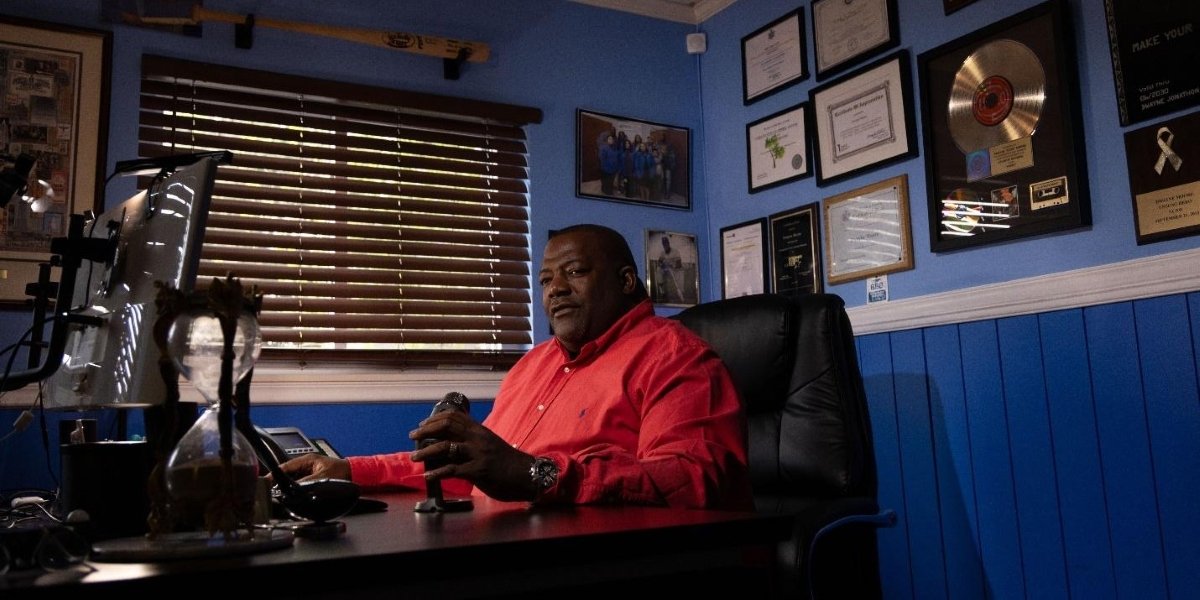
Transitions from sports stardom to business leadership are often idealized, but the path from the former to the latter is, more often than not, nonlinear. Indeed, it is oftentimes marked by doubt, emotional losses, and inner turmoil. The path of a one-time professional baseball player turned business leader takes more than motivation; it requires resilience, a clear vision, and a capacity to remake one’s narrative without sacrificing fact. Such a path, abounding with uncertainty and discovery, is the backdrop of Dwayne Moore’s life—a former professional baseball player whose comeback in the business world was not born from winning but from personal and professional struggle.
Prior to his career as a business executive, Moore’s name was forever linked to his professional playing days on the baseball field. A Brooklyn native, Moore drew early attention as captain of Abraham Lincoln High School’s varsity baseball squad. However, with interest from Division I colleges and universities such as the University of Hawaii, Wichita State, Seton Hall, and the University of New Mexico, Moore was unable to qualify for direct admission on the basis of the minimum GPA.
Instead, Moore chose Miami Dade College, a junior college with a highly competitive baseball team. There, he again established himself as a starting player, playing a significant role with timely RBIs and leading the team to the regional finals of the NJCAA. Although Moore’s baseball abilities were undeniable, his aspirations for professional baseball were short-lived. As with so many college athletes whose careers do not extend to the major leagues, Moore eventually realized that professional baseball would not be the focus of his future.
The end of his baseball life had profound personal consequences. Moore has spoken candidly about the emotional toll it took. In the next few years, he struggled with depression and could hardly bring himself to watch the game that had been such a central part of his life. His identity, so deeply entrenched in the game, was left in pieces, and he was forced to confront an undefined future without the structure and familiarity that athletics had provided.
Moore began the slow process of rebuilding. He held a standard 9-to-5 job, a step that marked the start of his shift from sports to business. The transition was neither quick nor seamless, but it paved the way for his eventual success in the commercial facility services industry. In 2018, he launched Moore National Facility Services (MNFS), which started with modest goals and relatively little capital. The New York-based firm began with only a few contracts—primarily small-scale janitorial and facility management services.
Over the next seven years, MNFS gradually expanded in size and scope. Moore’s company gained contracts around the country in the United States and began offering services in Canada.
Moore’s professional ascent wasn’t without its challenges. Balancing the emotional baggage of his early sporting career with the stresses of being an entrepreneur was an ongoing struggle. There were money-making failures, hiring mistakes, and times when business growth plateaued. However, Moore maintained a vision for long-term strategy rather than short-term success. His journey illustrates a broader point about the nature of reinvention—it is rarely tidy and tends to occur at the cost of deep personal adaptation.
In addition to growing his company, Moore remained committed to his Brooklyn neighborhood. Through MNFS, he has helped finance several youth baseball leagues, including the Brooklyn Bonnies, a well-respected organization offering inner-city youth mentorship through athletics. These efforts are not mere corporate social responsibility gestures; they are an extension of Moore’s recognition that well-organized support mechanisms are essential in early development—something he was afforded himself.
Moore has spoken on several platforms about the need for more retired athletes to look beyond sports, particularly in light of the short-lived nature of professional athletic careers. The NCAA estimates that fewer than 2% of college athletes end up playing professionally. For Moore, the recognition of this fact was not a point of conclusion but of inception. He frequently underscores the necessity to approach one’s life after sports with the same gravity and commitment that is applied to the field.
Now in his early 50s, Dwayne Moore is the CEO of a firm with more than 200 employees and contracts with more than two dozen private and government agencies. His journey, though specific in its details, is part of a broader trend—of athletes who, faced with the sudden end of one chapter, must find the strength to write another. By taking a personal loss and turning it into a professional mission, Moore demonstrates what reinvention can look like when necessity and vision are the driving forces.
In his metamorphosis from baseball hero to corporate leader, Dwayne Moore not only redefined his destiny but also developed a working template for overcoming adversity. His own story illustrates that endings, as painful as they may be, can also be the beginning of something profoundly significant.