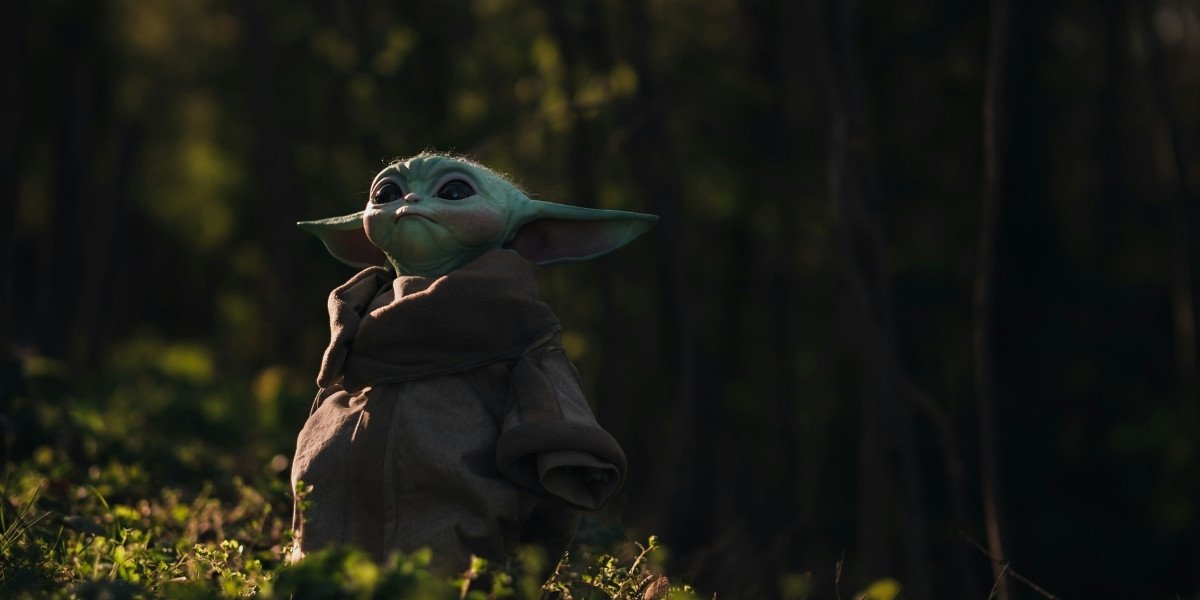
The Mandalorian and Grogu Eyes $102M Opening Weekend

The Mandalorian and Grogu is expected to generate about $102 million in domestic ticket sales during its first weekend in theaters, giving Disney and Lucasfilm one of the strongest openings for a Star Wars release in recent years. The film marks the franchise’s return to cinemas following several years focused primarily on streaming projects and serialized storytelling through Disney+.

Advance ticket demand increased in the days leading into release, with premium large-format screenings and evening showtimes posting strong sales across major theater chains in the United States. Industry tracking estimates placed the film ahead of several recent science-fiction releases and positioned it among the biggest domestic openings of 2026 so far.

Directed by Jon Favreau, the production continues the storyline established in the Disney+ series The Mandalorian. Pedro Pascal returns as Din Djarin, while Grogu remains central to the film’s narrative following years of audience recognition tied to the streaming series. The theatrical release represents the first Star Wars feature film since 2019’s Star Wars: The Rise of Skywalker.

Strong Early Demand Lifts Disney’s Summer Release Schedule

The projected debut provides a significant boost to Disney’s summer theatrical calendar after the company spent recent years balancing theatrical releases with streaming expansion. Internal forecasts and third-party tracking had pointed toward strong audience turnout before opening day, particularly among viewers familiar with the Disney+ series that launched in 2019.

The movie debuted across thousands of North American locations, including IMAX and other premium formats that generally contribute higher average ticket prices. Premium screenings accounted for a notable share of pre-sales heading into the weekend, according to theater industry tracking data.

Disney executives previously emphasized the importance of theatrical event films as part of the company’s broader entertainment strategy. The release of The Mandalorian and Grogu arrives during a period when studios continue evaluating audience habits after years of pandemic-related disruptions and changing viewing patterns tied to streaming services.

Lucasfilm president Kathleen Kennedy announced development of the project during Star Wars Celebration events as the company sought to expand the franchise’s theatrical slate again. The film became one of the first Star Wars theatrical productions to move from development into full release after multiple earlier projects experienced delays or restructuring.

Production took place primarily in California, with filming supported by visual effects facilities and virtual production technology previously used throughout the Disney+ series. The project continued the franchise’s use of StageCraft technology, which combines LED environments with real-time digital rendering.

Return to Theaters Follows Years of Streaming Expansion

Lucasfilm shifted much of its Star Wars storytelling to Disney+ after the release of The Rise of Skywalker in December 2019. During that period, streaming series including The Mandalorian, Andor, Ahsoka, and The Book of Boba Fett became central parts of the franchise’s expansion strategy.

The Mandalorian emerged as one of Disney+’s earliest flagship originals following the streaming platform’s launch. The series introduced Grogu, whose popularity extended beyond television audiences into merchandising, licensing, and theme park integrations. Consumer demand for Grogu-related products contributed significantly to Star Wars retail performance in multiple global markets.

By transitioning the characters into a theatrical feature, Disney and Lucasfilm linked the company’s streaming success directly to the cinema business. Analysts have closely monitored whether streaming-originated franchises can generate substantial theatrical demand when adapted into large-scale film releases.

The franchise’s absence from theaters for several years created additional attention around the release. Earlier Star Wars films consistently ranked among the highest-grossing global releases during the previous decade, beginning with 2015’s Star Wars: The Force Awakens. Subsequent films generated varying commercial results, leading Lucasfilm to reassess future production timelines and release strategies.

International Markets Expected to Add to Global Revenue

Outside North America, Disney expanded the film into major international territories including the United Kingdom, Japan, Australia, Germany, and France. Global earnings projections remained under close observation heading into the weekend, especially in regions where Star Wars historically maintains strong audience engagement.

International performance has traditionally played a major role in the financial outcomes of franchise tentpole releases. Previous Star Wars entries earned substantial portions of total revenue from overseas markets, although regional performance has varied by film and release cycle.

Marketing efforts for the film included international premieres, fan events, and promotional partnerships tied to the broader Star Wars brand. Cast appearances and convention presentations also contributed to audience awareness ahead of release.

Disney continued leveraging cross-platform promotion through its television networks, streaming platforms, consumer products division, and theme park operations. Star Wars remains one of the company’s largest entertainment properties, spanning film, television, publishing, gaming, merchandise, and attractions.

The release timing also positioned the movie within the competitive summer movie season, when studios traditionally launch high-budget franchise films. Several major releases are scheduled throughout the coming months, increasing competition for premium screens and audience attention.

Steeling Roses Is Building Contemporary Art From Strength, Survival, and Street Culture

Some artists create work that looks beautiful on a wall. Others create work that carries identity.

Steeling Roses belongs to the second category.

Behind the name is an artist whose visual language feels deeply connected to modern urban culture, emotional resilience, and transformation. Even with minimal public information available, the artistic identity itself already speaks loudly. The name Steeling Roses immediately creates contrast, softness against strength, beauty against pressure, emotion against survival.

And that contrast lives inside every part of the work.

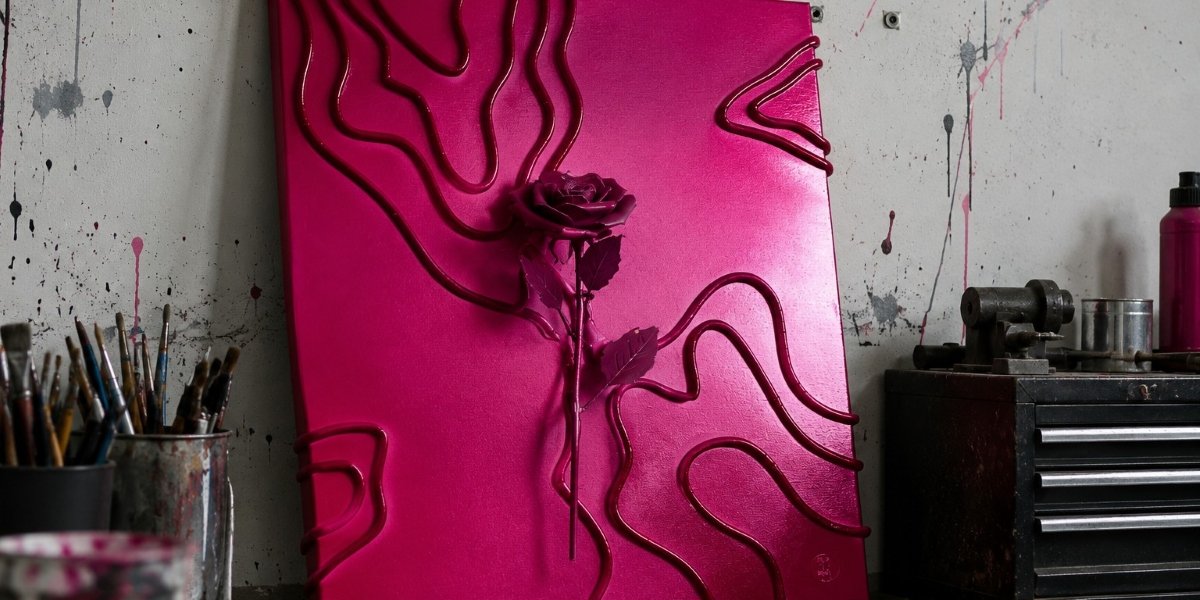
Steel roses emerge from industrial materials. Graffiti textures collide with sculptural craftsmanship. Fashion aesthetics blend with street influence. Raw metal becomes emotional symbolism. The result is a body of work that feels contemporary, masculine, emotionally charged, and impossible to place into a single artistic category.

That refusal to fit neatly into one world is exactly what makes the work compelling.

Today’s art landscape is no longer divided into traditional labels like “fine art” or “street art.” Contemporary artists increasingly move between sculpture, fashion, design, music culture, lifestyle branding, and personal storytelling all at once. Steeling Roses naturally exists inside that modern intersection.

The work feels equally at home in galleries, luxury lofts, creative studios, fashion spaces, music environments, and collector homes where personality matters more than perfection.

There is also something deeply symbolic about the artist’s choice of materials.

Steel is cold, heavy, industrial, permanent. A rose is delicate, emotional, fleeting, and universally associated with human feeling. Bringing those two elements together creates an immediate emotional reaction because it mirrors modern life itself. Most people today are constantly balancing strength with vulnerability, ambition with exhaustion, and confidence with emotional pressure.

Steeling Roses turns that emotional contradiction into visual form.

And perhaps that is why the work resonates.

There is a raw honesty behind it. Nothing feels overly polished or artificially manufactured. The welded surfaces, industrial textures, rough edges, spray-painted layers, and sculptural imperfections all contribute to a visual language that feels real rather than performative.

You can sense the physical process behind the artwork.

The heat.

The labor.

The sparks.

The transformation of material into meaning.

That physicality gives the work a presence that digital-first contemporary aesthetics often cannot replicate.

At the same time, there is strong emotional storytelling hidden beneath the industrial surfaces. Roses repeatedly appear throughout the artist’s universe, but not in a traditionally romantic way. Here, they symbolize survival, loyalty, memory, pain, and resilience. They become emotional artifacts rather than decorative flowers.

Even the darker aesthetic choices throughout the work seem intentional. Coffin imagery, oversized numbers, urban textures, and layered symbolism create a visual atmosphere that feels connected to themes of mortality, identity, pressure, reinvention, and legacy. Yet despite the heaviness of some symbols, the work never feels hopeless.

It feels defiant.

That emotional defiance is one of the strongest qualities within the Steeling Roses identity. The work reflects someone who understands struggle, responsibility, ambition, fatherhood, entrepreneurship, and emotional pressure, yet still chooses to create beauty from difficult materials and experiences.

That perspective gives the work emotional weight beyond aesthetics alone.

The artist’s connection to fashion and celebrity culture also feels natural rather than forced. Unlike artists who simply borrow from street culture visually, Steeling Roses appears genuinely immersed in those worlds. The work exists comfortably beside streetwear, hip-hop influence, luxury aesthetics, and contemporary urban identity because it feels rooted in real experience rather than trend imitation.

That authenticity matters.

In today’s cultural landscape, audiences connect most deeply with artists who create from instinct and lived emotion rather than calculated branding. And while Steeling Roses clearly understands visual identity and presentation, the strongest aspect of the work remains its emotional honesty.

The art feels personal.

Even when viewers do not fully understand every symbol or reference, they still feel the energy behind it. Strength. Pressure. Vulnerability. Ambition. Loyalty. Survival. Those emotions exist inside the work long before intellectual interpretation begins.

And that instinctive connection is powerful.

There is also a larger cultural relevance to the artist’s work. Contemporary audiences increasingly crave art that feels tactile, emotional, and physically made in response to a more digital, emotionally disconnected world. Steeling Roses offers exactly that contrast, handcrafted industrial work filled with emotional symbolism and human imperfection.

The artist is not simply creating sculptures or visual pieces.

Steeling Roses is building a world where steel becomes emotional language, where rough materials carry softness beneath the surface, and where contemporary art reflects the complicated emotional reality of modern life itself.

Photo Courtesy: Jason Perez / UFIRST Art Production

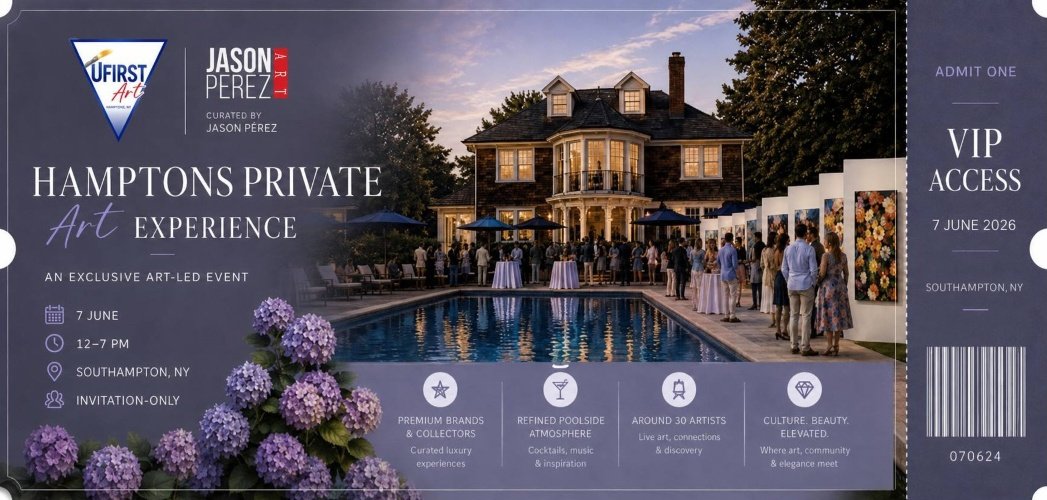
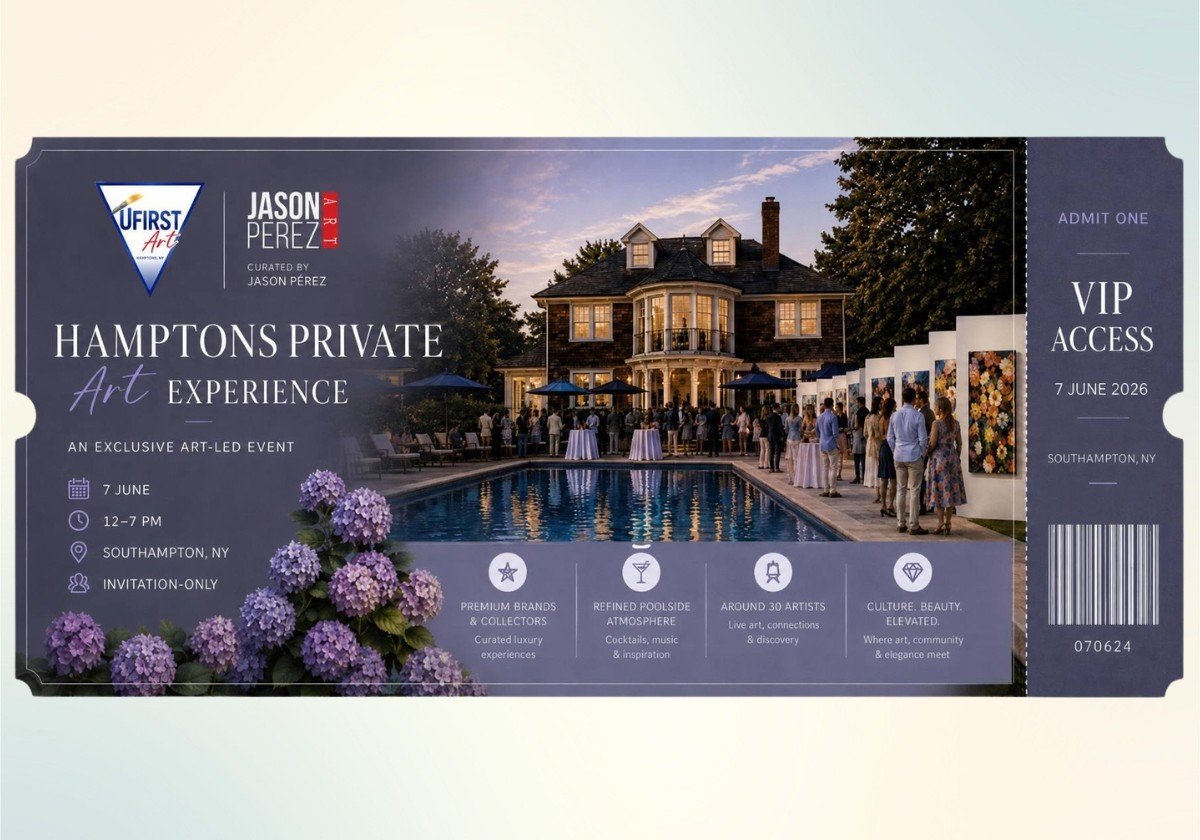
The artist’s work will be featured at the upcoming Hamptons Private Art Experience on June 7, 2026, in Southampton, New York, an invitation-only gathering produced by Jason Perez and UFIRST Art Production. Set within a private Hamptons estate, the experience brings together collectors, tastemakers, and high-net-worth guests for an elevated evening where contemporary art, curated networking, and refined summer lifestyle converge in an intimate collector-focused setting. Unlike traditional exhibitions, the event is designed to create meaningful access between artists and collectors, positioning each work within a sophisticated cultural atmosphere shaped by exclusivity, conversation, and artistic discovery.

Dr. Hakim Dubois on Culture as Purpose, Not Product

By: UFIRST Art Production

Some people are shaped by culture. Others shape it. Dr. Hakim Dubois has spent his entire life doing both, and the line between the two has never been something he needed to find, because he was born standing right on it.

New York Was the Classroom

To understand Dr. Hakim Dubois, you have to understand New York City, not the postcard version, but the living, breathing, block-by-block version that forged an entire generation of artists and visionaries. The New York where hip-hop was not a genre but a language. Where graffiti on a subway car was not vandalism but communication. Where the streets were the first gallery, the first studio, and the first stage.

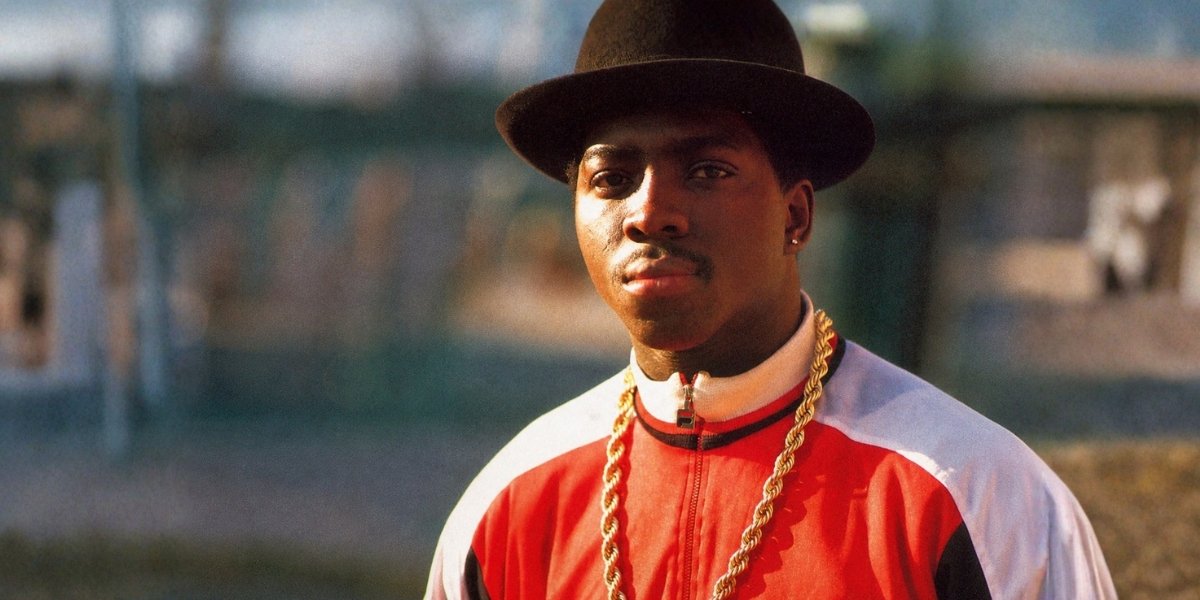
Hakim grew up woven into that fabric. His uncle, Earl “E-LOVE” Mathias, was a foundational figure in the rise of Def Jam Recordings, longtime producer and creative partner of LL Cool J, and the man widely recognized as the silhouette behind the iconic Public Enemy logo. His godfather was LL Cool J himself. These were not names he discovered on album covers. They were family.

From that vantage point, he watched hip-hop become one of the most powerful cultural forces in history, and understood, from the inside, how a movement built on creativity, defiance, and community could reshape music, fashion, language, and global identity. That understanding did not make him passive. It made him hungry.

From the Streets to the Studio

Like many children of New York’s hip-hop golden era, Hakim’s creativity first announced itself through graffiti. But it was only the first chapter. Over time, his range expanded to poetry, music, DJing, fashion, and creative direction, until he had immersed himself in every dimension of the culture that raised him.

That philosophy eventually crystallized into DEKĀD Lifestyle, a platform that began as a magazine and evolved into a full-service global creative agency. The name is intentional. DEKĀD is the phonetic spelling of “decade,” evoking legacy and the kind of cultural relevance that outlasts trends. Clients have included Rolls-Royce, Reebok, Monster Energy, TAO Group, and the government of Barbados, a portfolio that speaks to Hakim’s rare ability to move between street credibility and boardroom fluency.

Grief as Genesis

In January 2026, the hip-hop community lost one of its unsung architects. Earl “E-LOVE” Mathias passed away suddenly in Las Vegas. For Hakim, it was devastating, and transformational.

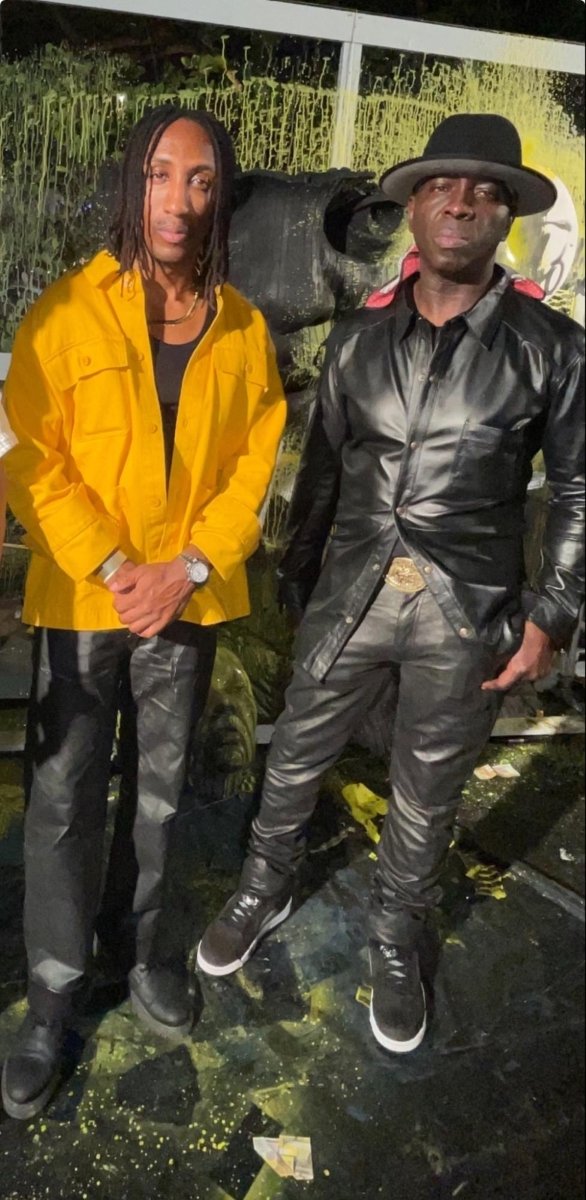
Photo Courtesy: Dr. Hakim Dubois

Grief, for some people, turns inward. For Hakim Dubois, it turned outward, into action, into art, into a commitment to ensure that the legacy his uncle spent a lifetime building would not quietly fade. He chose to honor E-LOVE not with a eulogy but with an exhibition, an immersive cultural experience bringing together generations of artists shaped by New York City street culture.

The Hamptons Exhibition: A Living Memorial

That vision is taking shape as the centerpiece of the Hamptons Private Art Experience on June 7, 2026, in Southampton, New York, produced by Jason Perez and UFIRST Art Production. Featured artists include Shirt King Phade of the legendary Shirt Kings collective, alongside Vera Twins, Mdot, K Craft, DEF SONIX, and others connected to the spirit of urban art and street culture.

Photo Courtesy: Dr. Hakim Dubois

This is not nostalgia packaged for aesthetics. This is a living tribute, a statement that the culture which shaped generations of creatives around the world deserves to be seen, collected, and honored at the highest levels of the contemporary art world.

The Mission Behind the Movement

A portion of the exhibition’s proceeds will support E-LOVE’s planned 501(c)(3) nonprofit, a multidisciplinary arts initiative providing opportunities for aspiring low-income artists in New York City. The vision includes creative workspaces, recording studios, visual arts facilities, fashion ateliers, and professional production environments. It is the full infrastructure of a creative life, made accessible to those who have the talent but not the resources.

In this, Hakim is doing what the pioneers who raised him always did. He takes something personal and turns it into something communal. Hip-hop was built on the belief that creativity is not a privilege of the wealthy but a birthright of the human spirit. The nonprofit is that belief made institutional.

Authentic by Design

In an era when “authentic” has become one of the most overused words in marketing, Dr. Hakim Dubois represents something that cannot be manufactured. His creative identity was forged entirely from lived experience. He did not study hip-hop culture and build a brand around it. He grew up inside it, was shaped by its legends, and is now actively working to ensure its survival.

For most creatives, legacy is something you think about at the end of a career. For Dr. Hakim Dubois, also known as Mr. New York, legacy is what he builds every single day. Not as an abstraction. As an act of love.