Microsoft Build 2026 Unveils New AI and Developer Tools

Microsoft Build 2026 opened in San Francisco with a series of product announcements spanning artificial intelligence, developer platforms, Windows enhancements, new hardware, and quantum computing. During the keynote presentation, Microsoft Chief Executive Officer Satya Nadella introduced new AI systems, a developer-focused Surface device, operating system features, and updates aimed at expanding the company’s technology ecosystem.

The annual developer conference serves as Microsoft’s primary venue for unveiling technologies that shape its software and cloud platforms. This year’s event placed particular emphasis on AI agents, in-house artificial intelligence models, developer productivity tools, and hardware designed to support advanced AI workloads.

Microsoft Build 2026 Highlights New AI Developer Tools

Several of the conference’s most significant announcements focused on software developers building AI-powered applications. Microsoft revealed the Surface RTX Spark Dev Box, a compact desktop computer designed specifically for AI development and testing.

Powered by NVIDIA’s new Arm-based RTX Spark chip, the system includes 128GB of unified memory and arrives with Visual Studio Code and GitHub Copilot pre-installed. Microsoft also configured the device with a developer-focused version of Windows 11 Pro that includes dark mode by default, a simplified taskbar, and a streamlined desktop experience. The company said the product is expected to launch in the United States later this year, although pricing details have not yet been disclosed.

The new hardware reflects Microsoft’s effort to provide developers with local computing resources capable of handling increasingly sophisticated AI workloads. As organizations adopt larger AI models, demand has grown for systems that can run advanced applications without relying entirely on cloud infrastructure.

Microsoft also announced updates to GitHub Copilot, expanding its capabilities beyond code suggestions toward handling more complex development workflows. The enhancements are intended to help software engineers automate additional aspects of application creation and maintenance.

Windows Platform Receives Developer-Focused Enhancements

The conference also featured several announcements designed to make Windows more attractive to software developers.

Microsoft revealed that Windows 11 will gain native support for Coreutils, a collection of Linux-style command-line tools commonly used in software development environments. The company is also expanding capabilities within the Windows Subsystem for Linux, allowing developers to create, run, and manage Linux containers directly through the platform.

Another addition is the Intelligent Terminal, a feature designed to provide contextual information to AI-powered development assistants. The goal is to improve how developers interact with AI agents while working across projects and development environments.

These updates continue Microsoft’s long-term effort to support open-source development workflows while maintaining compatibility with tools commonly used across Linux-based systems. By integrating more developer utilities directly into Windows, Microsoft aims to reduce friction for engineers working across multiple operating systems.

The operating system announcements were accompanied by demonstrations showing how developers can combine AI services, local computing resources, and cloud infrastructure within a unified workflow.

Project Solara and Scout Expand Microsoft’s AI Agent Strategy

A central theme throughout the keynote was Microsoft’s vision for AI agents that can operate across applications, devices, and workflows with greater autonomy.

One of the major announcements was Project Solara, an Android-based operating system and chip-to-cloud platform developed in partnership with Qualcomm and MediaTek. Microsoft described the initiative as a foundation for AI-first devices capable of running intelligent agents across multiple systems.

The company demonstrated prototype concepts including a desktop hub and a wearable digital badge, both intended to showcase how AI agents could move tasks between devices. Project Solara is designed to reduce reliance on standalone applications by enabling agents to handle workflows more directly across connected hardware.

Microsoft also introduced Scout, an always-on AI assistant integrated with Microsoft 365 services. Built on the open-source OpenClaw platform, Scout is designed to perform background tasks across applications such as Outlook, Teams, and OneDrive.

The assistant can help manage schedules, organize information, and automate routine administrative work. Initially, Scout is being released as a desktop preview for Frontier customers in the United States before a broader rollout.

Together, the announcements illustrate Microsoft’s increasing focus on agent-based computing, where AI systems are capable of carrying out actions and coordinating tasks rather than functioning solely as conversational assistants.

Company Expands In-House Artificial Intelligence Models

Another notable development at Build 2026 was Microsoft’s continued investment in proprietary AI technology.

The company introduced MAI-Thinking-1, described as its first internally developed reasoning model. According to Microsoft, the system contains 35 billion active parameters and supports a context window of 128,000 tokens.

The model is designed to handle complex reasoning tasks, long-context processing, code generation, and multi-step instructions. The launch represents an important step in Microsoft’s effort to develop AI systems alongside technologies it incorporates through external partnerships.

Microsoft also announced broader updates across its MAI family of models, including improvements related to image generation, voice capabilities, transcription services, and software development applications.

The expanded model portfolio signals a deeper investment in building foundational AI technology within the company. These systems are expected to support products across Microsoft’s cloud services, productivity software, and developer platforms.

At the same time, Microsoft introduced Microsoft Execution Containers, or MXC, a new security feature intended to improve safety when running autonomous AI agents. The technology enables developers to establish controls governing what resources agents can access on a device.

An accompanying OpenClaw application allows users to configure custom agents or connect to existing AI systems within a sandboxed environment designed to reduce security risks.

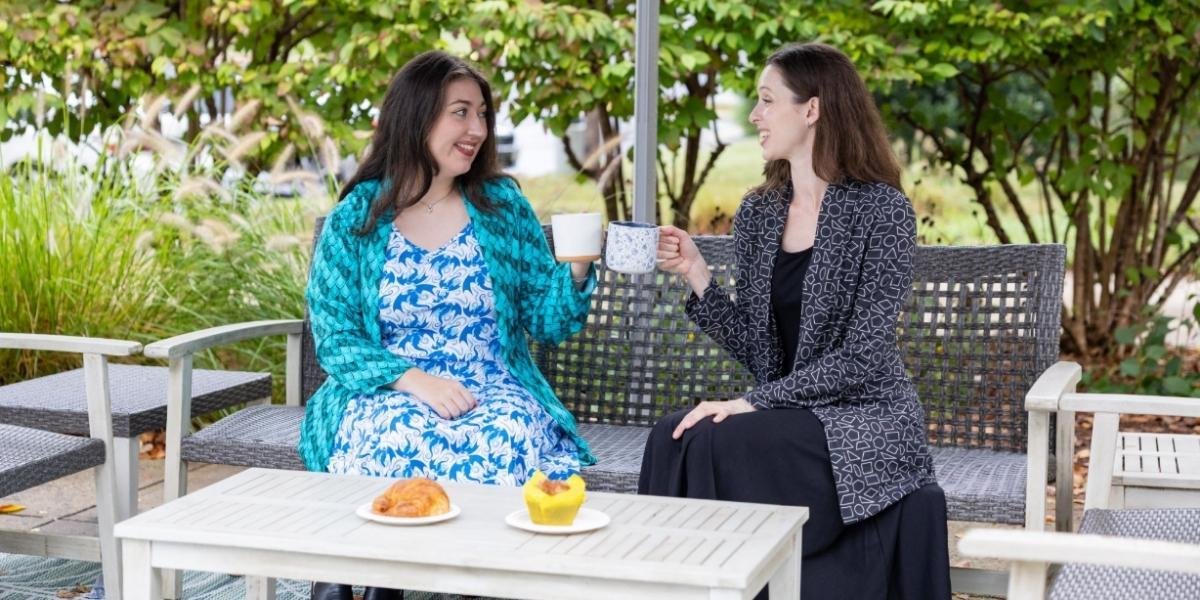
 

How Svaha USA Clothing Stands Out in Comfort and Style

By Kate Sarmiento

There is a very specific kind of disappointment that happens in fitting rooms, and almost nobody talks about it honestly because the clothes technically fit, the zipper closes, and the mirror says everything looks “fine,” yet the whole experience still feels strangely off, like the outfit belongs to a completely different person who somehow enjoys networking brunches and beige sweaters with no personality attached to them.

A lot of people have spent years wearing clothes that felt close enough instead of actually right, not because they lacked options, but because fashion has a habit of deciding who people are before they even get dressed. Certain prints get pushed toward men, certain colors get softened for women, and entire personalities disappear the second clothing brands decide what is “marketable,” which gets exhausting after a while because people eventually stop shopping for joy and start shopping for whatever feels safe enough to wear in public without explanation.

That is part of why Svaha USA connected with so many people so quickly, because the brand never built itself around trends that expire every six weeks anyway. Instead, it focused on recognition by creating dresses with pockets covered in constellations, organic cotton pieces inspired by science and storytelling, and prints that usually never survive the approval process inside traditional fashion meetings, where somebody always decides women apparently only want florals forever.

The emotional reaction people have to that kind of clothing is immediate because recognition changes the experience of getting dressed in ways people do not always expect. A woman sees a math-themed dress and suddenly remembers being the only girl in her robotics class. A father buys matching family clothing covered in stars because his daughter has spent years talking about becoming an astronaut. Someone in their fifties buys a glow-in-the-dark constellation dress simply because they are tired of dressing like personality has an expiration date.

The clothes stop feeling decorative once that connection happens because they start feeling personal instead, and confidence shifts almost immediately when people feel represented instead of managed. Researchers spent time examining how clothing affects psychological processes and behavior, and people consistently reported stronger feelings of confidence, attentiveness, and self-assurance when what they wore aligned with their identity and perception of themselves (Source: Critical Debates HSGJ, 2025).

That makes complete sense because nobody walks naturally in clothing that feels fake, and people know the difference faster than brands think they do.

Fashion Has Spent Years Editing People Down

There is something strangely repetitive about walking through most clothing stores because the colors repeat, the cuts repeat, and even the personality repeats until every rack starts looking like somebody copied the same woman fifty times and handed her slightly different cardigans.

Meanwhile, actual people are much stranger than that in the best possible way because they garden on weekends and play role-playing games on Tuesday nights, or they work corporate jobs while secretly collecting fossils, astronomy books, or obscure mushroom field guides that would probably confuse half their coworkers.

Jaya Iyer, the fashion merchandising PhD behind Svaha USA, started the company after struggling to find science-themed clothing for her daughter, who was obsessed with space and wanted astronaut apparel that actually existed for girls. That blend of academic training and real industry expertise is exactly why Svaha’s prints are accurate, intentional, and not just decorative. Somehow, after decades of innovation, the fashion industry still managed to act surprised by the possibility that girls might enjoy science, which sounds ridiculous when said out loud because it is ridiculous.

The long-term effect becomes subtle but damaging because kids learn quickly which interests get celebrated publicly and which ones quietly disappear from clothing aisles altogether. Adults are not immune either because plenty of women still get pushed toward fashion that feels “acceptable” instead of interesting, while plenty of men avoid prints or colors they genuinely like because somebody convinced them personality should stop at navy blue polos forever.

Then a brand comes along and creates dresses with pockets featuring seabed exploration artwork or nebula-inspired prints, and suddenly people remember clothing can actually say something fun again without feeling childish or forced.

Comfort changes when self-consciousness leaves the room, which probably explains why people become fiercely loyal to brands that genuinely commit to size-inclusive fashion instead of treating larger sizes like an afterthought hidden online under “extended sizing.” Consumers consistently report feeling more positive toward brands that reflect realistic body representation and inclusive sizing because people know when they are being included sincerely and when they are simply being tolerated for marketing reasons (Source: International Journal of All Research Education & Scientific Methods, 2024).

Organic cotton matters for similar reasons because people do care about breathability and softness, especially when clothing is tagless and sensory-friendly, but emotional comfort plays a role, too. People relax differently in outfits that do not make them feel like they are auditioning for approval all day, and that shift becomes obvious in small ways, like someone reaching for the same dress repeatedly because it feels easy instead of emotionally exhausting.

The Best Compliments Usually Start With “This Feels So Me”

There is a reason people get emotionally attached to certain outfits, and it usually has nothing to do with trends or price tags because the attachment comes from recognition instead. It is the dress with pockets someone keeps wearing three times a week because it somehow feels reliable. It is the dinosaur-print button-down that gets compliments in grocery store checkout lines from complete strangers who suddenly want to talk about Jurassic Park for five minutes.

Clothing becomes memory faster than people realize because outfits attach themselves to moments, confidence, and identity almost immediately. Retail conversations tend to obsess over aesthetics and seasonal trends while regular people are standing in front of mirrors trying to answer a much simpler question: “Does this actually feel like me?”

The answer arrives quickly because people can usually sense when they are dressing for themselves and when they are dressing for an imaginary version of acceptability that does not even make them happy.

A lot of that comes down to permission because seeing identity reflected in clothing gives people permission to stop editing themselves down into something easier to package. That is especially true for people who spent years believing their interests were too nerdy, too feminine, too intellectual, or too unusual to wear openly without explanation.

Then they find matching family clothing covered in dragons, or a constellation dress that glows in the dark, and suddenly getting dressed feels fun again instead of transactional.

Fashion became painfully serious for a while because every outfit started sounding like a LinkedIn profile, with neutral tones, “quiet luxury,” and the same oversized blazer copied endlessly across social media until nobody looked remotely distinguishable from each other anymore.

Meanwhile, people are craving personality again because shared interests create emotional connection faster than trend cycles ever will. Someone wearing a Sakura Starlings Twirl Dress is probably going to notice another person wearing one from across the bookstore immediately, and that tiny moment matters more than people think because humans are constantly searching for familiarity, community, and signs that somebody else understands them too.

Wear the Thing That Feels Like You

There is a strange kind of freedom that shows up when clothing stops feeling like a compromise because people stand differently in outfits that reflect who they actually are. They stop tugging at sleeves constantly, they stop second-guessing every choice, and they stop dressing for imaginary critics who probably are not paying attention anyway.

That is the thing brands keep missing when they reduce representation to marketing language because feeling seen changes behavior, comfort, and confidence in ways that are impossible to fake. It changes how long someone stays in a fitting room debating whether they are “allowed” to wear something joyful, interesting, or unapologetically personal.

Svaha USA built an entire community around the idea that people should not have to shrink their personalities to fit into clothing racks. Whether it is plus size clothing made from organic cotton, dresses with pockets that are actually functional, or matching family clothing designed around prints people genuinely care about, the larger idea stays consistent because clothing should feel like recognition instead of correction.

The right outfit does not magically transform someone into a different person, but it often helps people stop pretending to be one. That shift is small and immediate and surprisingly hard to fake, and for the people who spent years shrinking their interests to fit inside a clothing rack, it tends to feel less like a fashion moment and more like a quiet exhale. That feeling outlasts trends, and it is exactly the kind of thing a brand either builds itself around from the beginning or never quite figures out at all.