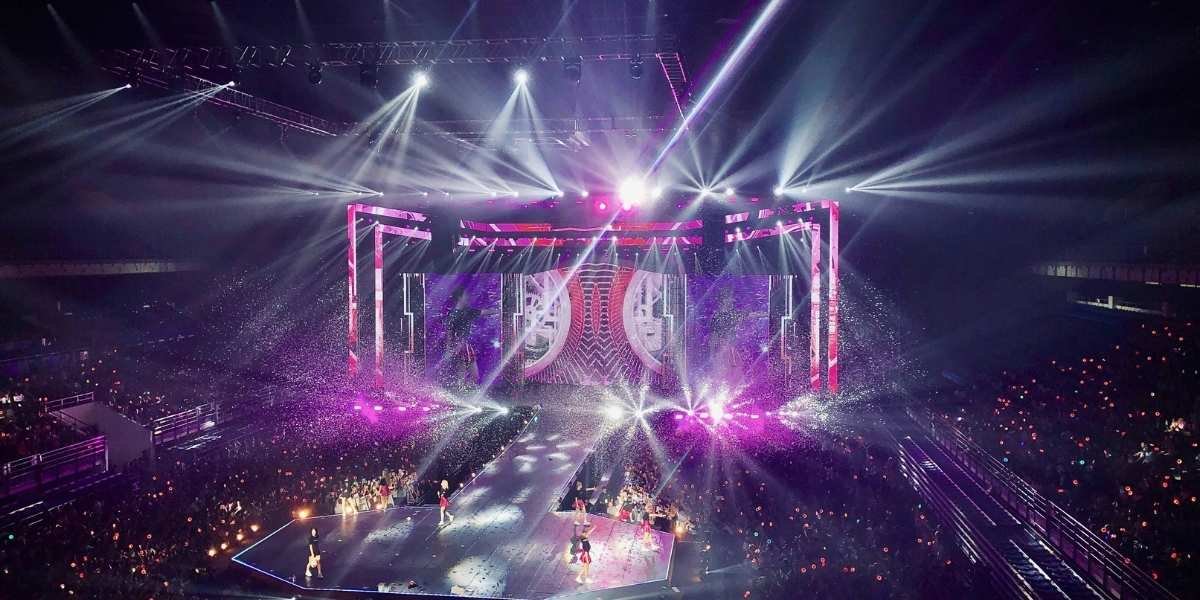
KCON LA 2026 Kicks Off With NCT 127 and Global K-Pop Lineup

KCON LA 2026 began Aug. 14 in downtown Los Angeles with NCT 127 leading Friday’s M COUNTDOWN lineup, followed by ZEROBASEONE on Saturday and TOMORROW X TOGETHER on Sunday. The three-day event also introduces extended headliner sets and a broader convention program spanning K-beauty, K-food, Korean film and drama, and fan-focused stages.

Key Takeaways

  • KCON LA 2026 runs Aug. 14 through 16 at Crypto.com Arena and the Los Angeles Convention Center.
  • NCT 127 leads Friday’s M COUNTDOWN lineup, followed by ZEROBASEONE on Saturday and TOMORROW X TOGETHER on Sunday.
  • CJ ENM introduced extended one-hour performances for M COUNTDOWN headliners and ARTIST STAGE performers.
  • The convention program includes four performance areas plus K-beauty, K-food and K-story experiences.
  • The 2025 Los Angeles edition drew 125,000 attendees across three days, according to CJ ENM.

The event continues through Aug. 16 across Crypto.com Arena and the Los Angeles Convention Center. ZEROBASEONE is scheduled to lead Saturday’s arena bill, while TOMORROW X TOGETHER takes the headline position for Sunday’s final M COUNTDOWN show.

The three-night structure gives each evening a separate anchor while keeping the wider lineup varied. Friday pairs NCT 127 with TREASURE, &TEAM, KickFlip and SANTOS BRAVOS. Saturday includes ILLIT, izna, P1Harmony, TAEYONG and YEONJUN, while Sunday brings ALLDAY PROJECT, ALPHA DRIVE ONE, JO1 and MEOVV alongside TOMORROW X TOGETHER.

The timing also places KCON inside a busy U.S. season for Korean artists. Earlier in August, Jennie’s Lollapalooza headline set put the BLACKPINK member at the top of a major Chicago festival bill, adding another prominent U.S. festival appearance for a K-pop artist during the summer.

NCT 127 Opens KCON LA 2026 With an Extended Headline Format

The most notable change at KCON LA 2026 is not limited to the names on the schedule. CJ ENM announced that headline artists on the M COUNTDOWN STAGE and performers on the ARTIST STAGE would receive newly extended one-hour performances, changing how much of the program can be devoted to individual acts.

That format puts NCT 127 at the center of the opening night. The group is listed as Friday’s lead act at Crypto.com Arena, where doors are scheduled to open at 6:30 p.m. and the M COUNTDOWN program begins at 8 p.m.

The longer-set structure gives featured artists more room within an event that still depends on frequent lineup changes across several stages. Rather than building the entire evening from shorter appearances, the 2026 format reserves a larger block of time for selected performers while maintaining the multi-artist structure around them.

NCT 127’s placement also continues the group’s recent connection with the Los Angeles event. The group appeared at KCON LA 2025, where it joined a three-day program that included 37 acts, according to organizer CJ ENM.

The opening-night bill also broadens the program beyond one established group. TREASURE and &TEAM appear alongside KickFlip and SANTOS BRAVOS, while additional performers and guests are scheduled across the day. Crypto.com Arena notes that the lineup remains subject to change.

The KCON Lineup Changes Across Three Nights

Saturday shifts the arena focus to ZEROBASEONE. The group leads a bill that also includes ILLIT, izna, P1Harmony and TAEYONG, with YEONJUN and Anderson .Paak among the additional names listed for the day.

Sunday then moves the headline position to TOMORROW X TOGETHER. The final-night schedule includes ALLDAY PROJECT, ALPHA DRIVE ONE, JO1 and MEOVV, along with NEXZ, RESCENE, ONE PACT and So!YoON! elsewhere on the program.

The rotation gives KCON three distinct arena lineups instead of organizing the weekend around a single top-billed performer. Established groups, newer acts and artists working across different markets appear within the same three-day program.

That variety is also reflected in the range of artists around the headliners. The schedule brings together Korean groups, Japan-based acts and performers connected with other international music markets, expanding the festival bill without changing its K-pop-centered identity.

The broader K-pop calendar also shows how artists are reaching audiences through concerts, festival appearances and screen projects. BTS comeback movie plans tied to the group’s 2026 return offer another example of music-related programming extending beyond the traditional concert format.

Festival Grounds Expand KCON Beyond the Arena

The nightly arena shows are only one part of the KCON LA 2026 schedule. CJ ENM says the event uses four main performance areas: the M COUNTDOWN STAGE, ARTIST STAGE, X STAGE and DANCE STAGE.

Festival Grounds programming at the Los Angeles Convention Center extends the event into K-beauty, K-food and K-story experiences. CJ ENM has also announced OLIVE YOUNG FESTA, a K-STORY ZONE focused on Korean dramas and films, and a K-FOOD ZONE as part of the convention program.

The structure separates large evening performances from much of the daytime convention activity. Crypto.com Arena states that Festival Grounds admission is included with most M COUNTDOWN packages, with the one-day K-POP DISCOVERY ticket listed as an exception.

The arrangement gives attendees several types of programming within the same weekend. Artist-focused events and dance activities operate alongside food, beauty and screen-entertainment areas before the nightly M COUNTDOWN schedule begins at Crypto.com Arena.

The 2026 theme, “Walk in SOUL CITY,” is being used across those convention experiences. CJ ENM describes the format as one intended to connect K-pop with additional Korean lifestyle categories instead of treating the Los Angeles stop solely as an arena concert series.

That wider format also explains why the event occupies two neighboring downtown venues. The Los Angeles Convention Center handles much of the festival programming, while Crypto.com Arena provides the setting for the nightly M COUNTDOWN performances.

Los Angeles Format Builds on KCON’s 2025 Scale

KCON LA 2026 follows an edition that CJ ENM said drew 125,000 attendees across three days in 2025. The organizer also reported 37 acts, 107 participating companies and 358 booths at last year’s Los Angeles event.

Those figures provide context for the current format. KCON’s Los Angeles program has developed as a combination of arena performances and convention programming rather than a single concert bill, allowing the schedule to accommodate both music and other Korean entertainment and lifestyle categories.

The newly extended headline performances add another layer in 2026. Major artists receive more stage time, while the ARTIST STAGE, X STAGE and DANCE STAGE preserve opportunities for additional performers and programming throughout the weekend.

For the U.S. audience, the schedule is anchored by three clearly defined nights. NCT 127 leads Friday, ZEROBASEONE takes Saturday’s top position, and TOMORROW X TOGETHER closes the M COUNTDOWN program Sunday.

KCON LA 2026 is scheduled to continue through Aug. 16. Its current format combines three nightly arena anchors, extended performances and daytime convention programming across two downtown Los Angeles venues, keeping KCON centered on K-pop while expanding the range of experiences surrounding the music.

Frequently Asked Questions

When iss KCON LA 2026?

KCON LA 2026 runs from Aug. 14 through Aug. 16, 2026. Programming takes place at the Los Angeles Convention Center and Crypto.com Arena in downtown Los Angeles.

Who is headlining KCON LA 2026?

NCT 127 leads the Friday M COUNTDOWN lineup, ZEROBASEONE takes the headline position Saturday, and TOMORROW X TOGETHER leads Sunday’s program. Each night also features several additional groups, solo performers and guests.

What changed at KCON in 2026?

KCON introduced newly extended one-hour performances for M COUNTDOWN headliners and ARTIST STAGE performers. The change gives selected artists more stage time while retaining the event’s broader multi-stage structure.

What other activities are available at KCON LA 2026?

The Festival Grounds include programming connected with K-beauty, K-food and K-story, alongside the ARTIST STAGE, X STAGE and DANCE STAGE. CJ ENM has also announced OLIVE YOUNG FESTA and dedicated areas for Korean food, dramas and films.

Where are the KCON M COUNTDOWN shows held?

The nightly M COUNTDOWN concerts are scheduled at Crypto.com Arena. Festival Grounds programming takes place primarily at the neighboring Los Angeles Convention Center.

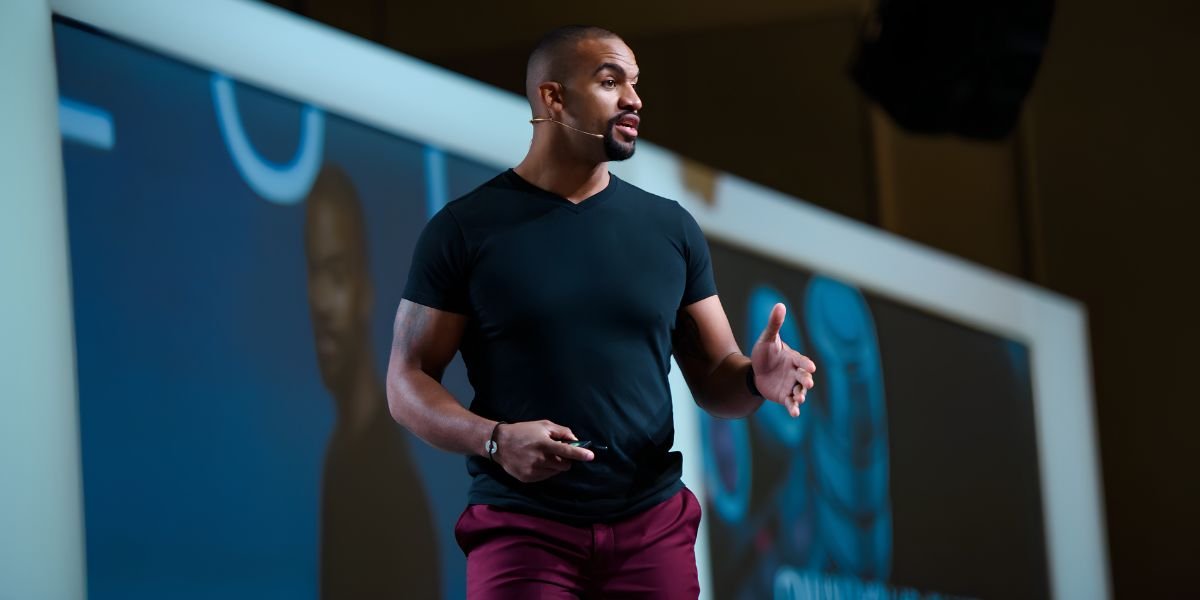
Athletic Identity Loss After the NFL: Anthony Trucks on Rebuilding Life Beyond Sports

By Audrey Denise B. Cachuela

One torn shoulder. That’s all it took to end Anthony Trucks’ NFL career at twenty-five, and take the rest of his identity down with it. No warning, no farewell tour, just a locker room, a diagnosis, and a life that stopped making sense overnight. Trucks, a former NFL player who had climbed from foster care to the University of Oregon to the Pittsburgh Steelers, watched two decades of proof that he mattered disappear in a single doctor’s appointment, and what came after was athletic identity loss in about as raw a form as it gets.

So what actually happens after a career-ending sports injury, once the applause stops and the medical staff moves on to the next patient? For Trucks, the answer took years to find, and it became the foundation for a method he now teaches to anyone rebuilding an identity from the ground up. You can see where that work lives today, but the real story starts on the day football ended, not the day the keynote invitations began.

Why Athletic Identity Loss Hits Long After the Injury

The hardest part of a career-ending sports injury almost always lands after the body heals, once rehab ends, and the surgery scars close, when an athlete is left staring at the fact that an entire sense of self was built around a jersey number and a stat sheet, and both are gone for good.

Trucks lost the scaffolding that had held up nearly every part of his life since childhood. Football had been a loud and undeniable proof that a kid who entered foster care at age three could still build something extraordinary. It gave him purpose, status, and a community that understood him without having to explain himself. When the shoulder gave out, none of that came with an exit plan.

He tried to stay close to the game by opening a training gym, and life after a professional football injury turned out to be nothing like the highlight reel he had spent a career building. The business bled money while his marriage strained under the added pressure, and he was eventually divorced, raising three kids out of a 500-square-foot apartment while trying to figure out who he was without a football schedule running his days.

This pattern shows up constantly during athlete transition after retirement, and the research backs up what Trucks lived through firsthand. Athletes who build their identity narrowly around their sport report lower wellbeing than those with a more diversified sense of self, and a sudden, unplanned exit, the kind an injury forces, produces a sharper drop in wellbeing than a retirement someone sees coming (Source: International Review of Psychiatry, 2024). Retirement driven by injury specifically shows up as one of the higher-risk paths in that research, alongside clinical guidance that a retiring athlete’s mental health needs the same attention as their physical recovery, particularly around the social isolation that follows (Source: International Olympic Committee Consensus Statement, 2019). What happened to Trucks reflected that exact pattern playing out in real time.

Retirement from sport functions differently than leaving a job, closer to losing a limb than closing out a role. Every day for years revolves around training blocks, film sessions, recovery protocols, and a locker room full of people who speak the same language, so confidence gets wired directly to performance and friendships form almost entirely around the sport. Taking the sport away leaves an athlete holding new questions all at once: who they are without the uniform, what they offer if they are not competing, and where their confidence comes from now. Identity after sports has to be rebuilt on purpose.

Former athletes who build several sources of identity outside their sport, relationships, interests, and skills that have nothing to do with competing, tend to adjust to retirement in a healthier way than those whose entire sense of self stayed locked to their athletic performance (Source: “I’m More Than My Sport”: Exploring the Dynamic Processes of Identity Change in Athletic Retirement, 2024). Trucks had to build that outside identity from scratch, in real time, while everything else around him was falling apart, which is exactly how athletes rebuild their identity after retirement when nobody hands them a plan for it.

Starting From Zero, Twice

By his own account, the lowest point came when the losses stacked on top of each other faster than he could process them. Football, gone. Marriage, ending. Business, underwater. Financially, there was nothing left in reserve. At one point, he sent goodbye messages to the people he loved and drove away with the intention of ending his life, stopped only by an interruption he didn’t plan for.

The weight of that moment came from every role he had depended on for a sense of self collapsing within the same short stretch of time. Athlete, husband, business owner, provider, each one failed at once, leaving no part of his identity untouched.

That level of honesty matters, because conversations about athlete mental health so often stop at the word “struggle” and never go further. Acknowledging depression is only a starting point; rebuilding a person takes deliberate, sustained work.

What followed for Trucks were months of uncomfortable, unglamorous questions about his parenting, his relationships, his own accountability, and what kind of future he actually wanted. Nobody was clapping for that work, and no scoreboard existed to track it.

Those months were where the actual rebuilding happened, long before any stage or spotlight returned. The questions themselves began to change what he paid attention to each day, and that change in attention became the seed of something he would eventually put a name to.

How Identity Gets Rebuilt After a Sports Career Ends

He would later give it a name: Dark Work, the effort that happens with zero audience and zero applause.

Dark Work centers on identity first, and that’s why athletic identity matters after retirement every bit as much as it mattered during a career, maybe more. Sustainable performance comes from becoming someone capable of producing results consistently, with habits built before any single achievement is chased. The habits nobody sees eventually show up as the results everyone notices.

The same pattern shows up far outside professional sports. An executive who gets laid off often faces the same disorientation as an injured athlete, and a founder whose company collapses frequently describes losing income and self-concept in the same breath. Parents facing an empty nest and veterans stepping into civilian life run into a version of the identical question: if the role disappears, who is actually left standing?

Broader research on career and life transitions keeps landing on the same conclusion, that people who cultivate multiple sources of purpose and connection before a transition hits tend to come through it with better mental health outcomes (Source: Factors That Influence Mental Health and Well-Being of High-Performance Athletes Transitioning Out of Sport, 2024). The need for that kind of adaptability continues to grow. Labor markets and technology are reshaping careers across nearly every industry, which makes building an identity that can survive multiple transitions a practical necessity (Source: World Economic Forum, 2025).

That same identity-first premise now shapes how organizations coach leaders through periods of change, starting from a recognition Trucks eventually reached on his own, that a performance problem is often an identity problem wearing a different name.

What Actually Rebuilds Confidence

Life after professional sports means starting the identity work personally, with no ready-made replacement waiting. Rebuilding confidence after leaving professional sports takes longer than one pep talk and considerably more reps than anyone wants to hear about. A common piece of advice given to athletes after a career-ending sports injury, go find another passion, misses the point entirely, because identity rebuilds slowly, through repeated actions that give a person real proof they can trust themselves again.

Years separated Trucks stepping off the football field from stepping onto a keynote stage, and his path is a working example of how to transition from professional sports to a new career without pretending the old one never happened. Those years held failed ventures, a broken marriage, real financial hardship, and long stretches of uncertainty about what came next. He reconciled with his former wife, rebuilt his family, and turned what he had learned into a leadership methodology now used inside organizations including Amazon, PayPal, T-Mobile, and Chick-fil-A.

The lesson buried in that timeline is worth sitting with. Trucks succeeded by recognizing that the discipline, resilience, and consistency the sport had built in him could exist completely apart from the game itself. That distinction is often what separates people who stay stuck replaying old highlight reels from people who go on to build a genuinely different second chapter.

That is sports psychology at work. Confidence grows most reliably through mastery experiences, small, repeated proof points that show a person can handle something difficult, one instance at a time (Source: American Psychological Association, 2025). For anyone navigating an athlete transition after retirement, that’s a far more useful starting point than waiting to stumble onto a new “passion.”

For Trucks, those mastery experiences showed up in small, unglamorous places, keeping a promise to one of his kids after a string of broken ones, showing up consistently for his wife during the process of reconciliation, meeting a deadline in the new business without cutting corners. Each one built on the last, adding up to direct evidence that the man he was becoming could be trusted, trust solid enough to support a harder question than what to do next.

The Question That Changes Everything

Trucks’ story keeps circling back to one idea, the kind that shows up in nearly every study on athlete mental health during retirement transition. The hardest part of starting over was the psychological reconstruction that followed, done piece by piece, mostly without anyone watching.

His path has run through foster care, professional football, a devastating injury, business failure, divorce, a genuine brush with losing everything, reconciliation, and a second career built from the wreckage of the first. Every real breakthrough in that timeline traces back to the same identity shift after career loss. He replaced one question with another, moving from “what should I do next” toward “who do I need to become.” That single reframe moves the focus away from chasing the next external win and toward building the internal traits that can outlast any one job, title, or season of life.

Athletic identity loss reflects a broader human pattern, because almost nobody spends an entire life in a single role. Titles change, circumstances change without warning, and what stays constant is the fact that identity can always be reshaped, even after it feels completely stripped away.

For a reader working through a comparable transition, that reframe offers a starting point, a way to redirect attention from circumstances back toward the self doing the rebuilding.

That is what overcoming athletic identity loss after the NFL actually looks like for Anthony Trucks, years of unglamorous, unwitnessed work that never made a highlight reel. Whatever forces a similar collapse in your own life, the same task waits on the other side, becoming someone new enough to carry a future that does not resemble the past. Trucks now teaches this exact rebuilding process to executives and teams through his Dark Work methodology. Learn more about booking him or bringing his framework to your organization at https://www.anthonytrucks.com/