Universal Music Group Signs TYGER Deal for Adaptive Music

The Universal Music Group TYGER agreement will bring selected licensed recordings to a gaming music service that says songs can adapt to live gameplay. Announced October 22, 2026, the arrangement adds a major-label partner to TYGER, but neither company has identified participating artists or confirmed when the recordings will become available.

Key Takeaways

  • Universal Music Group announced its TYGER licensing agreement on October 22, 2026.
  • Selected recordings are planned for the paid tier, with some also designated for free, ad-supported listening.
  • TYGER says its music can respond to gameplay without direct integration by game developers.
  • The service reports more than 400,000 existing songs, mostly from independent artists.
  • TYGER has not announced the UMG artist lineup, licensing fees or a precise launch date.

Universal Music Group has signed a licensing agreement with TYGER, a San Diego-based music service that lets players listen to songs that respond to events in supported video games. The October 22 announcement makes UMG the first major music company to license the platform, according to the companies, but the initial selection of recordings remains undisclosed.

The agreement calls for songs from UMG’s recorded music and publishing catalogs to become available through TYGER’s paid, on-demand subscription. Some recordings will also appear on a free, advertising-supported service. The companies described the plans in future terms and did not announce that UMG tracks were already available to users.

Michael Nash, UMG’s chief digital officer and executive vice president, said, “We believe that music has a more integral role to play in gaming.” He said the agreement would let UMG music accompany personalized gameplay.

Universal Music Group TYGER Agreement Covers Selected Recordings

The new arrangement concerns licensed music rather than original soundtracks composed for a particular title. TYGER runs alongside existing games and lets users select music to accompany their sessions. Its technology is intended to adjust that playback when specific gameplay events occur, rather than simply playing a fixed playlist from beginning to end.

That distinction also places limits on what the announcement establishes. UMG did not disclose the number of tracks or which artists and labels will be included. No financial terms or royalty rates were reported, and the public announcement did not set a firm date for the licensed songs to arrive. Details about licensing duration and geographic availability were not released.

Entertainment companies often negotiate content licensing agreement terms involving rights, distribution and payment structures. The UMG and TYGER announcement confirms that recordings will be licensed for the service, but it does not identify those underlying commercial provisions. The deal should therefore not be interpreted as a release of UMG’s entire recorded catalog.

Nick Venti, TYGER’s chief executive and co-founder, characterized the deal as an opportunity to connect artists and players through interactive entertainment.

The proposed access also distinguishes this arrangement from music used in a trailer or a preset game soundtrack. In those cases, a specific recording is usually selected for a defined experience. With TYGER, listeners choose tracks through a separate player, while the company’s software determines whether the playback can adapt to a supported game.

TYGER’s Adaptive Music Runs Alongside Supported Games

TYGER says its patented technology uses artificial intelligence to make licensed tracks react to live play. The service is designed to operate without a game developer adding its software directly to a title. That claim describes the platform’s product design, not a confirmed partnership between TYGER and the publishers of every supported game.

Its current desktop app is listed through Overwolf, where the prerelease beta identifies Fortnite, Valorant, Apex Legends and Rainbow Six among titles with adaptive audio support. The listing also cautions that unsupported games use TYGER as a standard music player. Listeners should not assume the interactive feature works identically across every game.

Overwolf also lists curated playlists, custom playlists for paid users, game-related sound effects and music intended for livestreaming. Those are existing TYGER features, not benefits confirmed for particular UMG recordings.

The company says its beta is available across more than 20 gaming titles whose combined monthly audiences exceed 540 million players. That figure refers to the games’ audiences, not the number of people who have installed TYGER, paid for a subscription or listened to its tracks. Neither company disclosed a user forecast tied to the UMG agreement.

TYGER describes its technology as intended for PC, console and mobile gaming. Its currently listed Overwolf app, however, is a desktop product. The announcement does not confirm when a console or mobile version of the UMG-enabled service might become available.

Catalog Size, Subscription Pricing and Earlier Gaming Deals

Before the addition of UMG music, TYGER reported a catalog exceeding 400,000 tracks, primarily supplied by independent artists. According to the current Overwolf listing, its ad-supported free tier offers curated selections, while TYGER Club gives early-access subscribers the broader beta catalog and custom playlists.

The same listing advertises TYGER Club for $3.99 per month during early access and says the rate will move to $5.99 at full release. Those are listed beta subscription prices, not newly announced terms for UMG’s music. The companies said they plan an updated paid offering and free tier after adding the licensed recordings.

The split follows familiar subscription and ad-supported models used across digital entertainment, but the agreement does not explain how many UMG tracks each version will contain. It also does not specify whether individual titles will be available in both tiers or only through the paid option.

UMG has previously worked with Roblox on interactive music projects. In 2023, it introduced Beat Galaxy as a music discovery experience. In 2024, UMG and Republic Records launched Boombox with STYNGR, bringing licensed music playback into Roblox experiences including TWICE Square.

A December 2025 agreement with Roblox expanded plans for artist experiences and merchandise tools, including potential sales of physical and digital products through Shopify. UMG cited earlier Roblox activations involving artists such as Lady Gaga and Chappell Roan, but their participation in those projects does not establish involvement in TYGER.

Unlike the Roblox initiatives, the Universal Music Group TYGER agreement focuses on a separate player built to accompany supported games. Its confirmed scope is limited to selected licensed recordings, planned subscription and ad-supported access, and a relaunch the companies expect later in 2026. No participating UMG artists or individual tracks were named.

Frequently Asked Questions

What is the Universal Music Group TYGER agreement?

The Universal Music Group TYGER agreement is a licensing arrangement announced October 22, 2026, for selected UMG recordings to appear on TYGER’s gaming music service. The service says it can adjust licensed music in response to live gameplay.

Are UMG songs already available on TYGER?

The companies said selected recordings would become available but did not identify an exact date. The October 22 announcement did not name any participating UMG artists or songs.

Which games support TYGER’s adaptive music?

TYGER’s Overwolf listing names Fortnite, Valorant, Apex Legends and Rainbow Six among games with adaptive audio support. Other games may use TYGER only as a standard music player.

How much does TYGER cost?

The Overwolf listing prices TYGER Club at $3.99 per month during early access and indicates a planned $5.99 price at full release. TYGER also offers an ad-supported free tier, but the UMG catalog allocation has not been detailed.

How Cade Griffis Expanded His Public Profile Through Baseball, Entrepreneurship, and Conversations on Franchise Leadership

In all professional sports, many retired players remain active even after their athletic careers end. While some become coaches, others are engaged in scouting, media work, and management. In the past twenty years, yet another career trajectory for successful executives has emerged. Today, successful executives give interviews and speak on podcasts about leadership, management, and strategic thinking at sports events and business meetings. Such discussions have become a part of broader intellectual debates on entrepreneurship and sports. Instead of the competitive aspect alone, such discussions address the way organizations are formed and teams evolve.

Against this backdrop, Cade Griffis has gradually expanded his public profile beyond his responsibilities as founder and chief executive officer of D-BAT. Although his primary work remains connected to the baseball and softball training organization he helped establish in 1998, Griffis has increasingly participated in interviews, podcasts, and public discussions centered on entrepreneurship, franchising, coaching, and leadership. His appearances have reflected the experiences of someone who has worked in several parts of baseball, including collegiate athletics, professional baseball, scouting, and business management. Rather than presenting a single formula for success, these discussions have typically focused on practical experiences gathered throughout his career.

Griffis’s background provides the context for many of those conversations. Before entering business, he played collegiate baseball at Dallas Baptist University, earning recognition as a two-time NAIA All-American. He later signed with the Kansas City Royals organization. He spent time in professional baseball before moving into scouting with the Chicago White Sox. Those experiences exposed him to player development from multiple perspectives. As a player, he experienced the demands of competitive baseball. As a scout, he evaluated talent and observed how organizations identified and developed athletes. Those combined experiences later became recurring themes whenever he discussed baseball instruction or business leadership in public settings.

Many of Griffis’s public appearances have focused on entrepreneurship rather than athletic performance. With the expansion of D-BAT into a franchise network operating throughout the USA and abroad, people became curious about the development of the company’s business model. This resulted in interviews on franchise expansion and business organization with business publications, podcasts, and other media. Unlike the purely financial approach often used to analyze D-BAT, many discussions revolved around decision-making, company culture, leadership, and the long-term challenges of expanding a specialized sports business.

An example of this is the Dugout CEO Podcast conducted by entrepreneur Casey Cavell. In the course of the interview, Griffin touched upon topics such as selecting business partners, preserving company culture during expansion, leadership and planning, and the realities of growing a franchise organization. Far from representing entrepreneurship as a process of following predictable steps, the discussion showed the uncertainties associated with business creation and management. It also demonstrated the connection between the lessons learned while competing in baseball and the responsibilities of the executive when growing the business and using the experiences acquired while being a professional athlete.

Griffin also participated in baseball-specific interviews which focused mostly on the origins of D-BAT and the development of the training model. Discussions in the programs such as Behind the Dish and the PlayMakers Talk Show concerned the history of the business – how the academy started as a business of private lessons and turned into a large company providing services to players of all ages in various locations. These discussions covered the early days of the business, the decision to integrate instruction with equipment production, and eventual franchising.

One more platform where Griffin has expressed himself is publishing. Specifically, in 2020 Griffin became one of the authors of the book Swinging for the Fences: The D-BAT Story together with Don Wall. The book covers the story of the organization in the context of valuable experience related to baseball and entrepreneurship. While authored by people involved in founding the company, it also touches on many of the topics Griffis discussed during interviews, such as persistence, leadership, team spirit, and organizational growth. Moreover, the publication’s release has provided more opportunities to discuss relationships between competitive sports and business, including book events and other discussions of experiences described in the book.

Moreover, sports-related podcasts can be considered a platform where Griffin was able to talk to broader audiences. According to research carried out by Edison Research, podcast listening has continued to grow steadily in the United States over the last decade. This means that this format can be considered a new medium for professional discussions that used to be held exclusively in the form of conferences and industry journals before. In this context, Griffis’ appearances in various podcasts can be regarded as a contribution to discussions of baseball instruction, franchise operation, and leadership. Unlike formal speeches, interviews in podcasts provide an opportunity to share not only success stories but failures as well.

Griffis has stated that he gets invitations to participate in school and business presentations. However, many of them are not covered in independent sources. All of them can be added to the list of ways that Griffis contributes to industry discussions as well. Overall, Cade Griffis’ role has been growing from being a baseball executive to being a participant in the discussions of leadership, coaching, and franchises. While his role cannot be considered as an industry spokesman, the activities discussed above show him as a professional whose experiences are the topic of discussion.

Only Three Things Belong in a Toilet

Congress is trying to make “Do Not Flush” labels the law of the land for wipes. Your city’s sewer crew has been begging for it for years, and so, in verse, has the author of a new bathroom-etiquette book.

By Margaret Holloway

There is a rule in the wastewater business that fits on a coaster. Only three things belong in a toilet: pee, poop and toilet paper. Anyone who has ever stood over a backed-up bowl knows how much trouble the other things cause. Utilities have been repeating that rule for years, and they have lately gotten some help from Washington.

A rare thing: bipartisan agreement

In March, the U.S. Senate passed the WIPPES Act, short for the Wastewater Infrastructure Pollution Prevention and Environmental Safety Act, by unanimous consent. The bill requires wipes that are not safe to flush to carry a clear “Do Not Flush” label on the package. The Federal Trade Commission would enforce it.

The bill is led in the Senate by Jeff Merkley, a Democrat from Oregon, and Susan Collins, a Republican from Maine. In the House, Lisa McClain, a Republican from Michigan, and Kevin Mullin, a Democrat from California, have championed a companion version that passed in June 2025 by voice vote. The Senate’s version of the bill still has to clear the House, and it had not become law as of this writing.

“When non-flushable wipes back up our wastewater system, it hurts our infrastructure, our environment, and our wallets,” Senator Merkley said after the vote.

Several states have moved first. Washington’s labeling law took effect in July 2022. According to the nonwovens industry group INDA, which supports the federal bill, seven states have passed similar laws. If the federal bill is signed, a package sold in Maine and a package sold in Oregon would finally carry the same warning.

The price of one wrong flush

It is easy to dismiss this as a minor housekeeping matter. The numbers argue otherwise.

Judi Gladstone, executive director of the Washington Association of Sewer and Water Districts, has said that utilities across the country spent an estimated $440 million in a year clearing clogs caused by wipes that were flushed. A 2021 survey by her organization and partner groups found that nearly 60 percent of consumers said they had flushed something non-flushable in the previous year.

Those two facts belong together. Most of the people doing it are not villains. They bought a product marketed as gentle, disposable and convenient, and they assumed the toilet was the place for it. Many wipes do not break down the way toilet paper does. They gather in pipes, snag on pumps and bind with grease into the large blockages that utilities call “fatbergs.” The cost of cutting them out lands on the ratepayer.

That is why labeling matters. A clear, consistent warning on the package is a cheap fix to a very expensive problem.

What the clog looks like at home

You do not need to own a sewer system to feel the effect. The bill comes due in the plumbing of ordinary houses.

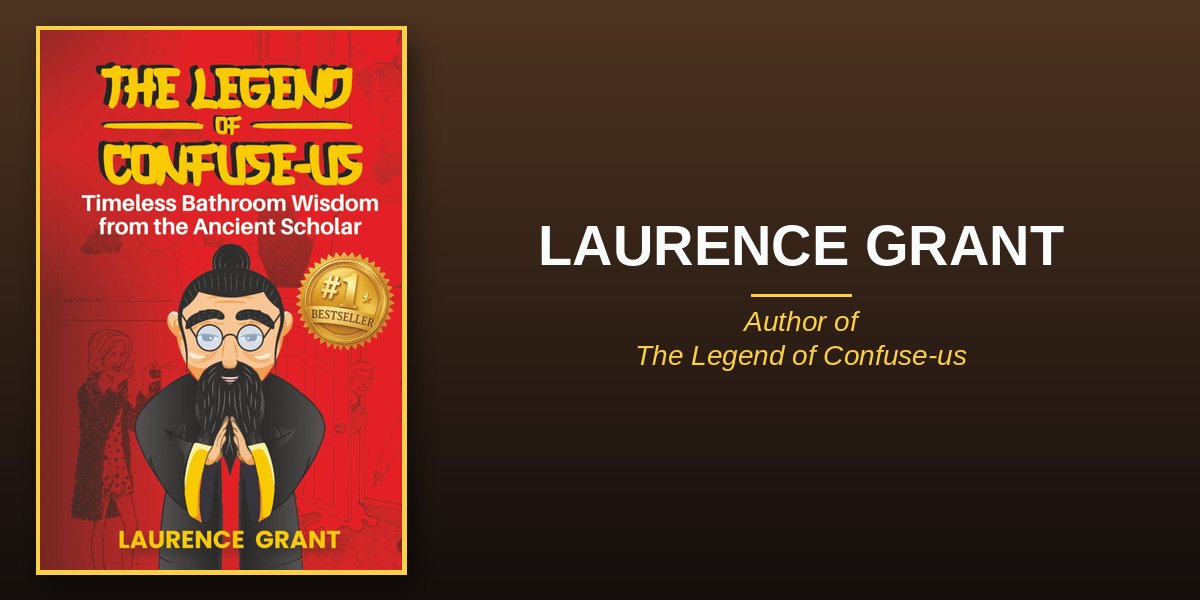
Laurence Grant, author of the hardcover humor book The Legend of Confuse-us: Timeless Bathroom Wisdom from the Ancient Scholar, opens his book with a confession of that kind. He recounts a catastrophic toilet overflow at a relative’s oceanfront estate in Maine, in which the evidence washed ashore on a very fine Oriental rug. It was, he writes, his first and last visit to the estate. The lesson he takes from it is the one the utilities take: what goes down must actually go away.

The book, published in September 2025, is built around an invented ancient philosopher named Confuse-us, a fictional contemporary of Confucius who delivers bathroom etiquette in rhyme. One of his imagined teachings applies equally to wipes, diapers, sanitary products and anything else that is not on the three-item list:

Thou shalt not cloggeth thy toilet drain unless thou wants to do some plumbing.

It is silly, but the sage has the order of events right. The clog comes first and the plumber second.

Check the flapper while you are at it

Plumbing etiquette has a second front that gets less attention than clogs: the toilet that keeps running.

The Environmental Protection Agency says household leaks waste nearly one trillion gallons of water a year across the country. The average home loses more than 9,300 gallons a year to leaks, and about 9 percent of homes leak 50 gallons or more a day. A worn flapper in a toilet tank can leak thousands of gallons annually without making a sound.

The old advice is to jiggle the handle, and Grant’s book devotes a whole chapter to that move. It is a fine stopgap, but it is a stopgap. The EPA suggests a simple test: add a few drops of food coloring to the tank, wait ten minutes, and see whether color appears in the bowl. If it does, you have a leak. Flush right away to avoid staining the tank. The agency also recommends checking the flapper periodically and replacing it at least every five years. A replacement flapper is an inexpensive part, and the savings are real. The EPA says fixing easily corrected leaks can cut a water bill by about 10 percent.

A short list for your house

You do not have to wait for Congress. Here is what to do in the meantime.

Keep the three-item rule. Pee, poop and toilet paper. Everything else goes in the trash, including wipes, even those labeled “flushable,” along with diapers, sanitary pads, tampons, cotton balls and floss. Utilities regularly give this advice, and local public works departments across the country have been repeating it.

Put a lidded wastebasket in every bathroom. Guests do not know your plumbing. If there is no obvious place for a used pad or a wipe, the toilet is the only option left. A small basket with a lid, within reach, removes the temptation. This is the cheapest bit of hospitality a host can offer.

Keep a plunger where people can find it. A plunger in plain view is a sign of a prepared household. It also lets a guest fix a problem quietly instead of walking out and hoping nobody notices.

Read the package. When wipes eventually carry uniform labeling nationwide, trust it. Until then, treat the package with suspicion and the toilet with respect.

Test your tank. Do the food-coloring check once a year. It takes less time than a commercial break.

Small habits, large systems

It is tempting to think of infrastructure as something done by governments and large companies. Sewers say otherwise. They are a shared system that works only when millions of people make small decisions correctly. Each flush is a tiny vote for the common good, or against it.

The WIPPES Act will not solve everything. People will still flush things they should not. But a plain warning on the package is a good start, and it is hard to name another bill that has won the votes of both parties in both chambers while asking so little of anyone.

Meanwhile, the rule on the coaster has not changed. Pee, poop and paper. Everything else belongs in the trash, and the next person to use your bathroom will thank you for it.

The Legend of Confuse-us: Timeless Bathroom Wisdom from the Ancient Scholar, by Laurence Grant, is available on Amazon. More at confuse-us.com.

Sources: Senator Merkley’s office on Senate passage of the WIPPES Act (S. 1092, March 2026); INDA statement via Textile World (March 2026); Kent Reporter on Washington’s labeling law; U.S. EPA WaterSense, Fix a Leak Week.