Book Publishing Support for Authors at Every Stage

Writing a manuscript is one stage of a longer process. Turning that manuscript into a finished book requires editing, design, production, distribution, and promotion. Carol Publishing works with aspiring and established authors through each of these stages, offering book publishing services that adapt to the project instead of placing every author on the same track.

Some writers arrive with a completed draft. Others arrive with an outline and a clear idea. Both begin in the same place, which is a conversation about the goals of the book, its genre, and the readers it aims to reach.

What the Book Publishing Journey Looks Like

The journey usually starts with development. An author clarifies the central idea, defines the structure, and decides what the finished book should accomplish. Ghostwriting support is available for writers who have the material but not the time or training to shape it into chapters.

Editing follows development. Then design, then formatting. Cover design creates the first impression a reader forms. Interior formatting determines how comfortable the pages feel in print and on a screen. Production comes next, followed by distribution and promotion. Each stage depends on the one before it, which is why sequence matters in book publishing.

Why Editing Matters in Book Publishing

Editing is not a single task. It covers three distinct jobs, and each one serves a different purpose.

Developmental editing examines structure. The editor reviews pacing, chapter order, argument flow, and whether the book delivers what the opening pages promise. Copyediting works at sentence level. It corrects grammar, tightens phrasing, and fixes inconsistencies in names, dates, and terminology. Proofreading is the final pass. It catches typographical errors and layout problems before files go to print.

Quality editing improves clarity, consistency, and readability while keeping the author’s voice intact. A careful editor removes what distracts the reader and protects what makes the writing distinct. Authors keep ownership of their creative work throughout the process. Registration with the U.S. Copyright Office remains the author’s decision and the author’s right.

Distribution Across Print and Digital Platforms

A finished book reaches readers through distribution channels. Carol Publishing prepares titles for release on Amazon Kindle, Apple Books, IngramSpark, Kobo, Barnes and Noble, and Lulu. Each platform serves a different audience and applies different file requirements, pricing structures, and royalty terms.

Print and digital formats work together. Print editions suit readers who browse bookstores, buy gifts, or request library copies. IngramSpark connects print titles to retail and library ordering systems. Digital editions reach readers who prefer immediate downloads and adjustable text size. Audiobook production extends the same book to listeners who prefer to read during commutes, workouts, or travel.

Channel selection matters. A business book aimed at corporate buyers may need print availability for bulk orders. A romance series may perform better with a digital-first release. Matching format to audience is part of planning in book publishing.

Marketing, Branding, and Author Visibility

A published book still needs readers to find it. Marketing covers the work that happens around and after release, including listing optimization, review outreach, and promotional campaigns. Publicity focuses on media coverage, interviews, and features. Marketing belongs inside book publishing rather than sitting outside it as an afterthought.

Author branding gives the work a consistent identity across platforms. A clear author bio, a recognizable cover style within a series, and a steady presence help readers connect one title to the next. Author website design gives that identity a home. A website gathers book links, event dates, contact details, and an email list the author controls directly.

A Coordinated Process From Manuscript to Market

Separate vendors can handle separate tasks. Problems appear when the editor, the designer, and the distributor never speak to each other. Files get reformatted twice. Metadata changes between platforms. Launch dates slip.

Carol Publishing keeps these functions connected. Editorial, design, production, and promotional work run through one process, so decisions made during editing carry forward into design and distribution. A coordinated book publishing process reduces repeated work and keeps the schedule predictable.

Authors stay informed and involved in creative decisions. Transparent communication means the author knows which stage the project has reached and what the next step requires. Personalized guidance accounts for genre conventions, audience expectations, and the goals the author set at the start.

Services for Different Stages of a Project

Not every author needs full support. A writer with a polished manuscript may want cover design and distribution setup alone. Another may want a complete path from first draft to launch day. Carol Publishing works both ways, offering single services or comprehensive book publishing assistance.

Supported genres include fiction, nonfiction, memoir, biography, business, self-help, children’s literature, romance, mystery, fantasy, and poetry. Each genre carries its own conventions in length, cover style, pricing, and reader expectations. A children’s picture book and a business guide require different production decisions from the first conversation onward.

Book publishing in its current form gives authors more routes to readers than earlier generations had. Print, digital, and audio editions can run side by side. Retail and library systems accept independent titles. The tools exist, and the work lies in using them in the right order with clear information at each step.

Carol Publishing approaches book publishing as a partnership between the author and the team. Writers who want to review available services can visit Carol Publishing or reach the team through the contact page to discuss a manuscript, a concept, or a release plan.
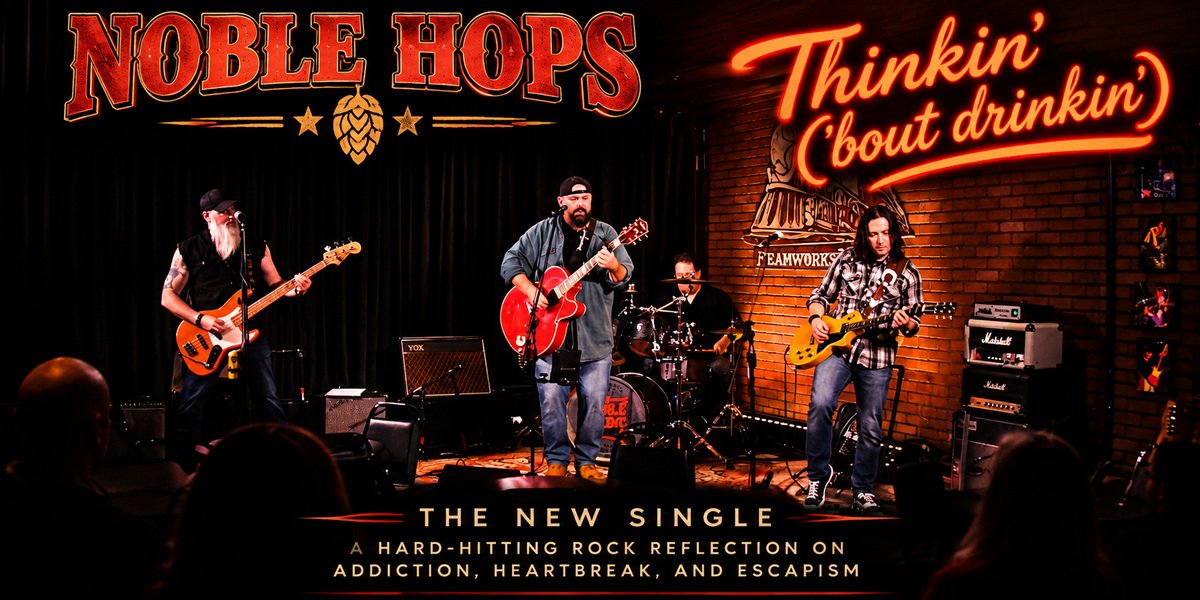

Noble Hops Turn Rock’s Favorite Drinking Tradition Into a Powerful Examination of Escapism on “Thinkin’ (‘Bout Drinkin’)”

By: Christopher Bennett

The Pittsburgh-area rock band transforms a familiar barroom narrative into a compelling reflection on addiction, emotional vulnerability, and the complicated relationship between music and mental health.

For decades, popular music has treated drinking as both a celebration and a solution. From country music’s whiskey-soaked heartbreak to rock’s legendary tales of excess, alcohol has functioned as a symbol of freedom, rebellion, and temporary escape. But there’s another side to that narrative, one that rarely makes it into the communal singalongs and raised glasses. It’s the moment when drinking stops making everything feel better and starts making everything considerably worse.

Pittsburgh-area rock band Noble Hops explores that uncomfortable territory with its latest single, “Thinkin’ (‘Bout Drinkin’),” released October 10, 2026, through Shady Lady Records in association with MTS Records. Built around a deceptively catchy lyrical premise and delivered through the band’s harder-edged rock identity, the track examines the emotional consequences of using alcohol to avoid confronting life’s problems.

What’s particularly interesting is that Noble Hops isn’t approaching this subject from a position of moral superiority. The band’s very name references hops, an essential ingredient in beer, and frontman Utah Burgess has been refreshingly candid about enjoying a few drinks himself.

That contradiction gives the song its authenticity.

Originally written nearly two decades ago during Burgess’s tenure with B.U.M., the composition features music by Burgess and lyrics co-written with former bandmate Marty Roppolo. Its revival in 2026 arrives at a time when discussions about mental health, addiction, and emotional wellness have become increasingly prominent across popular culture.

The song’s central idea is immediately recognizable: sometimes the things people turn to for relief become the very things making their lives more difficult.

The opening verse places listeners inside the perspective of someone already losing control. The narrator is drinking straight from the bottle, following it with beer, and discovering that intoxication has loosened more than his inhibitions. His words become reckless, his behavior deteriorates, and his sense of self begins slipping away.

Rather than romanticizing the situation, Noble Hops presents it as the beginning of an emotional unraveling.

Then comes the chorus:

“Now I’m thinkin’, ’bout drinkin’ / And I’m drinkin’, to keep from thinkin’.”

It’s a clever piece of songwriting, but its effectiveness extends beyond wordplay. The repetition mirrors the cyclical nature of the behavior being described. Drinking becomes a mechanism for escaping uncomfortable thoughts, while the consequences of drinking create even more reasons to seek that escape.

There’s something unsettling about how easily those words could function as a traditional barroom singalong. Removed from their context, they’re almost playful. Within the larger narrative, however, they describe an increasingly desperate psychological trap.

That tension between accessibility and emotional darkness is one of the composition’s most compelling qualities.

Musically, “Thinkin’ (‘Bout Drinkin’)” represents Noble Hops leaning into its harder rock sensibilities. Burgess handles lead vocals and electric rhythm guitar, Tony Villella contributes electric rhythm and lead guitar, Johnny “Sleeves” Costa supplies bass, and Brad Hurlburt anchors the recording on drums.

Recorded at Rattle Clack Studio, the track was engineered, produced, mixed, and mastered by Jazz Byers, with Burgess serving as co-producer. The band’s guitar-driven framework places the material firmly within rock’s traditional vocabulary, while the lyrics introduce a level of emotional vulnerability that challenges the genre’s familiar associations with swagger and excess.

That juxtaposition is important. Rock music has historically celebrated the freedom to behave recklessly, but Noble Hops asks what happens when reckless behavior becomes something a person can no longer control.

The song’s second verse brings that question into sharper focus.

The narrator remembers a woman who promised to love him and remain by his side. But when he finally sobers up, she’s gone. There’s no elaborate confrontation or dramatic explanation. The relationship has simply collapsed while he was too consumed by his own behavior to recognize what was happening.

It’s a striking reversal of one of popular music’s most familiar narratives. Instead of drinking because a relationship has ended, the narrator discovers that the relationship has ended because of his drinking.

The consequences are personal, painful, and impossible to dismiss.

Burgess has explained that the song reflects his awareness of how alcohol can become a form of self-medication for unresolved emotional struggles. While the track doesn’t attempt to offer clinical explanations or straightforward solutions, it acknowledges the complicated relationship between substance use and mental health.

That connection makes the October 10 release date particularly meaningful. Coinciding with World Mental Health Day, the single arrives as a musical contribution to a broader conversation about emotional distress, destructive coping mechanisms, and the importance of recognizing when temporary relief has developed into something more dangerous.

There’s also a wider cultural significance to the song’s perspective.

Across contemporary music, artists have increasingly embraced vulnerability as an essential component of their creative identities. Emotional openness is no longer confined to acoustic ballads or introspective singer-songwriter material. It has become central to conversations across genres, from hip-hop and electronic music to country and rock.

Noble Hops brings that sensibility into a distinctly traditional rock setting, demonstrating that familiar musical structures can still accommodate relevant and emotionally complicated stories.

Perhaps most effectively, the band avoids offering an artificially reassuring conclusion.

The narrator doesn’t suddenly achieve sobriety, repair his relationship, or announce a transformative realization that neatly resolves his circumstances. Instead, the song returns to its central anxieties, including his fear that intoxication might reveal aspects of his personality he’d rather keep hidden.

That unresolved ending reflects an uncomfortable reality: recognizing destructive behavior isn’t necessarily the same thing as overcoming it.

And that distinction gives “Thinkin’ (‘Bout Drinkin’)” much of its emotional credibility.

The track also raises an interesting question about the relationship between entertainment and accountability. Popular music has long celebrated excess because excess makes for compelling stories. But what happens when those stories are told from the perspective of someone living with the consequences rather than enjoying the temporary thrill?

Noble Hops doesn’t reject rock’s history. Instead, the band interrogates one of its most persistent traditions, replacing celebration with reflection while retaining the genre’s directness and rebellious attitude.

For a group whose identity is connected so closely to beer culture, it’s a particularly revealing choice.

Ultimately, “Thinkin’ (‘Bout Drinkin’)” is compelling because it finds emotional complexity within a straightforward musical premise. Its memorable chorus, accessible narrative, and serious subject matter demonstrate how an established rock formula can communicate something more substantial than another invitation to party.

The Verdict: Noble Hops delivers a thoughtful, emotionally resonant single that challenges rock music’s long-standing romance with intoxication. By examining the relationship between escapism, addiction, and personal responsibility, “Thinkin’ (‘Bout Drinkin’)” offers a different perspective on one of popular music’s most enduring subjects.

In a musical landscape filled with songs encouraging listeners to forget their troubles for another night, Noble Hops offers something considerably more meaningful: a reminder that eventually, the music stops, the bottle empties, and the things we were trying to escape are still waiting for us.

And sometimes, facing those things is the most rebellious act of all.

Alexandra John Are Back With Theatrical Pop Energy With Latest Release ‘OH LA LA!’

Romance has inspired countless pop songs, but Alexandra John understand that the search for love isn’t always particularly romantic. Sometimes it’s awkward, frustrating, dramatic and just a little ridiculous. Their single “OH LA LA!” embraces those contradictions, turning the experiences of a hopeless romantic into something playful and theatrical.

The Nashville-based twin duo have spent years developing a musical identity that draws from different generations of pop, soul, funk and dance music. Rather than committing to one particular era, they enjoy finding ways to bring familiar influences into their own songwriting.

That approach has helped them build a catalog that feels connected by personality rather than a single musical formula.

With “OH LA LA!”, the inspiration came from an expression almost everyone recognizes. The French phrase can communicate excitement, admiration, surprise or disappointment, depending on how it’s delivered. Alexandra John were drawn to those contrasting meanings and how naturally they reflected the experience of navigating modern dating.

For someone who genuinely wants to find love, the process can involve plenty of anticipation alongside repeated disappointment. It’s that emotional back-and-forth that gives the song its character.

Alexandra John wanted to capture a similar emotional intensity without simply reproducing the original sound. Instead, they explored a theatrical pop-rock direction that allowed the frustration and desire behind the lyrics to feel larger than life.

It’s an interesting development for artists whose previous releases have already demonstrated considerable musical variety.

“Lonely Night,” which has accumulated more than 190,000 Spotify streams, remains one of their most recognized tracks. “Love Like This” has also attracted more than 150,000 plays, helping introduce their music to a growing audience.

Elsewhere, “Thank U 4 Caring” and “The World’s Winking At You” demonstrate their interest in exploring different emotional perspectives.

The latter takes inspiration from finding encouragement in everyday moments, offering a more optimistic outlook than the romantic uncertainty explored through “OH LA LA!”

That contrast is part of what makes their catalog interesting.

Alexandra John don’t approach every song with the same emotional intention. Some celebrate connection, others explore loneliness, while their latest material finds room for humor and exaggerated frustration.

Their experience extends beyond the recording studio, too.

The duo have opened for David Archuleta during his West Coast tour, while a remix of their single “Taking Off” reached the Top 10 of the UK Pop Club chart.

Those achievements reflect their ability to connect with listeners across different musical settings, from live pop performances to dance-oriented releases.

With “OH LA LA!”, Alexandra John brings another influence into that growing musical world.

The song captures something familiar about modern relationships: the desire for a meaningful connection doesn’t disappear simply because finding one becomes exhausting.

Instead of dwelling entirely on disappointment, the duo turns those feelings into an opportunity for drama, humor and musical experimentation.

For Alexandra John, romance doesn’t have to be perfect to make an entertaining story. Sometimes the confusion, anticipation and frustration are exactly what make it worth writing about.

https://open.spotify.com/track/5gE8yH5Wt19uShA107hN8d?si=de25e4ebca1645a2

A First-Time Author Guide From AMZ Professional Publishing

Most first-time authors underestimate the same thing. They plan carefully for the writing and barely plan at all for everything that comes after it. The manuscript gets finished, and then the questions start. Who edits this. What should the cover look like. How does a book end up on a retailer’s shelf. Who tells anyone it exists.

AMZ Professional Publishing, an independent book writing, publishing, and marketing service provider, works with writers at exactly that moment. The guidance below covers what debut authors tend to wish they had known earlier.

Prepare the Manuscript Before Anyone Else Sees It

A manuscript that arrives clean gets better editorial work for the same money. Before handing a draft to anyone, read it start to finish without making changes. Note where attention drifts. Those sections are usually the ones that need structural attention rather than line-level polish.

Decide what the book is for. A clear answer to that question makes every later decision easier, from cover direction to category placement. A memoir written to preserve family history and a memoir written to reach a broad readership are different books, even with identical events inside them.

Resist the urge to edit your own work into the ground. Writers lose perspective on their own prose. Book editing and proofreading by someone outside the project finds problems the author cannot see anymore.

Understand What Self-Publishing Actually Involves

Self-publishing means the author holds the decisions and the responsibilities. There is no acquisitions team, no in-house production department, and no publicist assigned by default. That independence is the appeal. It is also the workload.

Self-publishing services exist to carry the technical weight without taking the decisions away. Through professional book publishing services, an author can access ghostwriting services, manuscript editing, custom book cover design, book formatting services, publishing preparation, and professional book marketing services while still signing off on every choice.

Timelines deserve honest expectations. Production runs on a schedule, and quality editing in particular cannot be rushed without consequence. Authors who build in time rather than racing toward a launch date tend to end up with stronger books.

Protect the Work and Keep the Rights

Copyright exists the moment a work is fixed in tangible form. Registration is a separate step, and it strengthens an author’s position if a dispute ever arises. AMZ Professional Publishing provides copyright registration assistance for writers who want that protection formalized before release.

Read any agreement carefully before signing. An author should understand who owns the manuscript, who owns the cover art, how royalties are paid, and what happens if the working relationship ends mid-project. Writers working with AMZ Professional Publishing retain ownership of their books and their royalties according to the terms they agree to.

Choose Services That Fit the Genre and the Budget

Genre drives production needs. Children’s books require illustration and image-led layout. Business books need positioning that speaks to a professional audience. Biographies and memoirs need structural editing and careful handling of real people. Fiction needs a cover that signals the right shelf instantly.

First-time authors do not need every service on the menu. The practical approach is to identify the weakest link in the project and spend there first. For a subject-matter expert who struggles with prose, that is ghostwriting. For a confident writer with a plain draft, it is design and formatting.

Plan Promotion Before the Book Is Finished

Marketing started after publication is marketing started late. Build an author presence while the manuscript is still in production. Collect early readers. Line up people willing to review honestly at launch.

Promotion work can include advertising, review campaigns, social assets, book trailers, author websites, and press outreach. The right mix depends on the genre and the audience, not on what worked for someone else’s book.

Authors weighing their options can contact AMZ Professional Publishing to discuss where their project stands and which services would make the most difference.