

A Life Rooted in Service
Dr. Tahir Majeed’s career spans medicine, writing, broadcasting, and community work. Yet, through every phase, one theme repeats: care shaped by conscience. Over the decades, he has moved between examining rooms, care facilities, and television studios, carrying the same conviction that people are at the center of all good work.
Born on September 24, 1957, in Quetta, Pakistan, Majeed entered medicine out of both curiosity and a sense of responsibility. He earned his MBBS degree before adding an MBA, a choice that surprised some of his colleagues. To him, it made sense. He believed that healing required not only clinical skill but also an understanding of how systems function and fail. That interest in both science and structure would later define much of his professional path.
From the Clinic to Care Leadership
When Majeed relocated to the United States, he began working directly in elder care, a field that, in his words, “tests not only the hands but the heart.” Starting at the floor level, he learned the rhythms of caregiving: how routines, tone, and attention to detail shape a resident’s day. Over time, his experience grew into administration, not out of ambition but necessity; someone had to make sure the system matched the compassion shown by the staff.
Today, as the Administrator of August Healthcare at Leewood in Annandale, Virginia, Majeed oversees a center that combines medical care with emotional presence. The facility specializes in rehabilitation and memory support, and its leadership reflects the same dual focus. Staff describe him as a visible presence, walking hallways, talking to families, and noting small changes that others might overlook. The policies he implements often stem from those observations rather than from spreadsheets or directives.
The Intersection of Faith and Healing
Faith, for Majeed, has always been a quiet companion to his medical work. It shapes his understanding of care not as a transaction but as a duty. He often says that healing has two halves: one for the body, one for the spirit.
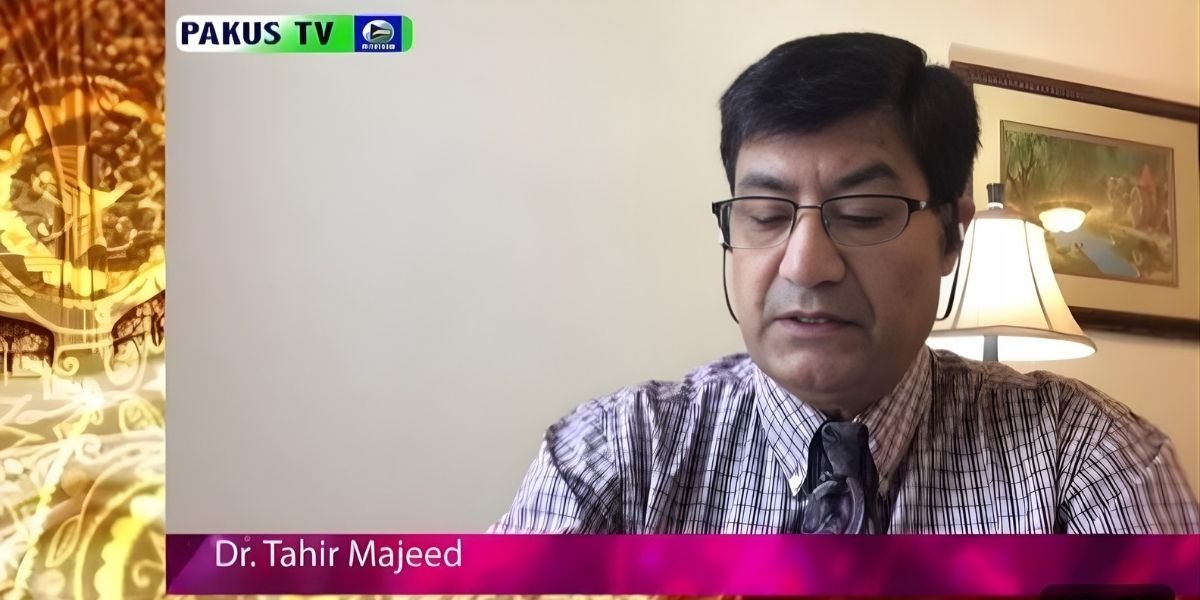
This view extends into his public voice. His television program, Zindagi Banam Bandagi (“Life Dedicated to Service”), began as a modest weekly broadcast on PAK US TV and has grown into a global platform. The show blends faith-based reflection with practical advice, touching on topics such as patience, kindness, and purpose. Its tone is conversational rather than prescriptive, less sermon, more reflection.
The program now reaches audiences across Pakistan, the United States, and around the world. Viewers tune in not for spectacle but for stillness. Majeed’s appeal lies in his ability to speak plainly about things people already know but often forget: gratitude, balance, and the small ways faith can guide daily life.
Writing as Reflection
Parallel to his medical and media work runs another thread, writing. Majeed’s book Zindagi Banam Bandagi expands on the same ideas as his broadcast, exploring devotion as a daily practice rather than a distant goal. His poetry collections, including Din, Des aur Dil (“Day, Homeland and Heart”) and Nawa-e-Tahir (“Voice of Tahir”), trace the experiences of migration, belonging, and emotional endurance.
Critics often note that his poetry is not abstract. It stays close to the ground, the way a patient’s room feels at dusk, the silence after a prayer, the memory of a distant home. Canadian psychiatrist and Urdu author Dr. Khalid Sohail once called him “a poet of hijr and hijrat,” separation and migration. The phrase captures both his subjects and his tone. Majeed writes from the space between worlds, East and West, science and faith, without choosing one over the other.
Through essays and verse alike, he treats words as a form of healing. Where medicine repairs the body, writing steadies the mind. It gives readers, especially those in the diaspora, a vocabulary for longing and resilience.
Influence Through Media and Mentorship
Outside of his formal roles, Majeed has become an informal mentor for many younger professionals in healthcare and community work. His social media presence, particularly through the Zindagi Banam Bandagi Facebook page, has grown to more than 200,000 followers. Yet, unlike many digital influencers, his online tone remains unhurried. He posts reflections, short verses, and notes of gratitude.
During the COVID-19 pandemic, those posts took on special weight. While misinformation spread rapidly, his updates focused on clarity and calm, reminders about hygiene, empathy, and patience. Many followers responded not just to the information but to the reassurance behind it.
Colleagues in eldercare describe him as someone who bridges generations, encouraging younger administrators to see policy as service rather than hierarchy. His mentorship extends beyond professional advice. He often tells students that “good work outlasts recognition,” a line that echoes both his faith and his philosophy.
A Voice Across Borders
What distinguishes Dr. Majeed’s public presence is its reach across cultural and linguistic boundaries. Urdu remains the language of his poetry and television program, but the themes resonate far beyond Pakistan or the Pakistani-American community. Audiences in the Middle East, Canada, and parts of Europe follow his broadcasts online, forming a network of viewers who find in his discussions something universal, a reminder of shared ethics in an often-divided world.
His role as a global communicator does not rely on celebrity but on trust. That trust, built over years, rests on consistency: the same calm tone, the same modest approach to big questions. Whether speaking about healthcare or spirituality, he avoids slogans and speaks from experience.
Balancing Many Roles
Looking across his career, it is tempting to separate his identities: the physician, the administrator, the poet, the preacher. But for Majeed, these roles overlap rather than compete. Each informs the other. His medical training brings precision to his writing; his faith adds patience to his management style; his poetry gives depth to his broadcast. Together, they form a portrait of a professional who treats life itself as an ongoing dialogue between reason and empathy.
What keeps that balance, he often says, is humility. Medicine teaches it through uncertainty; poetry, through emotion; and faith, through surrender. In combining them, he aims not for grandeur but for balance, a life that serves quietly but persistently.
Legacy of a Gentle Voice
After more than forty years of work across continents, Dr. Tahir Majeed’s legacy may be measured less by institutions than by influence, the kind that changes how people think about care, compassion, and responsibility. He has shown that a physician’s reach can extend beyond the clinic, that a poet’s words can ease more than hearts, and that teaching need not end when the lecture does.
He continues to lead, write, and speak with the same steadiness that has defined his career. For him, the goal has never been fame or numbers, though his audience spans continents. It has always been to bring meaning into the practice of living, through medicine, through language, and through faith.
Disclaimer: The views and experiences shared in this article are based on the life and career of Dr. Tahir Majeed. The content is intended for informational purposes only and does not constitute medical, legal, or professional advice. While the article reflects Dr. Majeed’s personal perspectives on medicine, faith, and mentorship, it should not be considered a substitute for professional guidance in these fields. The information provided does not represent the views of any affiliated organizations or institutions.