Katherine Thompson, the Six-Year-Old Who Already Owns the Runway

By: Olga Amraie, Producer, The LA Fashion Show

An exclusive interview with the winner of the Best Kids Fashion Award at the Los Angeles Fashion Show.

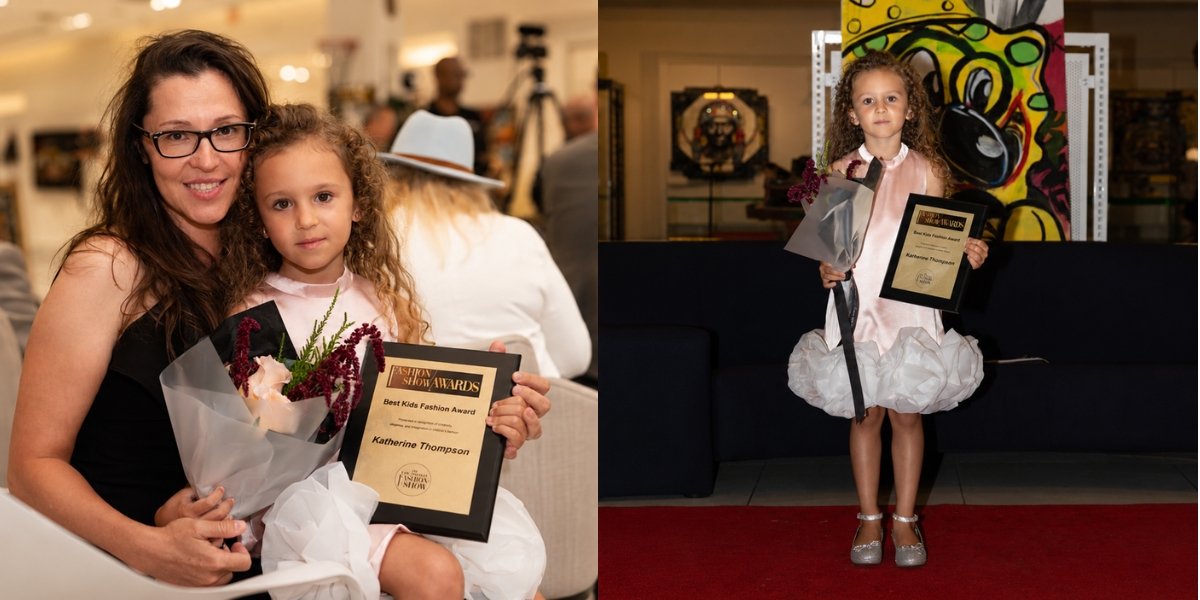
When the name Katherine Thompson was called at the Fashion Show Awards ceremony, the room understood immediately. This was not simply a sweet moment in children’s fashion. It was the recognition of a child who, at just six years old, has already built a real track record on the runway, in front of the camera, and on the stage.

Katherine received the Best Kids Fashion Award for her confidence, individual presence, and natural connection with an audience, qualities that are rare even in adult professionals. I had the privilege of speaking with Katherine’s mother to learn the story behind the win. And along the way, Katherine herself answered one very important question.

Interview With Katherine’s Mother

Q. Olga Amraie: Katherine has been on the runway since May 2025, just over a year ago. Where did it all begin?

Katherine’s mother: We noticed very early that Katherine was drawn to beautiful clothes, posing, and movement. She was never shy in front of the camera, quite the opposite. Near a camera, she became even more self-assured. What makes her special is that she doesn’t just pose. She feels the mood. She understands when to be elegant, playful, serious, or joyful. At such a young age, she already has a natural ability to connect with the lens and with the people watching her.

Q. Olga Amraie: She has been working with a number of LA-based designers. Tell me about that journey.

Katherine’s mother: Each project has been its own school. Katherine has walked for Tatiana Nikitina, Charlie Gram, Kiki Wang, Felicia Dillon, Mechelle Hooper, Tiara Donyale, Parvesh Jai, and Sonia Smith-Kang, among others. She has appeared at LAFW, Lumiere in Culver City, TFL: The Fashion Life Tour, Bridal Fashion Week Los Angeles, the Lady Like Foundation Fashion Show, BET Weekend Swim, and Kiki Wang’s Lunar New Year Runway Show. The most memorable was Lumiere, a stunning location, exceptionally professional in every detail. She still talks about it.

Q. Olga Amraie: Fashion is only one part of Katherine’s world. What else does she do?

Katherine’s mother: She trains every single day. Rhythmic gymnastics, ballet, ballroom and Latin dance, hip-hop, taekwondo, tennis, football, vocal, drawing, French language, and both theater and modeling school. Gymnastics takes the most time, with competitions in addition to regular training. But across everything, the goal is the same: discipline, confidence, coordination, and joy. We never want her to feel pressure. We want her to feel inspired.

Q. Olga Amraie: Katherine is also represented by Paloma Model and Talent Agency and has experience in film and television. How does she handle the difference between the runway and the camera?

Katherine’s mother: The runway is fast: walk, look, pose, exit. A film set requires patience, concentration, and the ability to repeat a scene many times. She has worked in advertising for children’s clothing, bicycles, and toys; in a feature film; in vertical projects; in television series; in theatrical productions; and in a musical. Each format teaches something different. Fashion gives her elegance and confidence. Film gives her imagination and emotion. We believe both make her a more complete young artist.

Q. Olga Amraie: What gave Katherine the win for Best Kids Fashion Award?

Katherine’s mother: I believe she won because she carries a particular light onto the stage. She is very young, but she already has confidence, elegance, and individuality. She doesn’t just wear a look, she brings it to life. In children’s fashion, the audience always senses when a child is genuinely happy and secure. Katherine has that authentic energy. She smiles with her eyes, she listens, she learns, and she always gives her best. I also believe the jury saw her potential. This award recognizes not only what she has already done, but who she is becoming.

Katherine Speaks

I asked Katherine one question directly, and her answer was perfectly her own.

Olga Amraie: Katherine, what would you say to a girl your age who wants to try modeling or acting but is scared?

Katherine: Don’t be scared. Just try. And smile, because smiling makes everything easier.

Six words. No hesitation. That is who Katherine Thompson is.

A Star in Progress

Katherine’s fashion icon is Cindy Crawford. Her dream is to play the lead role in a feature film, to show, as she puts it, everything she can do. She prepares for each runway appearance with a deep breath in and a slow breath out. What keeps her calm before the cameras and the crowds? Her own words: belief in herself, and the desire to make the audience happy.

At six years old, Katherine Thompson has already walked for nine designers, appeared at more than a dozen major fashion events, worked across film, television, theater, and commercial production, trained daily across eleven disciplines, and won the Best Kids Fashion Award at the Los Angeles Fashion Show. She is represented by Paloma Model and Talent Agency and is, by every measure, already a professional.

The Fashion Show Awards recognized something real. The only question now is how far she will go, and if May 2025 is any indication, the answer is clear: very far indeed.

How Svaha USA Clothing Stands Out in Comfort and Style

By Kate Sarmiento

There is a very specific kind of disappointment that happens in fitting rooms, and almost nobody talks about it honestly because the clothes technically fit, the zipper closes, and the mirror says everything looks “fine,” yet the whole experience still feels strangely off, like the outfit belongs to a completely different person who somehow enjoys networking brunches and beige sweaters with no personality attached to them.

A lot of people have spent years wearing clothes that felt close enough instead of actually right, not because they lacked options, but because fashion has a habit of deciding who people are before they even get dressed. Certain prints get pushed toward men, certain colors get softened for women, and entire personalities disappear the second clothing brands decide what is “marketable,” which gets exhausting after a while because people eventually stop shopping for joy and start shopping for whatever feels safe enough to wear in public without explanation.

That is part of why Svaha USA connected with so many people so quickly, because the brand never built itself around trends that expire every six weeks anyway. Instead, it focused on recognition by creating dresses with pockets covered in constellations, organic cotton pieces inspired by science and storytelling, and prints that usually never survive the approval process inside traditional fashion meetings, where somebody always decides women apparently only want florals forever.

The emotional reaction people have to that kind of clothing is immediate because recognition changes the experience of getting dressed in ways people do not always expect. A woman sees a math-themed dress and suddenly remembers being the only girl in her robotics class. A father buys matching family clothing covered in stars because his daughter has spent years talking about becoming an astronaut. Someone in their fifties buys a glow-in-the-dark constellation dress simply because they are tired of dressing like personality has an expiration date.

The clothes stop feeling decorative once that connection happens because they start feeling personal instead, and confidence shifts almost immediately when people feel represented instead of managed. Researchers spent time examining how clothing affects psychological processes and behavior, and people consistently reported stronger feelings of confidence, attentiveness, and self-assurance when what they wore aligned with their identity and perception of themselves (Source: Critical Debates HSGJ, 2025).

That makes complete sense because nobody walks naturally in clothing that feels fake, and people know the difference faster than brands think they do.

Fashion Has Spent Years Editing People Down

There is something strangely repetitive about walking through most clothing stores because the colors repeat, the cuts repeat, and even the personality repeats until every rack starts looking like somebody copied the same woman fifty times and handed her slightly different cardigans.

Meanwhile, actual people are much stranger than that in the best possible way because they garden on weekends and play role-playing games on Tuesday nights, or they work corporate jobs while secretly collecting fossils, astronomy books, or obscure mushroom field guides that would probably confuse half their coworkers.

Jaya Iyer, the fashion merchandising PhD behind Svaha USA, started the company after struggling to find science-themed clothing for her daughter, who was obsessed with space and wanted astronaut apparel that actually existed for girls. That blend of academic training and real industry expertise is exactly why Svaha’s prints are accurate, intentional, and not just decorative. Somehow, after decades of innovation, the fashion industry still managed to act surprised by the possibility that girls might enjoy science, which sounds ridiculous when said out loud because it is ridiculous.

The long-term effect becomes subtle but damaging because kids learn quickly which interests get celebrated publicly and which ones quietly disappear from clothing aisles altogether. Adults are not immune either because plenty of women still get pushed toward fashion that feels “acceptable” instead of interesting, while plenty of men avoid prints or colors they genuinely like because somebody convinced them personality should stop at navy blue polos forever.

Then a brand comes along and creates dresses with pockets featuring seabed exploration artwork or nebula-inspired prints, and suddenly people remember clothing can actually say something fun again without feeling childish or forced.

Comfort changes when self-consciousness leaves the room, which probably explains why people become fiercely loyal to brands that genuinely commit to size-inclusive fashion instead of treating larger sizes like an afterthought hidden online under “extended sizing.” Consumers consistently report feeling more positive toward brands that reflect realistic body representation and inclusive sizing because people know when they are being included sincerely and when they are simply being tolerated for marketing reasons (Source: International Journal of All Research Education & Scientific Methods, 2024).

Organic cotton matters for similar reasons because people do care about breathability and softness, especially when clothing is tagless and sensory-friendly, but emotional comfort plays a role, too. People relax differently in outfits that do not make them feel like they are auditioning for approval all day, and that shift becomes obvious in small ways, like someone reaching for the same dress repeatedly because it feels easy instead of emotionally exhausting.

The Best Compliments Usually Start With “This Feels So Me”

There is a reason people get emotionally attached to certain outfits, and it usually has nothing to do with trends or price tags because the attachment comes from recognition instead. It is the dress with pockets someone keeps wearing three times a week because it somehow feels reliable. It is the dinosaur-print button-down that gets compliments in grocery store checkout lines from complete strangers who suddenly want to talk about Jurassic Park for five minutes.

Clothing becomes memory faster than people realize because outfits attach themselves to moments, confidence, and identity almost immediately. Retail conversations tend to obsess over aesthetics and seasonal trends while regular people are standing in front of mirrors trying to answer a much simpler question: “Does this actually feel like me?”

The answer arrives quickly because people can usually sense when they are dressing for themselves and when they are dressing for an imaginary version of acceptability that does not even make them happy.

A lot of that comes down to permission because seeing identity reflected in clothing gives people permission to stop editing themselves down into something easier to package. That is especially true for people who spent years believing their interests were too nerdy, too feminine, too intellectual, or too unusual to wear openly without explanation.

Then they find matching family clothing covered in dragons, or a constellation dress that glows in the dark, and suddenly getting dressed feels fun again instead of transactional.

Fashion became painfully serious for a while because every outfit started sounding like a LinkedIn profile, with neutral tones, “quiet luxury,” and the same oversized blazer copied endlessly across social media until nobody looked remotely distinguishable from each other anymore.

Meanwhile, people are craving personality again because shared interests create emotional connection faster than trend cycles ever will. Someone wearing a Sakura Starlings Twirl Dress is probably going to notice another person wearing one from across the bookstore immediately, and that tiny moment matters more than people think because humans are constantly searching for familiarity, community, and signs that somebody else understands them too.

Wear the Thing That Feels Like You

There is a strange kind of freedom that shows up when clothing stops feeling like a compromise because people stand differently in outfits that reflect who they actually are. They stop tugging at sleeves constantly, they stop second-guessing every choice, and they stop dressing for imaginary critics who probably are not paying attention anyway.

That is the thing brands keep missing when they reduce representation to marketing language because feeling seen changes behavior, comfort, and confidence in ways that are impossible to fake. It changes how long someone stays in a fitting room debating whether they are “allowed” to wear something joyful, interesting, or unapologetically personal.

Svaha USA built an entire community around the idea that people should not have to shrink their personalities to fit into clothing racks. Whether it is plus size clothing made from organic cotton, dresses with pockets that are actually functional, or matching family clothing designed around prints people genuinely care about, the larger idea stays consistent because clothing should feel like recognition instead of correction.

The right outfit does not magically transform someone into a different person, but it often helps people stop pretending to be one. That shift is small and immediate and surprisingly hard to fake, and for the people who spent years shrinking their interests to fit inside a clothing rack, it tends to feel less like a fashion moment and more like a quiet exhale. That feeling outlasts trends, and it is exactly the kind of thing a brand either builds itself around from the beginning or never quite figures out at all.

Beverly Hills Fashion Week 2025 Launches with First California Casting in Beverly Hills

By: UFIRST Production

The road to Beverly Hills Fashion Week 2025 officially began last week, as organizers hosted the first California casting in the heart of Beverly Hills. Held at the boutique of designer Anahit Fashiondrug, the event brought together a mix of emerging talent, digital creators, and beauty queens, offering a glimpse into the caliber and diversity of the upcoming season.

The casting was powered by Tammy Barr and Edgar Saakyan, co-founders of Beverly Hills Fashion Week, a project that has garnered attention for its fusion of elegance, innovation, and inclusivity.

Designer Anahit Fashiondrug, who graciously welcomed the team into her Beverly Hills showroom, was one of last season’s featured designers—closing the previous edition of the fashion week with her signature bold femininity and dramatic silhouettes. Her continued support of the platform highlights the sense of creative community that BHWFW is known for cultivating.

“Anahit was one of the standout designers of last season,” said Edgar Saakyan. “Her boutique provided the perfect atmosphere for our first casting of the year. We’re thankful for her support and continued friendship.”

Unlike traditional castings that focus solely on measurements and walk, this event focused more on personality, presence, and alignment with the fashion week’s identity. The casting brought together not only models, but also influencers, creatives, and public figures whose voices and platforms align with the mission of Beverly Hills Fashion Week.

Among the notable guests and participants were Sayda Word, a respected media personality in the world of pageantry, and Ofir Korsia, the reigning Miss Universe Israel 2024, who added a touch of international flair to the occasion and symbolized the global network that the platform continues to foster.

“Our goal is to identify more than just beautiful faces,” said Tammy Barr, founder of GoldBarr and co-director of the fashion week. “We’re looking for individuals with something to say—models, creators, and ambassadors who bring meaning and magnetism to the runway.”

The casting also marked the beginning of what will be a multi-phase journey leading up to the main event in October 2025, with additional castings and pop-up fashion experiences anticipated for the summer in key cities such as Miami, Las Vegas, and Los Angeles.

As the organizers continue to finalize designer lineups and partnerships for the 2025 edition, this early casting suggests that Beverly Hills Fashion Week is not just returning—it’s evolving. With a growing international network, strong creative vision, and a team committed to excellence, BHWFW is positioning itself as one of the exciting fashion platforms on the West Coast.

“What we saw at this casting is the beginning of something exceptional,” said Saakyan. “From the models to the influencers to the energy in the room—it was everything we hoped for.”

And with October 2025 on the horizon, and a summer full of special projects in the works, all signs indicate a season where Beverly Hills Fashion Week not only showcases fashion—but sets the tone for where it’s heading next.


Published by Jeremy S.