How USA Book Publishing Company Supports Authors

Many writers reach a point where a draft exists but the path forward does not. Notes pile up. A manuscript sits unfinished. Book publishing services exist to close that gap between a private idea and a finished book that readers can buy, borrow, and review.

USA Book Publishing Company works with aspiring and established authors across the writing, editing, design, production, and promotion stages. The company positions itself as an author-services provider, which means the writer keeps creative control while a professional team handles the technical work that turns a manuscript into a published product.

What Book Publishing Services Include

Publishing a book involves more steps than people expect. Book publishing services usually begin with manuscript development, where the writer and the team shape the concept, structure, and voice. Editing follows. Then proofreading, cover design, interior formatting, printing, distribution, and marketing.

Each stage solves a different problem. Skipping one tends to show in the final product. A strong story with a weak cover struggles to attract browsers. A beautiful cover wrapped around an unedited manuscript draws poor reviews. The sequence matters because readers judge a book on several signals at once.

How Ghostwriting Turns Ideas Into Manuscripts

Not every author writes. Some have deep expertise, a lived experience worth recording, or a clear creative concept, but limited time or confidence on the page. Professional ghostwriting addresses that directly. A ghostwriter interviews the author, gathers material, and drafts the manuscript in a voice that reflects the author’s own.

The author stays involved throughout. Ghostwriting works through interviews, outlines, and chapter reviews, so the writer approves direction before the draft grows large. The method suits memoirs and autobiographies, where personal detail carries the book, and business or self-help titles, where the author’s methodology needs careful translation into readable chapters.

USA Book Publishing Company supports a wide genre range through its book publishing services, including fiction, nonfiction, memoirs, autobiographies, children’s literature, romance, fantasy, business, and self-help. Genre affects everything downstream, from chapter length to cover style to where the book gets listed.

Why Editing and Proofreading Change a Manuscript

Editors look at the whole book. They examine structure, pacing, argument, repetition, and clarity. A developmental edit might move a chapter, cut a subplot, or ask the author to expand a section that moves too quickly. Line editing then sharpens sentences and keeps the writing style consistent from first page to last.

Proofreading comes last. Proofreaders catch spelling errors, punctuation mistakes, inconsistent names, and formatting slips that survived earlier rounds. The Chicago Manual of Style and similar style references guide these decisions in professional publishing, which keeps choices consistent rather than arbitrary.

Readers notice errors. Reviews often mention them. Careful editorial work protects the author’s credibility, which matters for anyone publishing to support a business, a speaking career, or a professional reputation.

Cover Design, Illustration, and Interior Formatting

A cover does one job. It makes a stranger stop scrolling. Custom cover design considers genre conventions, typography, thumbnail legibility on retail sites, and spine requirements for print editions. A thriller cover and a children’s picture book cover follow different rules, and readers recognize those rules without thinking about them.

Interior formatting handles what happens after the reader opens the book. Margins, font size, line spacing, chapter openers, headers, and page numbers all affect reading comfort. Print and digital editions need separate treatment because an eBook reflows text while a printed page does not.

Book illustration adds another layer for children’s books, instructional titles, and nonfiction that benefits from diagrams. Illustrated projects require coordination between the writer, the illustrator, and the formatter so text and image sit together properly on every page.

Choosing Between Paperback, Hardcover, and eBook

Format affects cost, pricing, and audience. Paperback remains a practical choice for general trade titles and sells well through online retailers. Hardcover carries a premium feel and suits gift books, business titles, and authors who want a durable edition for events or libraries. eBooks reach readers instantly, cost nothing to reprint, and perform strongly in fiction categories where readers consume quickly.

Many authors release more than one format. Book publishing services help compare production costs, royalty structures, and distribution reach before the author commits. USA Book Publishing Company handles publishing assistance and distribution through its book publishing offering, which covers the production decisions that follow a finished manuscript.

Marketing a Book After Publication

Publication is a starting point. Book marketing services help readers find the title once it exists. Options include social media promotion, author website development, audiobook production, video book trailers, and digital advertising.

An author website gives readers a permanent home base that the author controls. Audiobooks open a format that continues to grow, according to industry data published by the Audio Publishers Association. Video trailers and paid digital campaigns help a new title compete for attention in crowded retail categories. These book publishing services work together rather than separately, and a planned sequence usually outperforms scattered effort. The company’s book marketing support focuses on building discoverability and author visibility over time.

Working With an Author Services Provider

The practical appeal of book publishing services lies in coordination. One team manages the handoffs between writing, editing, design, production, and promotion, which reduces the administrative load on the author.

USA Book Publishing Company structures its book publishing services around personalized plans, creative collaboration, and author involvement in decisions that shape the final book. Writers who want to discuss a project can reach the team through the company contact page.
How Carol Publishing Turns Manuscripts Into Published Books

A finished manuscript is not a finished book. Between the last line of a draft and the day a title appears on a retail page sits a long sequence of editorial, design, and production work. Carol Publishing, a professional book publishing company, guides independent writers, first-time authors, and experienced storytellers through that sequence. Editorial, creative, production, and promotional support sit in one place, so authors are not coordinating five separate vendors on their own.

Why Book Publishing Takes More Than Uploading a File

Uploading a document to a retail platform takes minutes. Producing a book that holds up beside traditionally published titles takes longer. A manuscript usually moves through evaluation, developmental editing, copyediting, proofreading, cover design, interior formatting, eBook preparation, and distribution setup before it reaches readers.

Each stage answers a different question. Evaluation asks what the manuscript still needs. Editing addresses how it reads. Design and formatting decide how it looks in a reader’s hands or on a screen. Skipping a stage rarely saves time, and it often shows up later in reviews. The book publishing services at Carol Publishing organize those stages into one plan with a defined order and clear handoffs.

What Professional Editing Changes

Editing is not a single task. Developmental editing works on structure, pacing, and argument, the parts of a manuscript that are hardest for an author to see after months inside the draft. Copyediting handles grammar, consistency, and word choice. Proofreading catches what everyone else missed.

The concern most writers raise is voice. A good editor sharpens how a sentence lands without rewriting the author out of it. Carol Publishing’s editorial work is built on that distinction. Language issues get corrected and structure gets clearer while the author’s style stays recognizable.

How Covers and Interiors Shape the Reading Experience

Readers judge a cover in about the time it takes to scroll past it. Genre convention does much of that work. A thriller cover signals something different from a memoir cover, and a design that ignores those signals makes a title harder to place on a crowded category page.

Interior formatting is quieter but just as noticeable. Consistent typography, sensible margins, clean chapter openings, and correct spacing keep a reader moving through the pages. Carol Publishing prepares print and digital interiors separately, since the two formats behave differently.

Self-Publishing With the Author in Control

Writers who want more say in their publishing decisions can work through self-publishing instead. Carol Publishing prepares paperback, hardcover, and digital editions, then supports distribution through Amazon Kindle, Apple Books, IngramSpark, Kobo, Barnes & Noble, and Lulu.

Authors keep ownership of their work. They stay involved in the decisions that matter, including cover direction, pricing approach, and release timing.

Building an Author Brand After Release

Publication is a starting point rather than a finish line. Discoverability depends on what happens afterward. The company’s book marketing services cover author branding, publicity, social media campaigns, influencer collaborations, and author website design.

A consistent author identity gives readers something to return to. A website collects the books, the biography, and the writing history in one place. Promotion aimed at a defined audience usually does more for a title than promotion aimed at everyone.

Choosing a Book Publishing Partner

Not every manuscript needs every service. A writer who already worked with a developmental editor may only need formatting and a cover. Packages that bundle services a book does not need cost money without improving the result.

A book publishing partner should explain what each stage does and why it applies to the manuscript in front of them. Carol Publishing builds recommendations around a book’s current stage, genre, goals, and budget, with coordinated project management and updates at each step. Authors who want to understand what their book actually requires can arrange a consultation before committing to a plan.

How Author Publishing Solution Guides Authors Through Book Publishing

Most books start the same way. Someone has a story, a lesson, or a body of knowledge worth sharing, and no clear idea of what comes next. The manuscript sits unfinished. The finished draft sits unread. Professional book publishing services exist to close that gap between a good idea and a book readers can actually buy.

What the Publishing Journey Actually Looks Like

Publishing a book is a sequence of separate jobs, and each one requires a different skill. It begins with concept development, where an author clarifies the subject, the audience, and the shape of the book. Writing follows. Then comes editing, which covers developmental work on structure and argument, line editing for clarity, copy editing for consistency, and proofreading as the final pass.

Design comes next. A cover has to signal genre and quality within seconds of a reader seeing a thumbnail. Interior formatting determines whether the book reads comfortably in print and on a screen. After production comes printing, distribution, and promotion.

Author Publishing Solution handles these stages as a connected process rather than a set of unrelated tasks. The company builds a publishing plan around the manuscript and the author’s goals, then carries it through editing, design, production, and launch.

Why Ghostwriting Matters for Authors With Ideas

Plenty of people have something worth saying and no practical way to write it. A surgeon with thirty years of case experience is not necessarily a prose stylist. A founder with a hard-earned business method may have notes, interviews, and talks, but no manuscript.

Professional ghostwriting solves this. A ghostwriter interviews the author, organizes the material, and drafts the book in the author’s voice. The ideas, the authority, and the credit remain with the author. The writing craft comes from someone who does it full time. For many nonfiction and memoir projects, this is the difference between a book that gets published and one that never leaves the outline stage.

Genres and Formats Covered

Author Publishing Solution works across fiction, nonfiction, memoirs, autobiographies, children’s books, fantasy, self-help, business titles, and eBooks. Each category carries its own conventions. Children’s books depend heavily on illustration and page count. Memoirs need narrative structure applied to real events. Business books need a clear framework a reader can use. Treating these the same way produces weak results, so the approach shifts with the genre.

Self-Publishing and Distribution

Self-publishing has opened real distribution to independent authors, but the technical side stops many writers cold. Files have to meet platform specifications. ISBNs have to be acquired and assigned correctly. Print and digital editions need separate preparation.

Book publishing services cover this groundwork. Author Publishing Solution supports distribution through Amazon KDP, IngramSpark, and Barnes & Noble, preparing both print and ebook versions so a title becomes available to readers across retail and library markets. Print-on-demand and bulk printing options give authors flexibility depending on whether they are supplying bookstores, running events, or selling online.

Building an Author Brand After Launch

A published book is a starting point, not a finish line. Audiobook production opens a format that keeps growing with commuters and multitaskers. Illustration strengthens children’s titles and visual nonfiction. An author website gives readers, event organizers, and media a single place to find the work.

Author Publishing Solution also offers Spotify publishing, article publishing, and book promotion. These services address visibility, which is the problem most independent authors underestimate. A book no one can find performs the same as a book that was never written.

Choosing a Publishing Partner

The useful question for any author is how much support they need and where they want to stay involved. Some writers want a finished manuscript handled from editing onward. Others want help only with cover design and distribution. A publishing partner should adapt to that rather than force a single package.

Authors who want to discuss a project can contact Author Publishing Solution to talk through their manuscript and publishing options.

Book Publishing Support for Authors at Every Stage

Writing a manuscript is one stage of a longer process. Turning that manuscript into a finished book requires editing, design, production, distribution, and promotion. Carol Publishing works with aspiring and established authors through each of these stages, offering book publishing services that adapt to the project instead of placing every author on the same track.

Some writers arrive with a completed draft. Others arrive with an outline and a clear idea. Both begin in the same place, which is a conversation about the goals of the book, its genre, and the readers it aims to reach.

What the Book Publishing Journey Looks Like

The journey usually starts with development. An author clarifies the central idea, defines the structure, and decides what the finished book should accomplish. Ghostwriting support is available for writers who have the material but not the time or training to shape it into chapters.

Editing follows development. Then design, then formatting. Cover design creates the first impression a reader forms. Interior formatting determines how comfortable the pages feel in print and on a screen. Production comes next, followed by distribution and promotion. Each stage depends on the one before it, which is why sequence matters in book publishing.

Why Editing Matters in Book Publishing

Editing is not a single task. It covers three distinct jobs, and each one serves a different purpose.

Developmental editing examines structure. The editor reviews pacing, chapter order, argument flow, and whether the book delivers what the opening pages promise. Copyediting works at sentence level. It corrects grammar, tightens phrasing, and fixes inconsistencies in names, dates, and terminology. Proofreading is the final pass. It catches typographical errors and layout problems before files go to print.

Quality editing improves clarity, consistency, and readability while keeping the author’s voice intact. A careful editor removes what distracts the reader and protects what makes the writing distinct. Authors keep ownership of their creative work throughout the process. Registration with the U.S. Copyright Office remains the author’s decision and the author’s right.

Distribution Across Print and Digital Platforms

A finished book reaches readers through distribution channels. Carol Publishing prepares titles for release on Amazon Kindle, Apple Books, IngramSpark, Kobo, Barnes and Noble, and Lulu. Each platform serves a different audience and applies different file requirements, pricing structures, and royalty terms.

Print and digital formats work together. Print editions suit readers who browse bookstores, buy gifts, or request library copies. IngramSpark connects print titles to retail and library ordering systems. Digital editions reach readers who prefer immediate downloads and adjustable text size. Audiobook production extends the same book to listeners who prefer to read during commutes, workouts, or travel.

Channel selection matters. A business book aimed at corporate buyers may need print availability for bulk orders. A romance series may perform better with a digital-first release. Matching format to audience is part of planning in book publishing.

Marketing, Branding, and Author Visibility

A published book still needs readers to find it. Marketing covers the work that happens around and after release, including listing optimization, review outreach, and promotional campaigns. Publicity focuses on media coverage, interviews, and features. Marketing belongs inside book publishing rather than sitting outside it as an afterthought.

Author branding gives the work a consistent identity across platforms. A clear author bio, a recognizable cover style within a series, and a steady presence help readers connect one title to the next. Author website design gives that identity a home. A website gathers book links, event dates, contact details, and an email list the author controls directly.

A Coordinated Process From Manuscript to Market

Separate vendors can handle separate tasks. Problems appear when the editor, the designer, and the distributor never speak to each other. Files get reformatted twice. Metadata changes between platforms. Launch dates slip.

Carol Publishing keeps these functions connected. Editorial, design, production, and promotional work run through one process, so decisions made during editing carry forward into design and distribution. A coordinated book publishing process reduces repeated work and keeps the schedule predictable.

Authors stay informed and involved in creative decisions. Transparent communication means the author knows which stage the project has reached and what the next step requires. Personalized guidance accounts for genre conventions, audience expectations, and the goals the author set at the start.

Services for Different Stages of a Project

Not every author needs full support. A writer with a polished manuscript may want cover design and distribution setup alone. Another may want a complete path from first draft to launch day. Carol Publishing works both ways, offering single services or comprehensive book publishing assistance.

Supported genres include fiction, nonfiction, memoir, biography, business, self-help, children’s literature, romance, mystery, fantasy, and poetry. Each genre carries its own conventions in length, cover style, pricing, and reader expectations. A children’s picture book and a business guide require different production decisions from the first conversation onward.

Book publishing in its current form gives authors more routes to readers than earlier generations had. Print, digital, and audio editions can run side by side. Retail and library systems accept independent titles. The tools exist, and the work lies in using them in the right order with clear information at each step.

Carol Publishing approaches book publishing as a partnership between the author and the team. Writers who want to review available services can visit Carol Publishing or reach the team through the contact page to discuss a manuscript, a concept, or a release plan.

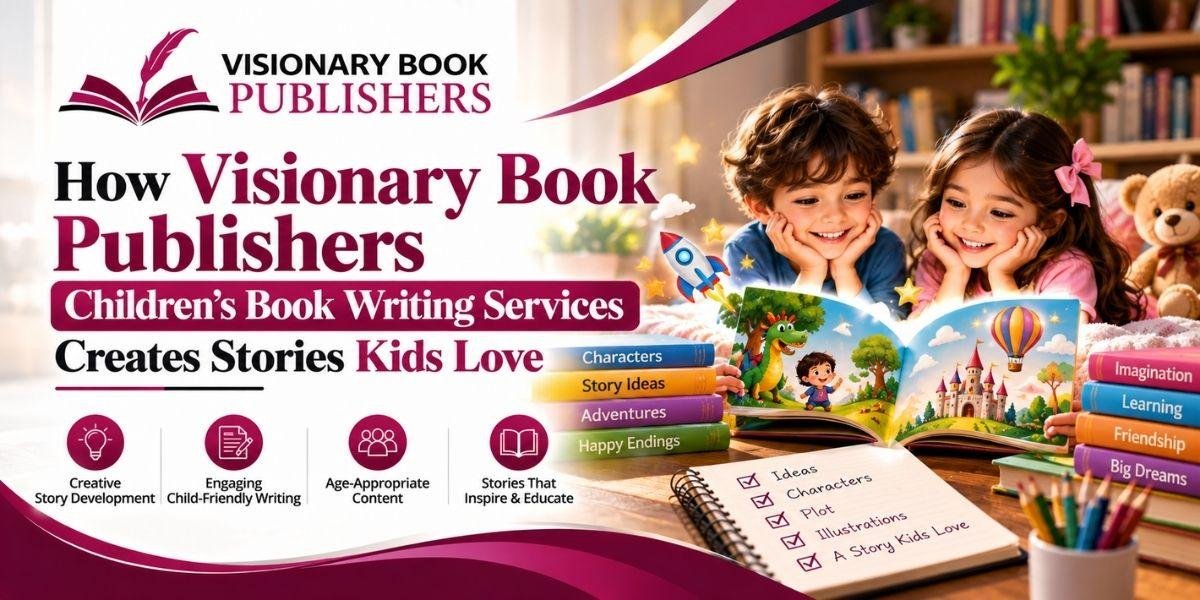
How Visionary Book Publishers’ Children’s Book Writing Services Create Stories Kids Love

By: Jay Kt

Some of the most powerful books in the world are also the shortest. A picture book of a few hundred words can teach kindness, spark curiosity or become a bedtime favorite that families read for generations. But writing for children is harder than it looks. Every word must earn its place, the rhythm must sound good aloud and the story must work hand in hand with illustrations. At Visionary Book Publishers, our children’s book writing services help parents, grandparents, teachers, counselors and aspiring authors turn treasured ideas into polished stories. Through our ghostwriting services, we bring structure, playfulness and professional craft to every page.

Why Writing for Children Is a Specialized Skill

Adults often assume that a short book must be quick to write. In reality, children’s writers must make careful choices about vocabulary, sentence length, pacing and emotional tone. A story for a three-year-old reads very differently from one for an eight-year-old. Humor, repetition, rhyme and page turns all play roles in keeping young readers engaged.

Children’s books also have a dual audience. The child listens and looks, while the adult reads aloud and often buys the book. The best stories delight both. That balance is one reason so many authors choose professional children’s book writing services rather than going it alone.

What Our Children’s Book Writing Services Include

Every project begins with your idea, whether it is a character you invented for your own children, a lesson you want to share or a real experience you want to turn into a story. A typical project may include:

  • A discovery session to understand your idea, target age group and message.
  • Story development, including characters, setting, conflict and resolution.
  • A drafted picture book manuscript with suggested page breaks.
  • Scheduled review points so you can shape the story as it develops.
  • Polishing for rhythm, word choice and read-aloud flow.
  • Optional illustration notes to guide the artist.

All deliverables, milestones and fees are set out in a written proposal before writing begins.

Working with a Children’s Book Ghostwriter

A children’s book ghostwriter writes the story while you remain the credited author. This collaboration is ideal if you have a wonderful idea but feel unsure about crafting it into a professional manuscript.

The process starts with listening. Your children’s book ghostwriter asks about your inspiration, the child you imagine reading the book and the feeling you want them to have when the story ends. From there, the writer develops a draft that captures your vision. You review it, suggest changes and approve the final version. The result is a story that reflects your heart, written with the skill of someone who understands how children read.

Crafting a Strong Picture Book Manuscript

A successful picture book manuscript has several key ingredients:

  1. A relatable main character, often a child or an animal, with a clear desire or problem.
  2. A simple, focused plot that builds to a satisfying moment.
  3. Language that is rich but accessible, with room for playful sounds or repetition.
  4. Page turns that create suspense or surprise.
  5. Space for the illustrations to tell part of the story.

That last point is important. In a picture book, words and art share the storytelling. Good manuscripts avoid describing everything the illustrations will show, leaving room for the artist to add humor, detail and emotion.

Choosing the Right Message

Many authors come to us with a lesson in mind, such as sharing, courage, honesty or dealing with big feelings. These themes are valuable, but the most effective children’s books deliver them through story rather than lecturing. We help shape your message so it emerges naturally from what the character experiences, allowing children to draw their own conclusions.

Rhyme or Prose?

Rhyming stories can be magical when done well, but rhyme is one of the hardest forms to master. Forced rhymes, uneven meter or awkward word choices can quickly pull readers out of the story. Our writers are comfortable with both rhyme and prose and will recommend the form that best suits your idea. Sometimes a story sings in rhyme; other times, lyrical prose gives it more room to breathe.

From Manuscript to Finished Book

Once your manuscript is complete, it is ready for the next stages: illustration, layout, cover design and publishing. Because Visionary Book Publishers offers support at every step, you can move smoothly from words to a finished book without searching for new providers. We recommend that authors publish under their own retailer accounts so they keep full control of their book and receive royalties directly.

Testing the Story Aloud

Before any manuscript is considered finished, we recommend reading it aloud, ideally to a child in the target age group. Listening reveals problems that silent reading misses: a sentence that trips the tongue, a joke that falls flat or a page that drags. Children are honest critics. If they lean in, laugh or ask to hear it again, the story is working. If they fidget, it may need trimming. We build this read-aloud check into our process and encourage authors to share early drafts with young listeners for feedback.

Who Uses Children’s Book Writing Services?

Our clients include parents capturing family stories, educators creating classroom resources, counselors addressing emotional topics, grandparents leaving a legacy and entrepreneurs building a children’s brand. Whatever your reason, professional children’s book writing services share the same goal: a story children want to hear again and again.

Bring Your Story to Life

If you have a story that deserves to be told, our children’s book writing services can help you shape it into a manuscript ready for illustration and publication. Once your words are ready, our book publishing services can guide your book through illustration, design and release. Contact Visionary Book Publishers to discuss your idea with our team and receive a written proposal.

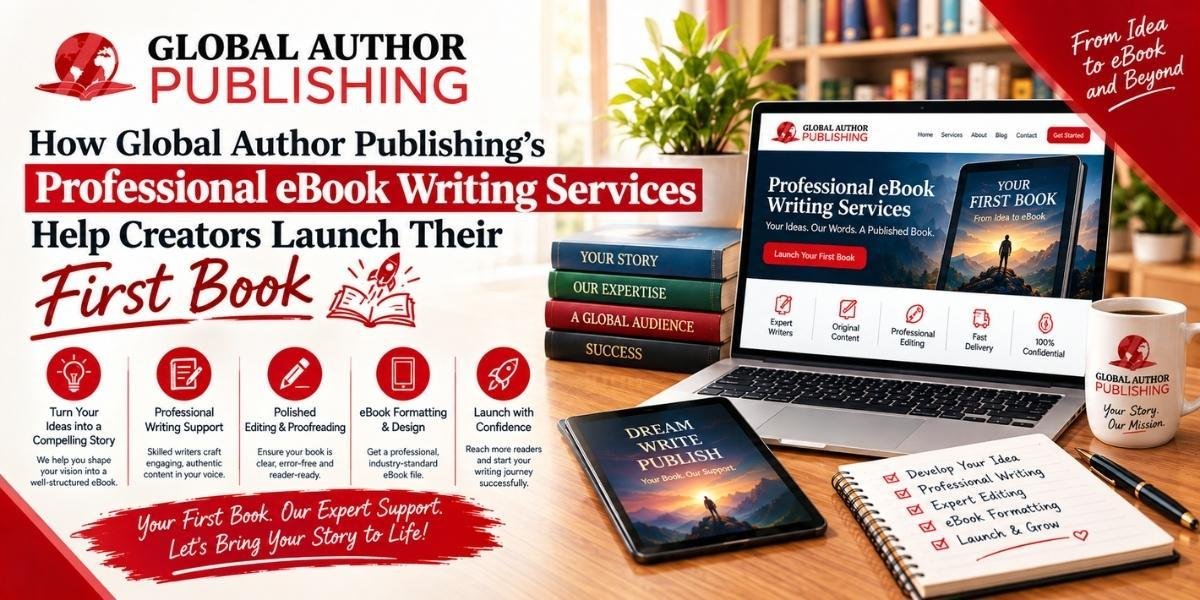
How Global Author Publishing’s Professional eBook Writing Services Help Creators Launch Their First Book

If you have built an audience online, you have already done the hardest part of launching a book. People trust your advice on fitness, food, travel, money, beauty or parenting, and many of them would happily pay for a deeper version of it. The challenge is time. Creators already produce content every day, and a book is a very different kind of project. That is why more of them are turning to professional eBook writing services for authors to package their expertise into a finished product.

Why an eBook Is the Perfect First Product for Creators

An eBook is fast to produce, instant to deliver, and easy to update. It can be sold as a premium guide or offered free in exchange for an email address, which turns followers on a rented platform into subscribers you actually reach. Unlike a post that vanishes from the feed in a day, a good eBook keeps working for years.

How Professional eBook Writing Services for Authors Work

The process is designed for busy people and usually follows six steps:

  1. Discovery: a call to define the goal, the audience, and the promise of the book
  2. Content audit: your best posts, videos, and captions are mined for ideas and structure
  3. Interviews: short recorded sessions fill the gaps and capture your personality
  4. Drafting: a writer turns the outline into chapters in your voice
  5. Revisions: you review, react, and request changes
  6. Editing: professional book editing services polish the final manuscript

The result reads like you on your best day, organized in a way your audience can actually follow.

Make It Look Scroll-Stopping

Your followers are used to beautiful visuals, so the book needs them too. Professional book cover design services create a cover that stands out as a tiny image on a phone screen. Book formatting services make sure text, images, checklists, and recipes look clean on phones, tablets, and e-readers alike.

Family and parenting creators sometimes take the next step into picture books, pairing children’s book writing services with artwork from children’s book illustration services.

Launch Like a Creator

Creators know how to build hype, and a book launch rewards those instincts. Book marketing services help plan the countdown content, waitlist, collaborations, and launch-day push. A short clip from book trailer services gives your audience something easy to share.

Every link in your bio needs somewhere to go. Author website design services build a landing page that sells the book and collects emails. SEO content writing services add blog posts that keep attracting new readers from search long after the launch posts have scrolled away.

Grow Beyond Digital

Once the eBook proves demand, expanding is simple. Online book printing services produce signed paperbacks for superfans, giveaways, and merch bundles. The audiobook services can record an audio edition, ideally in your own voice, since your audience already knows and trusts it.

Picking the Right Partner

Look for a team that understands creators, not just traditional authors. When comparing the book publishers, ask how they handle interviews, how many revision rounds are included, and who owns the final files. The book publishing company for a creator will move at your pace and keep your voice front and center.

Your Audience Is Ready When You Are

Your followers already come to you for answers. An eBook gives them a deeper, more organized version of what they love. Professional eBook writing services for authors make that possible without putting your content schedule on hold. Global Author Publishing creates e-books for emerging writers, indie authors, and experienced storytellers, and it offers a free author consultation to shape your first title.

Professional eBook Writing Services for Authors: From Ideas to Published Digital Books

Writing an eBook requires more than having a great idea. Turning knowledge, experiences, or creative concepts into a complete digital book requires planning, structure, writing expertise, editing, and professional production.

For many first-time authors, the biggest concern is whether the final book will truly sound like them. At the same time, many authors underestimate the amount of information, collaboration, and decision-making required throughout the writing process.

Professional eBook writing services for authors provide a structured collaboration between the author and publishing professionals. City Light Publishers describes its writing process through five key stages: research, outline, draft, edit, and polish, creating a clear workflow from the initial idea to the finished manuscript.

Stage 1: Research and Discovery, Turning Knowledge Into a Foundation

The first stage of professional eBook writing services focuses on gathering the information needed to create a strong manuscript.

For nonfiction authors, valuable content often already exists through:

  • Professional experiences
  • Presentations
  • Client conversations
  • Notes and documents
  • Previous articles or online content

For fiction writers, the foundation may include:

  • Story concepts
  • Characters
  • Themes
  • Tone
  • Important scenes

During this stage, authors provide their knowledge, experiences, and existing materials, while writers help identify the strongest ideas through conversations and research.

The author’s role is to provide availability and honest insight. The writer’s role is to ask the right questions, organize information, and create a clear direction for the book.

Stage 2: Building the Outline Before Writing Begins

A strong outline is one of the most important parts of the ebook writing process.

Many authors want to move quickly into drafting because writing feels like progress. However, a weak structure can create larger problems later.

A detailed outline helps determine:

  • Chapter organization
  • Main arguments
  • Story progression
  • Reader journey
  • Overall book direction

Before drafting begins, authors should carefully review:

  • Chapter order
  • Key ideas
  • Missing sections
  • Unnecessary content

A strong outline creates the foundation for an efficient writing process and reduces the need for major restructuring later.

Stage 3: Drafting the Manuscript With Professional Support

Once the structure is approved, the writing stage begins.

During this phase, a professional writer develops chapters while the author provides feedback and guidance.

The author’s role becomes focused on reviewing and refining:

  • Does this sound like my voice?
  • Is this story accurate?
  • Is this example stronger than another?
  • Does this section represent my ideas correctly?

City Light Publishers emphasizes communication and feedback throughout the drafting process, allowing authors to review and refine the manuscript instead of receiving a completed book without involvement.

For authors considering ghostwriting services, reviewing a sample chapter before committing to a full manuscript can help determine whether the writer understands their voice and message.

Stage 4: Editing and Refining the eBook

A first draft is only the beginning. Professional editing helps transform a manuscript into a polished book.

eBook editing services focus on improving:

  • Structure
  • Clarity
  • Flow
  • Consistency
  • Voice
  • Reader experience

City Light Publishers separates editing, proofreading, and formatting into different stages, following the proper order:

  1. Structural and line editing
  2. Proofreading
  3. Final formatting

This approach ensures that corrections and improvements are completed before the book moves into production.

Stage 5: eBook Production and Publishing Preparation

After editing is complete, the manuscript moves into production.

Professional eBook publishing services may include:

  • Kindle formatting
  • Digital retailer formatting
  • Cover design
  • Print interior preparation
  • Distribution setup

City Light Publishers supports distribution through platforms including:

  • Amazon KDP
  • Barnes & Noble
  • Kobo
  • Apple Books
  • Google Books
  • IngramSpark
  • Draft2Digital

For digital books, formatting requires special attention because eBooks are typically reflowable. Readers can adjust:

  • Font size
  • Screen size
  • Margins
  • Display settings

Professional formatting ensures the book remains readable across different devices and settings.

Important Questions Authors Should Ask Before Hiring an eBook Writing Service

Before beginning a writing partnership, authors should clearly understand the agreement and expectations.

Confidentiality and Credit

Authors should confirm:

  • Who receives the byline?
  • How is confidentiality handled?
  • Are personal details and research protected?

City Light Publishers states that it maintains complete confidentiality and that the author receives the byline. Authors should ensure these terms are included in their agreement.

Rights and Ownership

Ownership is one of the most important considerations when working with a professional writing service.

Authors should understand:

  • Copyright ownership
  • Publishing rights
  • Future audiobook rights
  • Translation rights
  • Second edition rights

City Light Publishers states that authors retain 100% ownership, rights, and royalties. Authors should carefully review agreements to confirm ownership terms before beginning a project.

Project Scope and Deliverables

A clear agreement should define:

  • Expected word count
  • Number of chapters
  • Revision rounds
  • Delivery schedule
  • Additional revision costs

Clear expectations help prevent misunderstandings and create a smoother collaboration between authors and writing professionals.

What Professional eBook Writing Services Cannot Replace

While professional writers can help organize, structure, and improve ideas, they cannot replace the author’s personal knowledge and experience.

A successful book requires:

  • Original insights
  • Authentic experiences
  • Valuable information
  • A clear purpose

A ghostwriter can help communicate expertise effectively, but the substance of the book must come from the author.

Additionally, a completed manuscript does not automatically guarantee book sales. Marketing, distribution, reviews, and audience-building remain separate parts of the publishing journey.

Understanding the Timeline for eBook Creation

Creating a professional eBook requires time and collaboration.

A full-length nonfiction manuscript typically takes several months from:

  • Research
  • Outline development
  • Drafting
  • Editing
  • Final production

Fiction projects may require additional time depending on length and complexity.

Authors should be cautious of promises that a complete professional manuscript can be created within only a few weeks, as a quality publishing process requires proper development and refinement.

Helping Authors Transform Ideas Into Professional eBooks

An idea is only the beginning of the writing journey. Creating a successful eBook requires structure, collaboration, editing, and professional preparation.

City Light Publishers provides professional eBook writing services for authors through a structured process designed to transform ideas into complete digital books.

From research and outlining to drafting, editing, formatting, and publishing preparation, a professional writing partner can help authors navigate the complex process of creating a reader-ready eBook.

For authors ready to turn their knowledge, experiences, or stories into a published digital book, choosing the right eBook writing company can provide the guidance and support needed to move from concept to completion.

How Professional Book Formatting Keeps Readers Engaged and Turning Pages

No reader has ever finished a book and praised its line spacing. Yet poor readability, cramped text, awkward spacing, inconsistent layout, and fonts that strain the eye quietly nudge readers to set a book down without ever being able to say exactly why. Formatting shapes the reading experience far more than most authors realize, working almost entirely beneath conscious notice, and that invisible influence can be the difference between a reader who finishes a book and one who drifts away halfway through.

This article explains how professional formatting keeps readers engaged, why readability operates below the level of conscious awareness, and how the experience of reading translates directly into the outcomes authors care about. It covers the small choices that add up to comfortable reading, the way good formatting reduces friction and fatigue, and how a professional service builds books that readers actually finish. For any author who wants their book not just opened but read to the end, formatting is a quietly decisive factor.

Readability Works Below Conscious Notice

The reason formatting is so easy to underestimate is that good formatting is invisible by design. When a book is well formatted, readers simply sink into the text and forget the page entirely, experiencing the story or the ideas without any awareness of the typography carrying them along. They never consciously register that the margins are comfortable, the line spacing is right, and the chapter breaks are clear; they just feel that the book is easy and pleasant to read.

Bad formatting works the same way in reverse. A reader rarely thinks “the leading is too tight” or “these margins are cramped,” but they feel the fatigue and friction those problems create, and that discomfort accumulates until they put the book down. Because the cause is invisible, the reader often blames the book itself or simply loses interest without diagnosing why. This is what makes readability so consequential and so easy to neglect: its effects are powerful precisely because they’re felt rather than seen.

The Small Choices That Add Up to Comfort

Comfortable reading is the product of dozens of small, deliberate decisions working together. Legible typography in an appropriate size, sensible line spacing that gives the eye room without wasting space, balanced margins, clear and consistent chapter openings, and a layout that lets the eye move smoothly down the page all contribute. Individually, none of these choices announces itself, but collectively they determine whether reading the book feels effortless or quietly tiring.

Getting these details right requires knowing how readers actually read and what supports sustained reading over many pages. Lumera Publishing attends to exactly these elements, formatting books so that the typography, spacing, and structure all work to keep a reader comfortable from the first page to the last. The aim is a book where nothing about the presentation gets in the reader’s way, where the formatting does its job so well that the reader never has a reason to notice it, and simply keeps reading.

Reading Comfortably on Every Device

For eBooks, readability carries an added challenge: the book has to be read comfortably, not on one fixed page, but across a wide range of screens and reader settings. A digital edition that looks fine on one device can become cramped or awkward on another, or fall apart when a reader increases the font size, and any of those failures pushes a reader to give up. True digital readability means the book holds together and stays comfortable, however and wherever it’s opened.

Lumera Publishing builds eBooks that reflow cleanly and remain readable across the devices and apps people actually use, while also meeting the technical specifications platforms require. That ensures the digital reading experience is as smooth as the print one, rather than being undermined by formatting that only works under specific conditions. For authors whose readers will encounter the book on phones, tablets, and e-readers, that cross-device reliability is an essential part of keeping those readers engaged rather than frustrated.

Why a Smooth Read Drives Better Results

Readability isn’t only about courtesy to the reader; it feeds directly into the outcomes that determine a book’s success. A reader who moves through a book comfortably is far more likely to actually finish it, and a reader who finishes is far more likely to leave a positive review and recommend the book to others. Conversely, a reader worn down by poor formatting often quits early, and an unfinished book rarely earns a good review or a recommendation.

Because reviews and word of mouth drive so much of a book’s visibility and sales, the quiet influence of formatting on whether readers finish has outsized consequences. A well-formatted book gives itself the best chance of being read to the end and spoken about afterward, while a poorly formatted one undercuts even strong writing. Investing in professional formatting is, in effect, investing in completion, reviews, and recommendations, the things that actually move a book, which is why it’s far from a cosmetic concern.

Formatting as Part of a Finished Book

Strong formatting works best as one part of a coherently produced book rather than an isolated fix applied at the end. A book that has been well written, carefully edited, and thoughtfully formatted presents a seamless experience to the reader, with each element supporting the others. Formatting is the stage that takes polished writing and turns it into a comfortable, professional reading experience, which is why it deserves the same care as the writing and editing that precede it.

Lumera Publishing handles book formatting for both print and digital editions and can pair it with editing, cover design, and publishing, so the whole book is produced to a consistent standard rather than assembled from mismatched parts. The result is a reader-friendly book that people are glad to keep reading, and one that gives the author’s words the best possible chance of landing. Authors who want a book that readers will actually finish can contact Lumera Publishing to discuss professional formatting.

About Lumera Publishing

Lumera Publishing is a full-service, fee-based book publishing company based in New York, USA. The company offers ghostwriting, editing, formatting, cover design, publishing, and book marketing services for authors across every genre, helping writers self-publish professionally while keeping 100% of their rights and royalties.

Learn more at lumerapublishing.com or call +1 (888) 477-8199. Media contact: info@lumerapublishing.com.