
Why More Professionals Are Embracing Neurodiversity-Affirming Practices, According to Chris Wenger

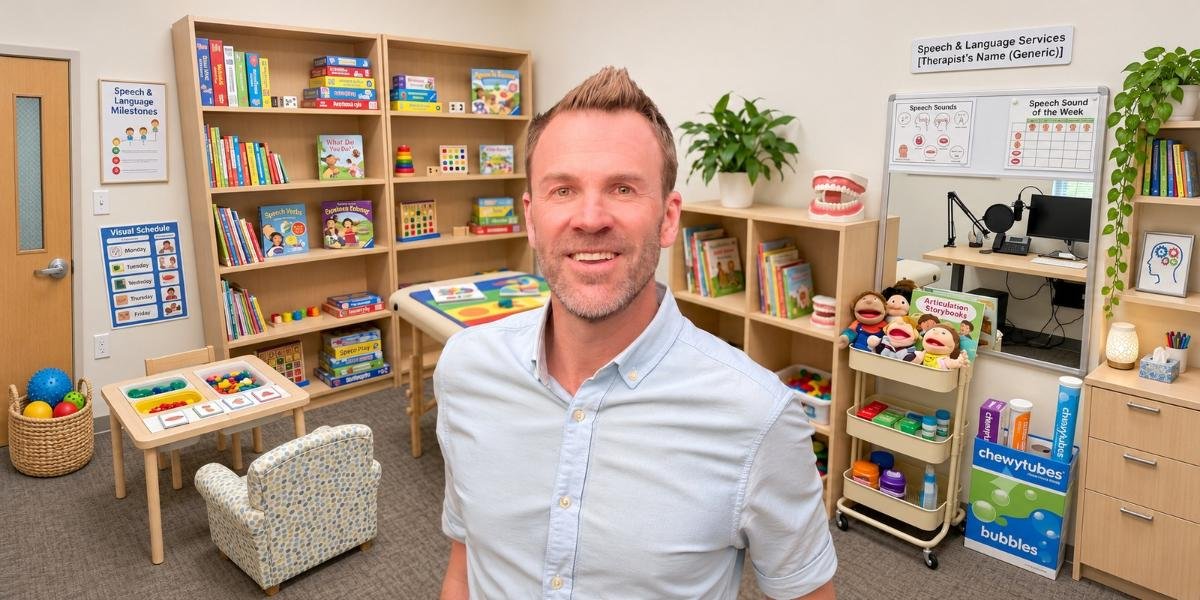
The Speech Dude founder on the shift reshaping therapy and education, and what it means for families searching for support
Something has changed in the way a growing number of therapists and educators talk about autism. The language is different. The goals look different. The starting question has moved from what is wrong and how do we fix it to who is this person and what do they actually need. Chris Wenger has had a front-row seat to that shift, and increasingly, a hand in driving it.
Wenger, M.S., CCC-SLP, is a speech-language pathologist with more than 25 years of experience and the founder of Speech Dude, an educational platform for clinicians, educators, and families. He has spent years helping professionals understand neurodiversity-affirming practices, an approach that has moved from the margins toward the mainstream of education and therapy. To understand why so many practitioners are embracing it, it helps to understand what they are moving away from.
For a long time, autism support was organized around a deficit-based lens. A student would be evaluated primarily on the gaps , and intervention would aim to reduce or reshape behaviors that looked different from the norm. Wenger, who has spent his entire career working with teens and tweens, much of it in public high schools , saw the limits of that model firsthand. The students in front of him had real strengths that the standard framework was not designed to see, and focusing narrowly on behavior often missed the reasons behind it.
Neurodiversity-affirming practice starts from a different premise. It treats neurological differences as part of natural human variation rather than problems to be corrected, and it prioritizes communication, autonomy, self-advocacy, and authentic connection. “Meaningful support begins with understanding,” Wenger says. “Neurodivergent individuals do not need to become someone else in order to succeed.” For many professionals, that reframe has been less a rejection of their training than an expansion of it.
Wenger is careful about how he makes the case, because he knows the terrain is contested. Conversations about masking, communication differences, and appropriate support have evolved rapidly, and professionals do not all agree on the answers. His role, as he sees it, is not to tell colleagues what to think but to encourage curiosity and a deeper understanding of neurodivergent people. That invitational tone is a large part of why his message has traveled so far.
A key driver of the shift, in his experience, has been the growing practice of listening directly to autistic individuals. Trained to focus on observable behaviors and measurable goals, Wenger found that autistic people were consistently describing experiences, masking, burnout, communication differences, support needs, that traditional approaches overlooked. As more professionals encountered those firsthand accounts, many began reexamining assumptions they had held for years. The lived experience of autistic people, long treated as anecdotal, increasingly informs how thoughtful practitioners work.
Research has moved in the same direction, and Wenger works where several perspectives meet: clinical experience, autistic insight, current evidence, and the practical realities families and educators live with every day. A speech-language pathologist with ADHD himself, he tends to focus less on changing behavior and more on understanding the reasons behind it. That framing resonates with professionals who entered their fields to help people and sensed that the older model was not always doing that.
For the professionals ready to make the shift, the practical challenge is knowing how. This is where much of Wenger’s work now lives. Through Speech Dude, he provides training and resources that make neurodiversity-affirming practice concrete rather than abstract. He also created DASEL, the Dynamic Assessment of Social Emotional Learning, a neurodiversity-affirming assessment framework built to help professionals better understand autistic and neurodivergent students instead of simply measuring them against a norm.
The movement he describes is not only professional. It is deeply practical for families, who are often the ones left searching for support that aligns with these values. Wenger repeatedly heard from parents who wanted help finding providers who genuinely understood neurodiversity-affirming approaches, a search that can feel overwhelming and isolating. That need led him, alongside his wife Jessie Wenger of Sensory SLP, to build NeuroAffirm Community and Directory, which connects families with affirming providers. , and to co-found NeuroAffirm Academy for ongoing professional training.
The stakes, in Wenger’s view, are high and concrete. When professionals, families, and communities better understand communication differences, support needs, strengths, and lived experiences, they create environments where autistic and neurodivergent individuals are far more likely to thrive. The reverse is also true. Environments built on misunderstanding ask people to spend their energy masking who they are rather than growing into who they could be.
For readers watching this shift from the outside, whether parents, teachers, or curious professionals, Wenger’s advice tends toward openness rather than overhaul. Start by listening. Stay curious. Reexamine assumptions when the evidence and the voices of autistic people invite you to. The larger movement he sees taking hold across education, healthcare, and disability communities is built, in the end, from exactly those individual shifts in understanding, repeated across enough people to change the whole conversation.
Professionals and families can explore neurodiversity-affirming training and resources through Speech Dude and find affirming providers through the NeuroAffirm directory. Follow Chris Wenger on Facebook, Instagram or Tik Tok @SpeechDude.
