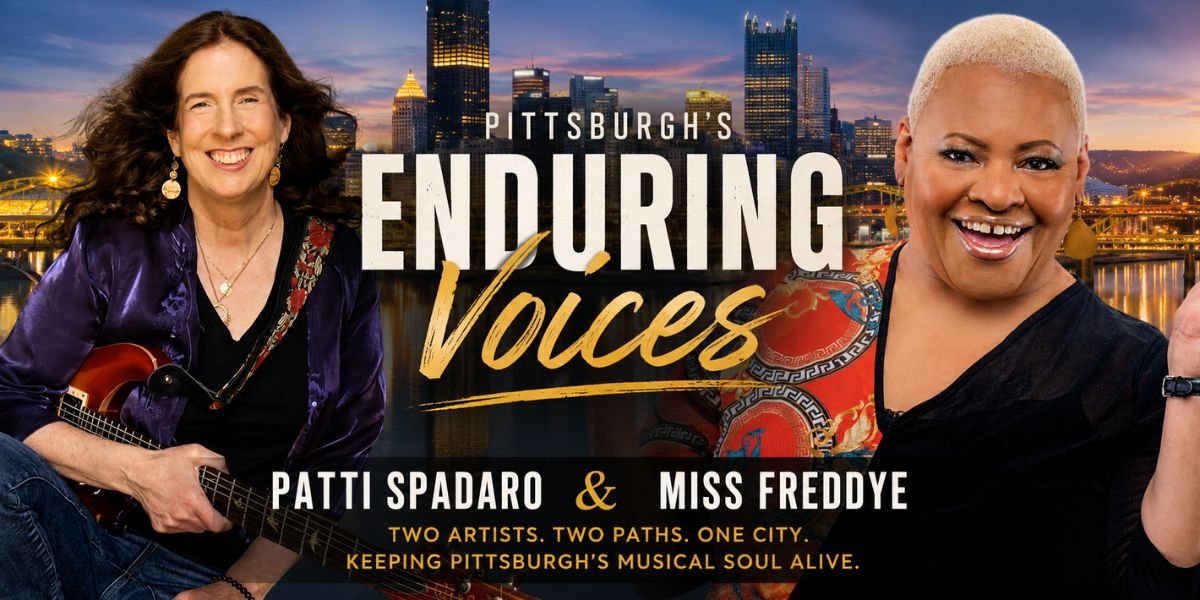
Pittsburgh’s Enduring Voices: Patti Spadaro and Miss Freddye Keep the City’s Musical Soul Alive

By Dylan Avery

Pittsburgh has always been a city that understands hard work. Built on steel, rivers, and resilience, it has also produced generations of musicians who embody those same qualities, not by chasing fleeting trends, but by building lasting careers rooted in authenticity. Two of the city’s most enduring musical ambassadors, Patti Spadaro and Miss Freddye, represent different corners of the musical spectrum, yet they share a common mission: creating music that uplifts, connects, and tells the truth.

Their sounds may differ, Spadaro’s flowing blend of rock, jam-band improvisation, and mindfulness-inspired songwriting contrasts with Miss Freddye’s deeply rooted, soul-stirring blues, but both artists have become cultural fixtures whose influence extends far beyond the stage.

For Patti Spadaro, music has never been confined to entertainment. It has become a vehicle for healing, exploration, and personal transformation.

A gifted guitarist with roots in classic rock, blues, and improvisational music, Spadaro began playing guitar at age eleven before earning a degree in Physics and later attending the prestigious Musicians Institute in Los Angeles. During an era when female lead guitarists remained a rarity, she forged her own path, touring throughout the western United States, performing with acclaimed bands, and opening shows for artists including Eddie Van Halen, Little Feat, and Melvin Seals & JGB.

But Spadaro’s career has evolved into something even broader.

Today, she balances performing with teaching college courses in yoga, meditation, and the innovative curriculum she developed called Mindfulness in Music. Her work reflects a philosophy that creativity and wellness are deeply intertwined, that music has the power not only to entertain audiences but also to help people reconnect with themselves.

That philosophy is beautifully captured in her recent single, “Mystic Misfit.” Built around warm guitar tones, relaxed grooves, and lyrics encouraging listeners to “meet me in the middle,” the song invites reflection in an age often defined by distraction. Rather than preaching, Spadaro creates space for listeners to slow down, breathe, and embrace authenticity.

If Patti Spadaro’s music encourages inward reflection, Miss Freddye’s work reaches outward, embracing audiences with warmth, honesty, and unmistakable soul.

Known throughout the region as “Pittsburgh’s Lady of the Blues,” Miss Freddye has spent years preserving one of America’s most enduring musical traditions while making it unmistakably her own. Her performances combine powerful vocals with genuine storytelling, honoring blues history while reminding listeners that its themes, love, hardship, perseverance, joy, and hope, remain timeless.

Blues has always been music born from experience, and Miss Freddye sings with the authority of someone who understands that deeply. Whether delivering a slow-burning ballad or an up-tempo blues shuffle, she brings emotional authenticity that cannot be manufactured.

Her impact extends well beyond performance.

As a mentor, advocate, and ambassador for Pittsburgh’s blues community, Miss Freddye has devoted herself to keeping the genre vibrant for future generations. Her collaborations with local musicians, festival appearances, and community engagement have made her one of the city’s most beloved musical figures. Every performance carries with it an appreciation for the artists who came before while creating opportunities for those who will follow.

Despite working in different genres, Spadaro and Miss Freddye share remarkable similarities.

Neither artist has built a career around commercial trends. Instead, both have cultivated audiences through consistency, musicianship, and genuine connection. They understand that music is less about image than communication.

Both women also represent the richness of Pittsburgh’s musical landscape. The city’s creative identity has never belonged exclusively to one style. Rock, blues, jazz, folk, Americana, and soul have long flourished alongside one another, supported by artists committed to their craft and communities.

Spadaro and Miss Freddye embody that tradition in complementary ways.

One channels introspection through expansive guitar melodies and mindfulness-inspired songwriting. The other transforms lived experience into blues performances that resonate with emotional honesty and timeless groove.

Together, they demonstrate that longevity in music is built not on chasing relevance but on remaining authentic.

In an industry often obsessed with the next big thing, Patti Spadaro and Miss Freddye remind us of something more enduring: that great artists continue growing, continue serving their audiences, and continue strengthening the communities that shaped them.

Pittsburgh’s skyline may have changed dramatically since the city’s steelmaking heyday, but its musical heartbeat remains steady thanks to artists like these. Through different voices and different styles, Patti Spadaro and Miss Freddye continue to prove that the Steel City’s greatest export has never been steel alone.

It has always been soul.
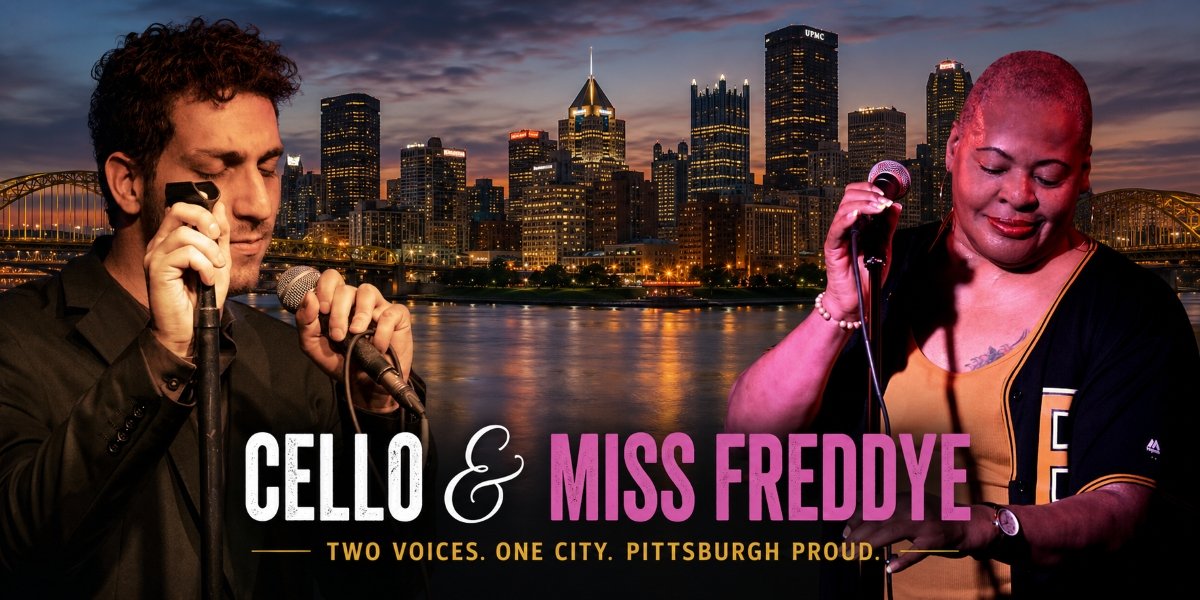
How Cello and Miss Freddye Show Pittsburgh’s Musical Range

By: Adrian Mercer

Pittsburgh has always been a city of reinvention. Once defined almost exclusively by steel mills and smokestacks, today’s Steel City is also known for its thriving arts community, where musicians continue to redefine what Pittsburgh sounds like. While no single artist could ever represent the region’s musical identity, two performers illustrate its remarkable diversity better than most: pop artist Cello and blues powerhouse Miss Freddye.

On paper, they couldn’t appear more different. One embraces contemporary pop production and modern songwriting, while the other carries forward one of America’s most enduring musical traditions. Yet both artists share something unmistakably Pittsburgh: authenticity, resilience, and a commitment to creating music that reflects real life rather than chasing fleeting trends.

A New Generation of Pittsburgh Pop

Cello represents a younger generation of Pittsburgh musicians who are proving that pop music can emerge from western Pennsylvania. His recordings combine polished production with emotionally direct songwriting, creating songs that balance commercial appeal with personal storytelling. Rather than imitating what’s popular, Cello has focused on developing an artistic identity built around memorable melodies, expressive vocals, and an evolving creative vision.

Like many artists coming out of Pittsburgh today, Cello benefits from a city that has quietly become fertile ground for independent musicians. Affordable creative spaces, passionate local audiences, and a supportive artistic community have allowed emerging performers to develop their craft without immediately relocating to larger entertainment hubs.

That independence shows in Cello’s work. His music carries the confidence of an artist willing to experiment while remaining accessible. Every release demonstrates growth, not only as a vocalist but also as a songwriter determined to connect emotionally with listeners.

Pittsburgh’s Lady of the Blues

At the opposite end of Pittsburgh’s musical spectrum stands Miss Freddye, affectionately known throughout the region as “Pittsburgh’s Lady of the Blues.” Her career has become one of the city’s most inspiring musical success stories, built not through overnight fame but through decades of perseverance, authenticity, and service.

Long before becoming one of western Pennsylvania’s blues performers, Miss Freddye first discovered music in church, where gospel taught her that every song should tell the truth. She entered the professional blues scene in 1996 with Blues Music Works under the direction of Big Al Leavitt before eventually forming Blue Faze, followed by Miss Freddye’s Blues Band and Miss Freddye’s Homecookin’ Band.

Over the years, her unmistakable voice has earned widespread recognition. Multiple Pittsburgh music honors, Blues Foundation nominations, and regional awards have affirmed what local audiences have known for decades, that Miss Freddye is one of the city’s defining musical ambassadors. Her performances are rooted equally in gospel conviction and classic blues tradition, producing a sound that is both timeless and unmistakably personal.

Perhaps even more impressive is the life behind the music. A longtime nurse, community advocate, charity supporter, and breast cancer survivor, Miss Freddye has consistently used her platform to give back. Whether supporting veterans, cancer awareness initiatives, domestic violence prevention, or local charitable organizations, she has demonstrated that an artist’s legacy extends well beyond the stage.

Where Innovation and Tradition Coexist

Despite their stylistic differences, Cello and Miss Freddye share a common thread. Neither artist relies on the image alone. Their music succeeds because it is grounded in genuine experience.

Cello speaks to audiences searching for connection in a rapidly changing world, crafting modern songs filled with vulnerability and hope. Miss Freddye reminds listeners that the blues remains as relevant today as ever because honesty never goes out of style. One looks confidently toward the future of independent music. The other preserves a tradition while continually proving it still has something important to say.

Together, they reflect the remarkable breadth of Pittsburgh’s music scene. It is a community where innovation and tradition don’t compete. They coexist. The same city that nurtures emerging pop artists also celebrates legendary blues performers. It is a place where creative freedom matters more than genre labels.

For decades, Pittsburgh has produced exceptional musicians across rock, jazz, classical, folk, country, hip-hop, blues, and pop. Artists like Cello and Miss Freddye continue that tradition in their own unique ways, reminding audiences that great music isn’t defined by style but by sincerity.

As Pittsburgh’s cultural reputation continues to grow nationally, these two artists stand as powerful examples of what makes the city’s music community so compelling. One offers the excitement of tomorrow. The other embodies the wisdom of experience. Together, they tell a story far bigger than themselves, a story of a city whose creative heart continues to beat as strongly as ever.

Whether through Cello’s contemporary pop sensibilities or Miss Freddye’s soul-stirring blues performances, Pittsburgh continues to prove that some of America’s most authentic music still comes from the place where three rivers meet and countless musical journeys begin.