Backgammon, Poker, and Who Really Changes the Rules: Game Night in Nuts To You

How Steve Weinstein Uses Board Games to Turn a Feud Into a Friendship in Nuts To You, Available Now

A lawyer and two squirrels sit down at a picnic table. Within minutes, each side accuses the other of cheating.

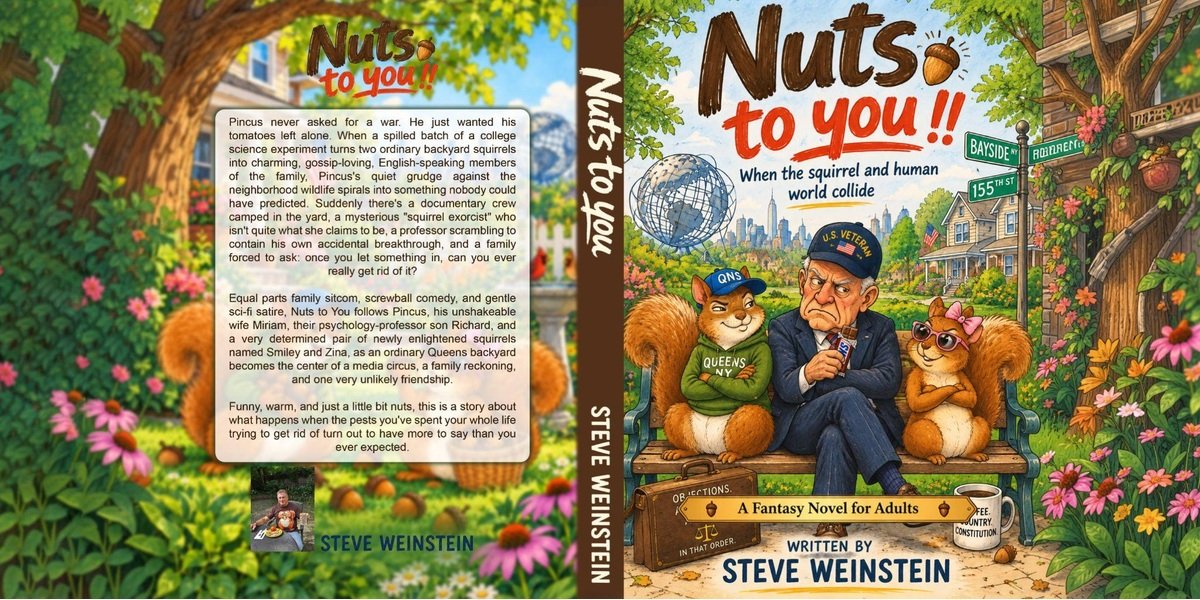
That is the scene that captures the spirit of Steve Weinstein’s comic novel Nuts To You, which is ready for anyone who has ever argued over the rules of a board game. Pincus Ballnick spends the first part of the book trying to chase squirrels out of his garden. Then two of them learn to talk, and in a moment of unusual softness he asks whether they would like to play backgammon. It is the smallest invitation in the novel, and the one that changes everything. Weinstein understands something every family knows: a game is one of the fastest ways to find out who somebody is.

You can learn a lot about a person by watching them lose: Who in your life is still keeping score?

The Invitation

The offer comes so quietly that hardly anyone notices. Dr. Radcliffe, eavesdropping from the basement, knows at once that it is the breakthrough he was hoping for. “How about I teach you how to play backgammon?” Pincus asks, in what the narrator calls a moment of unusual softness. For a man who has spent months in a cold war with the creatures in his yard, it is a warm gesture, and he would deny it if anyone asked. Over the course of the novel, that picnic table becomes the most important piece of furniture in Queens.

The squirrels, of course, pick it up instantly. Soon they are moving on to card games, betting berries and nuts as chips, and Weinstein enjoys the image of a retired lawyer counting acorns like a riverboat gambler. Richard watches from a distance and feels a little jealous that his father is spending more time with the squirrels than with him. He also takes notes, reminding himself to bring it up with his therapist. Weinstein’s comic instinct is at work here. The people who have trouble talking to each other can sit down together and be perfectly happy as long as there is a board between them.

Who Is Cheating Whom?

The best exchange arrives when Richard reminds his father how much he has enjoyed talking and playing games with the squirrels. “Yeah, but they cheat at cards and backgammon,” Pincus grumbles. Smiley and Zina shake their heads. “It’s the other way around,” Zina answers. “He’s constantly changing the rules as the game goes on. It’s confusing.” A few pages earlier, the narrator has already noted that the squirrels consider Pincus the man who taught them backgammon and then cheated them at poker. Anyone who has ever sat at a family board game will recognize both accusations.

Neither party admits guilt, of course. In another scene, Pincus tells the doctor that the little rascals cheated during a backgammon tournament, while Smiley, eavesdropping outside the basement window, thinks to himself that they never did. The reader is left to decide, and that is part of the fun. Every good game night has an unresolved argument about the rules, and Weinstein shrewdly notices that the arguments keep everyone coming back.

· Who in your family has always changed the rules halfway through?

· Would you rather win the game or keep the company?

Hundreds of Questions

Pincus’s curiosity has another side. Between hands, he peppers his new friends with questions. Do they have a social life? What do they do in their spare time? Can they tell time? Do they answer to anyone? Smiley admits that some of them are strange even by human standards. Their favorite, they say, is the last one: “Are squirrels mean to each other?”

The questions say more about Pincus than about the squirrels. A man who has spent his working life arguing with people who try to cheat him is fascinated by a society that seems to run on cooperation. He wants to know whether they get into disputes, whether they have to answer to a boss, and whether anyone is ever unkind. Weinstein slips a lot of feeling into what looks like a joke, and underneath the sarcasm is a man who is genuinely wondering whether there is a kinder way to live. Each question makes the lonely person behind the sarcasm a little easier to see.

Cards Too Small to Hold

Miriam later remembers that her husband planned to teach them pinochle but could not find a deck of cards small enough for the squirrels to hold. He even considered chess, although he was afraid they would beat him at that too. It is one of the sweetest details in the book, because it shows how seriously Pincus takes the project. He might as well have a syllabus, and he has a very real fear of losing to a squirrel. It is also a quiet reminder that friendship sometimes requires the right equipment.

The games keep turning up, always in unexpected shapes. Later in the story, a Scrabble set is abandoned when the squirrels start sniffing and licking the tiles, sure that they are a new kind of snack. The table has been set since the day Nuts To You reached readers, and anyone can pull up a chair at the picnic table to see who wins. A word of warning: the dice are loaded, the rules are subject to change, and the house is always in Queens.

And just like a game that turns on the final roll…

The story has a surprise ending you won’t expect…

A game can be an invitation…
A rule can be a matter of opinion…
A loss can be the start of a friendship…

In Nuts To You, the funniest fights happen over a backgammon board!

Author Name: Steve Weinstein; Book Title: Nuts To You; Published By: Author Path Publishers

Building a Life Together Through Care, Trust and Commitment

Letters to Tommi by British author Ryan Tate looks beyond the major milestones of a relationship to explore the qualities that helped Ryan Tate and Tuomas “Tommi” build a life together. Across the letters, Tommi is remembered as someone who enjoyed being around people, approached difficult situations thoughtfully, and took an active role in planning their future. These qualities appear in memories of everyday life as well as in the larger decisions the couple made about their relationship.

The writing also shows that partnership involved more than affection. Ryan recalls the practical decisions, moments of disagreement, periods of illness, and discussions about their future that gradually shaped their life together. Rather than presenting their relationship as effortless, the memories show two people learning how to manage the realities of being a couple while maintaining a strong sense of commitment to one another.

Finding a Way Through Disagreements

Ryan remembers Tommi as someone who generally preferred to think before reacting when difficulties arose.

During disagreements, Tommi would often step away, go for a walk, and take time to consider the situation. Ryan recalls him visiting his grandmother’s grave and talking through problems before returning with his thoughts settled.

That habit became one of the qualities Ryan most admired. Tommi did not always try to solve a disagreement immediately. Giving himself time to reflect allowed him to return to the conversation with a clearer idea of how the issue might be resolved.

Their relationship was not without arguments. Ryan remembers one particularly heated phone call after Tommi had returned to Finland, when work commitments prevented Ryan from accepting a proposed trip. Looking back, he recognises the importance of that experience and the choices they might have made differently.

The memories present disagreement as part of a real partnership rather than something that existed outside it.

A Natural Connection With Other People

Tommi’s social nature is another recurring element in Ryan’s memories.

His visits to the health spa provide a particularly vivid example. Tommi would swim, spend time in the sauna, and quickly become involved in conversations with other regular visitors. Ryan remembers people gathering around him to hear stories about Finland and enjoying the energy he brought to the afternoon.

The experience appears to have been typical of Tommi’s personality. He was comfortable speaking with people and seemed to have a natural ability to make those around him feel included.

For Ryan, that quality was part of what made Tommi distinctive. His presence was not limited to the relationship itself; he could also change the atmosphere of the spaces and groups he entered.

Turning Plans Into Practical Decisions

The couple’s discussions about their future reveal another side of their partnership.

Ryan and Tommi considered where they might eventually live, how their careers could be managed, and how they would remain connected with family. Because they were living across national borders, these questions also involved practical restrictions on how much time they could spend in one another’s countries.

Their response was to begin considering a legal partnership that could provide greater security for their future. Ryan recalls that Tommi played an important role in moving those discussions forward.

The planning was not presented as a single conversation. The couple returned to the subject repeatedly, sitting together with notebooks and working through possibilities. Ryan remembers the enjoyment they found in turning ideas into practical plans.

Supporting Each Other Through Difficult Periods

Care also appears in the experiences the couple went through together.

When they both contracted COVID, they had to manage being ill while dealing with work and the practical demands of everyday life. They slept in separate rooms and helped each other through the worst of the illness. Ryan later reflects that experiencing such a difficult period together strengthened their relationship.

Other memories reveal care on a smaller scale. Tommi encouraged Ryan to recognise when he had been working too long, while Ryan regularly looked after Tommi when he injured himself.

These moments show how consideration became part of their ordinary life. Care was not reserved for major problems; it appeared in the repeated routines of being together.

Commitment Across Borders

Their relationship also involved challenges that extended beyond the couple themselves.

Ryan was British, and Tommi was Finnish, and their plans were affected by residency and travel restrictions. The couple discussed how to overcome those limitations while creating a more stable future together.

Those circumstances influenced their decision to consider legal partnership and also shaped their conversations about where they might eventually settle.

For Ryan, the plans reflected a determination to make their relationship work within circumstances that were not always straightforward. Their commitment therefore had a practical dimension as well as an emotional one.

Imagining Where Life Could Lead

The couple’s future discussions eventually extended to the possibility of living somewhere else.

During one conversation, Ryan and Tommi considered a number of countries and independently selected Italy as their preferred choice. The idea was connected to their desire for a warmer environment and a place where they could establish a future together.

The plan never progressed to the point of becoming reality, but the conversation remains important in Ryan’s memories because it represented a future they were actively imagining.

Other plans were more immediate. Ryan remembers discussing when and where they would marry and who would be involved, with Finland identified as the intended setting and a small group of family and friends expected to attend.

These details show how the couple’s relationship had moved beyond simply enjoying the present. They were preparing for what they expected to come next.

A Partnership Shaped by Many Small Choices

Taken together, the memories suggest that Ryan and Tommi’s life together was built through many decisions rather than a few defining moments.

They learned how to approach disagreements, supported each other when circumstances became difficult, made plans around practical obstacles, and considered what kind of future would suit them both.

Tommi’s own character played a role in this. His preference for reflection, his ability to connect with others and his enthusiasm for life all influenced the way he participated in the relationship.

Ryan’s memories therefore provide a picture of partnership as something developed through repeated choices, conversations, and acts of care.

A Shared Life, Not Just a Love Story

One of the strengths of Letters to Tommi is the way it presents the relationship through both emotion and practicality.

There are romantic memories and moments of humour, but there are also arguments, work pressures, illness, travel restrictions and decisions about where and how to build a life together.

That combination gives the relationship its substance.

The couple’s story is not remembered only through what they felt for one another. It is also remembered through what they did with that feeling: how they solved problems, made plans, supported each other, and tried to create a future that belonged to both of them.

In the end, the partnership is revealed through the choices that filled the years between the major milestones.

About the Author

Ryan Tate is the British author of Letters to Tommi: A Journal of Letters Written from the Heart to a Heart. The collection grew from personal letters written to his late partner, Tuomas “Tommi,” and brings together memories and reflections from the life they shared.

Website: letterstotommi.com

Kobo Link: https://www.kobo.com/us/en/ebook/letters-to-tommi?sId=105b70ca-3aaa-42bf-82a8-3ced21abc145&ssId=uW_c-Gs9g8ssSt-CAapK2&cPos=1

Reading The Lines Between May Be the Thriller Experience Readers Have Been Waiting For Without Knowing It

By: Alexia Brown

There are books that readers finish and immediately want to recommend, not because they are perfect, but because they feel alive in a way much fiction does not. They seem to find something true about the world they are describing and find the right way to make the reader feel it.

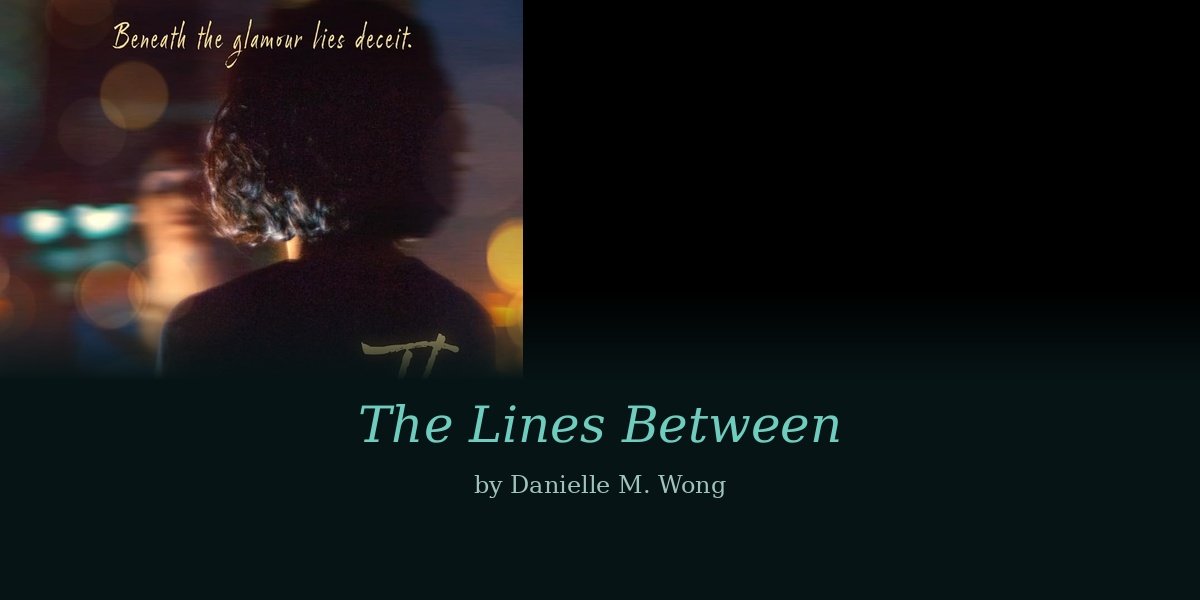
Danielle M. Wong’s The Lines Between is that kind of book, a psychological thriller set in the specific and revealing world of Hollywood celebrity. It works as both gripping entertainment and an insightful examination of what fame and the management of public image can do to the human beings inside them.

Stevie Young is a fully realized protagonist in psychological thriller fiction, a character whose professional competence and personal vulnerability exist in genuine tension. Her journey through the novel is emotionally engaging as well as narratively propulsive.

Her growing understanding of what is really happening between Lana Lim and Dean Bennington unfolds with pacing that reflects Wong’s command of the psychological suspense form. Each revelation arrives at a moment that deepens rather than simply resolves the reader’s uncertainty. Each shift in understanding recontextualizes what came before in ways that feel surprising rather than arbitrary.

The multiple perspectives that structure the narrative are managed with the intelligence of a writer who understands that the value of multiple perspectives in psychological thriller fiction is not simply the addition of information. It is also the creation of a gap between what the reader knows and what each individual character knows.

That gap, when managed well, produces the engaged anxiety that the form depends on. Wong manages it with control, giving each perspective character enough interiority and specificity to feel inhabited while keeping the overall picture productively incomplete until the right moment for completion to arrive.

The Hollywood setting is rendered with specific detail and a clear understanding of how the entertainment industry operates, helping it feel authentic rather than assembled from borrowed imagery. That authenticity gives the novel’s darker elements the grounding they need to feel unsettling rather than merely dramatic.

The deception at the heart of the story feels like something that could have grown in this particular world, produced by these particular pressures. That organic quality is part of what gives the novel its force.

The Lines Between is a thriller that works carefully for the effects it produces. For readers who enjoy psychological suspense shaped by character, structure, atmosphere, and the tension between public image and private truth, Danielle M. Wong’s novel offers a focused and satisfying reading experience.

If you have been waiting for a psychological thriller that is genuinely alive in the way that only the best fiction manages to be, that has found something true about the world it is describing and has found the right way to make you feel it, The Lines Between by Danielle M. Wong is exactly that book. Pick up your copy on Amazon today and find out why this is the novel you are going to be recommending to everyone you know.