
Finding Grace in the Grind: Noble Hops’ “Music Man” Reclaims the Soul of Rock and Roll

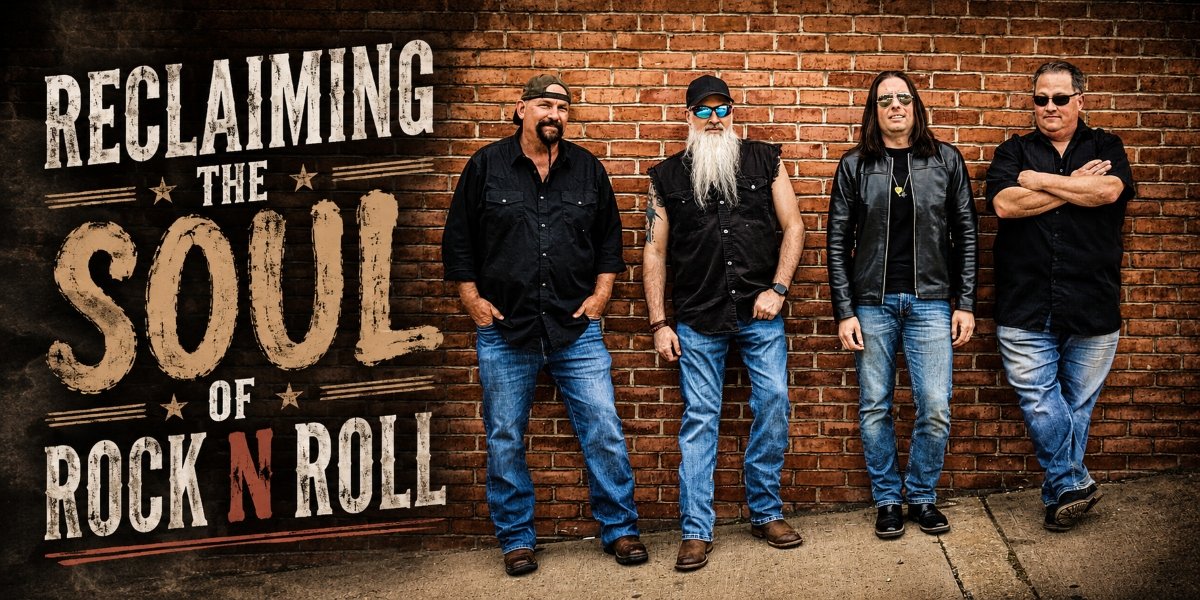
By John Landry
There has always been a tension at the heart of rock and roll between aspiration and authenticity. The music promises escape, transformation, even immortality, but most musicians discover something else entirely: a lifetime of late nights, uncertain paychecks, endless miles, and an unshakable devotion to a craft that rarely returns the favor in material terms. Noble Hops’ “Music Man” understands that contradiction, and more importantly, embraces it.
This isn’t simply a song about musicians. It’s a song about vocation.
From its opening line, “I didn’t sell my soul for rock and roll, but it became my way of life”, frontman and songwriter Utah Burgess dismantles one of rock’s oldest myths. The familiar image of the artist making a Faustian bargain in exchange for greatness is replaced by something much more recognizable: a man who simply kept saying yes to music, one night at a time.
That’s a far more interesting story.
Rock music has never really belonged to its superstars alone. It has survived because of thousands of musicians who played county fairs, neighborhood taverns, VFW halls, festivals, and corner bars. They carried their own amplifiers, drove through bad weather, and accepted that success might look very different than they once imagined. “Music Man” gives voice to those artists with uncommon dignity.
The song’s narrative unfolds with remarkable restraint. Burgess catalogs the realities of the life, “Empty bars, beat up guitars, and a handful of ex-wives”, without inviting pity or glorifying hardship. He’s not constructing a legend; he’s documenting a life. The difference is significant because the song’s emotional strength comes from its honesty rather than its mythology.
Burgess delivers the lyric with conviction born from experience. His voice possesses the rough edges that rock music has always valued, not because imperfection is fashionable, but because it suggests a life actually lived. Every phrase feels earned. Every line carries the weight of someone who understands exactly what he’s singing.
Behind him, Noble Hops provide an arrangement that never distracts from the story yet continually enriches it.
Tony Villella’s guitar work is rooted in classic American rock traditions. His playing is melodic without becoming indulgent, expressive without chasing virtuosity for its own sake. Every phrase seems chosen to reinforce the emotional direction of the song rather than demonstrate technical ability.
Johnny “Sleeves” Costa’s bass gives the recording a quiet confidence. His lines anchor the arrangement with warmth and movement, while Brad Hulburt’s drumming supplies the steady pulse of countless miles traveled between one performance and the next. Together, the rhythm section creates a sense of forward motion that mirrors the narrative itself.
Produced by Jazz Byers, the recording wisely avoids excessive polish. Instead, it preserves the chemistry of four musicians playing together, allowing the natural dynamics of the band to remain intact. That decision serves “Music Man” beautifully. The song asks listeners to believe in the people performing it, and the production never gives them a reason not to.
The chorus, “Music Man, playing across the land”, works because it resists sophistication. It doesn’t attempt cleverness. Instead, it embraces clarity. By repeating the phrase throughout the song, Noble Hops gradually transform it from description into declaration. The narrator no longer needs external validation because he has already found his identity.
Perhaps the most moving moment arrives near the conclusion when Burgess reflects, “The time will come when I’ll be gone, but my songs they will live on.” The line speaks to one of music’s deepest promises, not celebrity, but continuity. Songs outlive singers. They travel from generation to generation, finding new voices, new listeners, and new meaning along the way.
That sentiment gives “Music Man” emotional resonance beyond its immediate story. The song isn’t merely honoring one fictional musician. It’s recognizing the countless artists whose names may never appear in history books but whose music shaped communities, inspired younger performers, and gave ordinary people extraordinary nights they never forgot.
In an age increasingly dominated by algorithms, playlists, and fleeting digital attention, Noble Hops remind us that rock and roll remains, at its heart, a profoundly human exchange. It begins with someone picking up a guitar because they have something to say. It continues because they refuse to stop saying it.
“Music Man” succeeds because it understands that enduring artistry isn’t built on spectacle. It’s built on commitment, humility, and the willingness to keep walking onto another stage regardless of who may be waiting on the other side of the curtain.
Noble Hops haven’t written an anthem about becoming a rock star.
They’ve written something far more lasting, a tribute to the people who kept rock and roll alive after everyone else went home.
That’s a song worth hearing.
