Elvira Kalnik’s ‘Summer Time’ Finds Power in Choosing Joy

By: Rebecca Sloan

Pop music has always loved summer. Summer is freedom. Summer is possibility. Summer is the fantasy that the person you’ve always wanted to become is already there, waiting beneath the sunlight. But while countless artists have written songs about beaches, bonfires, and endless nights, Elvira Kalnik’s “Summer Time” reaches for something deeper. Beneath the shimmering electronic production and the bright, playful imagery lies a question that has become increasingly relevant in a world defined by anxiety, exhaustion, and endless noise: What if happiness is something we choose?

That’s the idea at the heart of “Summer Time,” a sparkling electronic anthem that serves as both a celebration and a gentle act of rebellion.

Kalnik has spent much of her career refusing to fit neatly into a single category. Singer, songwriter, producer, filmmaker, actress, model, fashion designer, television host—she has built a creative life that seems driven less by industry expectations than by an insatiable curiosity about the many forms artistic expression can take. That expansive perspective informs “Summer Time,” a song that feels as visual as it does musical.

From the opening notes, Kalnik establishes an atmosphere that feels warm, familiar, and almost dreamlike. Waves seem to roll beneath the rhythm. The synthesizers shimmer and swell like sunlight reflecting off the surface of the ocean. The beat never demands attention as much as it invites participation. There’s movement here, but there’s also a sense of ease.

That balance is one of the song’s greatest strengths.

For years, popular culture has treated seriousness as sophistication. Darkness is often mistaken for depth. Cynicism is celebrated as wisdom. Joy, meanwhile, is frequently dismissed as simplistic or naïve. “Summer Time” challenges that idea at every turn.

Its imagery is unabashedly colorful. Kalnik sings of rainbow bubbles, dancing until sunrise, bonfires, sunshine, and the simple pleasure of surrendering to the present moment. In the hands of a less confident artist, those ideas might seem overly sentimental. Here, however, they feel intentional.

There’s courage in optimism.

The song’s origins are equally revealing. Although “Summer Time” first appeared as part of Kalnik’s Magical Child project, its themes have become even more relevant over time. The track embraces the idea that people often spend so much time worrying about what has happened or what might happen that they forget to appreciate what is happening right now.

The result is a song that feels surprisingly restorative.

Kalnik’s vocal performance contributes significantly to that effect. She doesn’t overcomplicate the material with unnecessary flourishes or exaggerated emotion. Instead, she allows the melody and message to guide the performance. Her delivery feels open, relaxed, and sincere, qualities that have become increasingly rare in an era when so many recordings are polished into emotional anonymity.

That sincerity has long been a defining characteristic of her work.

Listeners familiar with Kalnik’s “Water Knows” will immediately recognize the connection between the two songs. Both are rooted in transformation, healing, and emotional release. Yet where “Water Knows” invited listeners inward, encouraging reflection and introspection, “Summer Time” turns outward. It embraces movement, laughter, and celebration.

Together, the songs reveal two complementary sides of the same philosophy.

First, we learn to release what burdens us.

Then we learn how to dance again.

Perhaps that’s why “Summer Time” feels so effective. It isn’t merely a soundtrack for warm weather. It is a reminder that adulthood doesn’t have to come at the expense of wonder. Kalnik understands that joy isn’t the absence of hardship; it is the willingness to continue embracing life despite it.

Throughout her career, she has consistently explored ideas of self-discovery, resilience, creativity, and personal transformation. Whether through music, fashion, film, or visual art, she has repeatedly returned to the notion that beauty exists all around us if we’re willing to notice it.

“Summer Time” embodies that philosophy perfectly.

By the song’s final chorus, it becomes clear that Kalnik isn’t trying to persuade anyone to ignore reality. Instead, she is asking listeners to remember that life can still contain moments of delight, spontaneity, and freedom.

In a cultural moment that often feels defined by division, uncertainty, and relentless urgency, that message lands with surprising force.

After all, summer isn’t just a season.

Sometimes it’s a state of mind.

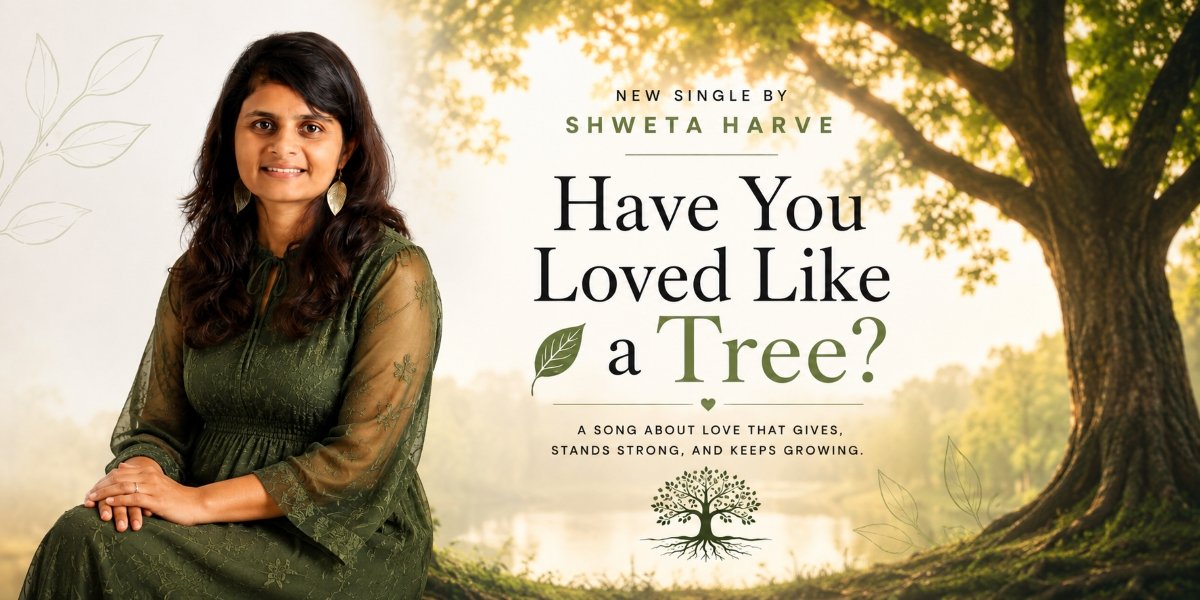
Growing Toward the Light: Shweta Harve’s Have You Loved Like a Tree? Is a Song That Slows Time

By Birdie Newton

Some songs want to make you dance. Others want to make you cry. Every now and then, one comes along that simply wants you to stop for a minute.

Not because it’s demanding your attention.

Because it has something worth hearing.

That’s the quiet magic of Shweta Harve’s “Have You Loved Like a Tree?” It doesn’t arrive with fireworks or oversized hooks designed to dominate playlists. Instead, it walks in like an old friend carrying a simple question that’s somehow impossible to answer quickly. Have you loved like a tree? It’s the kind of lyric that lingers long after the music fades—not because it’s complicated, but because it’s disarmingly honest.

There’s something beautifully unfashionable about making a song like this in 2026.

We’re living through an era where everyone seems to be sprinting toward the next thing. Every app tells us to scroll faster. Every notification insists that whatever we’re doing can wait. Music often mirrors that pace, chasing louder choruses, quicker gratification, and bigger emotional payoffs.

Harve chooses another road entirely.

She writes about stillness.

And somehow, stillness becomes revolutionary.

From the opening moments, the song feels less like a performance and more like an invitation. Acoustic instruments settle into place with an easy confidence, creating space instead of filling it. The arrangement doesn’t rush to impress you. It trusts you’ll stay.

That’s a rare kind of confidence.

The production is wonderfully understated, allowing warmth to become the defining texture. Every guitar chord seems to breathe. Every piano accent feels intentional rather than ornamental. Instead of building toward some explosive climax, the music unfolds naturally, like branches stretching toward sunlight.

It’s an arrangement that understands one important truth: sometimes less music creates more feeling.

Harve’s voice carries that same philosophy.

She never oversings the moment. There’s no sense that she’s trying to convince you to feel something. She simply delivers each lyric with quiet conviction, allowing sincerity to do the heavy lifting. It’s a performance built on trust—the trust that honesty will always outlast spectacle.

That choice pays off beautifully.

You begin listening to the song.

By the second chorus, the song begins listening back.

The metaphor at its center could have easily become sentimental in less capable hands. Trees have long symbolized life, endurance and renewal. They’re familiar enough to risk cliché. But Harve approaches the image from an unexpected angle, asking us not to admire the tree but to emulate it.

Think about that for a second.

Trees spend their entire existence giving. Shade. Oxygen. Shelter. Fruit. Stability. They ask for remarkably little in return.

When the song quietly wonders whether we’ve loved with that same generosity, it stops feeling like poetry and starts feeling like self-reflection.

The best songwriters have always known that asking the right question is often more powerful than offering the perfect answer.

Harve understands that instinctively.

What’s especially rewarding is how open the song remains. Depending on where you are in life, Have You Loved Like a Tree? can become almost anything. It can be about family. Parenthood. Friendship. Faith. Marriage. Community. Even our relationship with the natural world.

The song never insists upon one interpretation.

It simply plants the seed.

That’s confidence.

There’s also something refreshingly timeless about the entire production. While plenty of contemporary releases are carefully calibrated to fit the sonic trends of the moment, this one feels almost unconcerned with fashion. It isn’t trying to sound current. It’s trying to sound true.

Ironically, that’s what gives it staying power.

You can imagine discovering this song years from now and finding that it still speaks with the same quiet clarity.

Perhaps that’s because Harve seems less interested in documenting the world than gently improving it.

That ambition runs throughout her growing catalog. Whether exploring mindfulness, technology, or human connection, she consistently writes songs that look beyond personal confession toward shared experience. Have You Loved Like a Tree? may be her clearest expression of that artistic mission so far.

It’s music with its roots planted firmly in empathy.

And empathy, these days, feels like one of the rarest resources we have.

By the time the final notes drift away, nothing dramatic has happened. No walls have come crashing down. No cinematic ending arrives to announce that you’ve been transformed.

Instead, something quieter occurs.

The song leaves behind a feeling.

Maybe it’s gratitude.

Maybe it’s perspective.

Maybe it’s simply the desire to call someone you’ve been meaning to call.

Those are small things.

Then again, trees begin as small things, too.

Perhaps that’s the point.

In a culture increasingly fascinated with speed, noise, and instant impact, Shweta Harve has created something that grows at its own pace. Have You Loved Like a Tree? isn’t interested in being the loudest voice in the room. It wants to be the one you remember after everyone else has stopped talking.

That’s the kind of song that doesn’t just earn repeat listens.

It earns a place in your life.

Running Toward the Horizon, Robert Ross Finds the Endless Pursuit in “For You Girl”

By: Mark Grey

Every love song carries a hidden argument.

Some insist that love is salvation. Others warn that it is an illusion, a compromise, or a temporary shelter from loneliness. Robert Ross’s “For You Girl” chooses another path entirely. It argues that love is a pursuit, not an arrival. It isn’t something possessed, but something chased, often with the full knowledge that the chase itself may be the point.

That’s an old American idea.

Long before country music became an industry, it was populated by restless figures forever heading toward some disappearing horizon. The railroad worker. The drifter. The soldier. The cowboy. They were always moving, always searching for something just beyond reach. Ross, whether intentionally or not, taps into that mythology. His narrator isn’t standing still. He’s running.

“I’m running a race that I can’t win / To the ends of the earth and back again.”

The lyric is deceptively simple, but beneath it lies one of country music’s oldest truths: longing has always been more compelling than fulfillment.

Ross knows something about long roads.

Before music became his profession, he served for more than a decade in the Canadian Army. Later, he crossed continents, settling in Australia before eventually recording in Nashville. His career itself has followed the same pattern his songs often describe, a series of journeys rather than destinations. Success came gradually: international chart hits, industry awards, television placements, the quiet accumulation of credibility rather than sudden celebrity.

You hear that accumulated experience in his voice.

There is nothing flashy about his singing. No theatrical strain to convince you that every word matters. Instead, Ross sings as though he has already lived through enough to understand that the strongest emotions rarely announce themselves loudly. They settle into the voice as weather settles into old wood.

The opening verse begins almost casually.

“My whole life got turned around / When I saw you painting up the town.”

Country music has always excelled at turning ordinary moments into life-changing revelations. A glance across a dance floor. A truck disappearing down a gravel road. A telephone that doesn’t ring.

Ross understands that tradition.

The woman in this song isn’t described in elaborate detail because she doesn’t need to be. She functions almost symbolically, less an individual than the moment when certainty collapses into desire. Once she appears, the narrator loses his center of gravity.

The production wisely resists the temptation to overstate the emotion.

Gil Grand builds the arrangement patiently, allowing the musicians to color rather than dominate the narrative. Dan Dugmore’s pedal steel enters like memory itself, not announcing tragedy but quietly suggesting its possibility. Mike Rojas’ piano doesn’t decorate the melody so much as widen it, giving the song room to breathe. Troy Lancaster’s guitar adds flashes of light without disrupting the emotional current.

Everything serves the story.

Perhaps the song’s most revealing image comes almost in passing.

“Spinning around just like a tilt-a-world.”

It’s one of those wonderfully democratic metaphors country music has always favored. Not poetry drawn from mythology or literature, but from county fairs, midway rides, ordinary American experience. The Tilt-A-Whirl becomes more than carnival machinery; it becomes emotional architecture. Love isn’t stable. It’s centrifugal force. It throws your balance off while somehow making you feel more alive.

Ross commits fully to that sensation.

There isn’t the slightest hint of irony in lines like “I’d crawl a million miles down on my knees just to see your smile.” Modern songwriting often apologizes for sincerity before the listener has a chance to reject it. Ross refuses. He understands something increasingly uncommon: emotion doesn’t become stronger by pretending not to care.

That willingness recalls an earlier country tradition, when songs were allowed to believe in themselves completely.

It also explains why Ross has steadily found audiences across continents. Whether on earlier songs like “Drink ‘Em Down,” which found new life through its placement in Tulsa King, or on this unabashed love song, he approaches music not as performance but as testimony.

His career has been built on that consistency.

Independent chart success. International recognition. Recording in Nashville while remaining unmistakably himself. These accomplishments matter, but they are secondary to something less measurable. Ross has gradually become the kind of artist whose songs sound lived-in.

“For You Girl” doesn’t reinvent country music because it doesn’t need to.

Instead, it reminds us that beneath every fashionable production trend and every commercial cycle, country music remains a genre obsessed with pursuit, the impossible distance between who we are and what we desire.

Robert Ross runs that race knowing he may never catch what he’s chasing.

But then again, the greatest country songs have never been about crossing the finish line.

They’ve always been about finding enough truth in the journey to keep running.