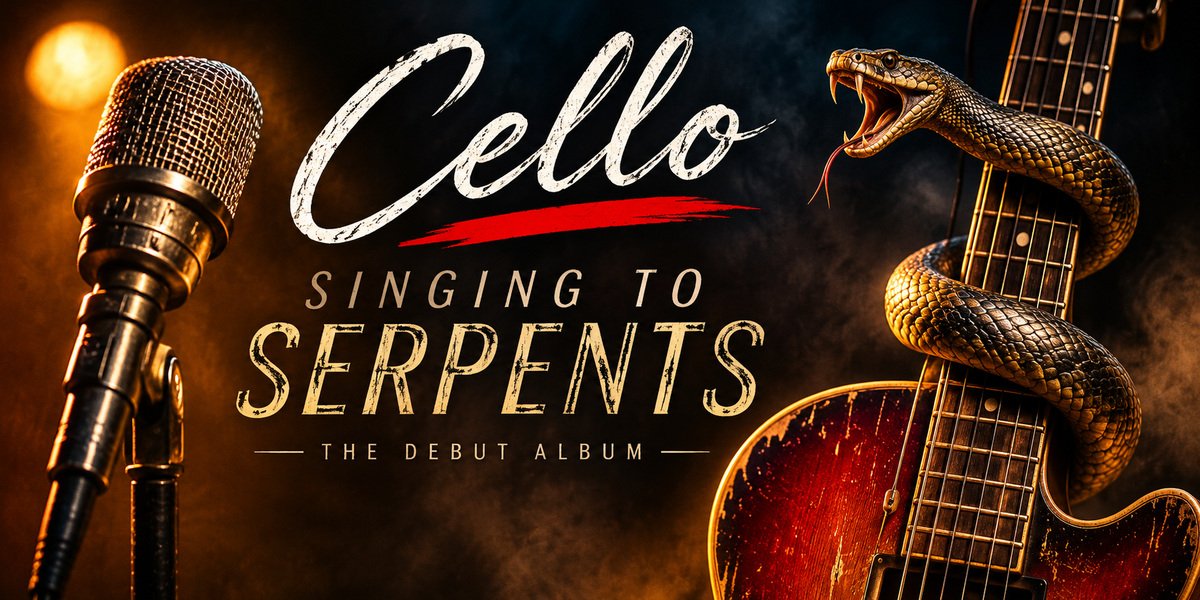
Cello’s Singing to Serpents Is the Soundtrack to All the Feelings You Forgot to Delete

By Julian Westbrook

Everybody has that playlist. The one you probably shouldn’t listen to after midnight. The one containing songs associated with people you no longer speak to, questionable romantic decisions, spectacular misunderstandings and those glorious five-minute stretches when you genuinely believed you had figured out your entire life.

Pittsburgh singer-songwriter Cello has essentially made an entire album for that playlist.

His nine-track collection, Singing to Serpents, released March 1, 2026, explores the emotional territory between falling in love, falling apart and falling asleep with your headphones still on. It’s ambitious, unpredictable, occasionally uncomfortable and refreshingly indifferent to the idea that pop music should make complicated feelings easier to understand.

Sometimes you need a song that makes them even more complicated.

Cello, born Marcello Valletta, comes to music with experience as an actor and published poet. That combination gives his songwriting an interesting dramatic quality. His songs often resemble conversations he’s having with himself, with the occasional unfortunate romantic partner invited into the proceedings.

Opening track “Stay Here” immediately establishes the stakes. It’s a song about wanting somebody to remain in your orbit, even when the gravitational pull between you might be doing more damage than good.

Popular music has an entire magnificent history of people begging other people not to leave. The Supremes built classics around romantic uncertainty. The Cure practically established a permanent residence inside it. Cello joins that tradition from his own decidedly contemporary perspective, incorporating alternative pop, melodic hip-hop and confessional songwriting.

The repetition in “Stay Here” captures something recognizable about romantic obsession: the ridiculous belief that thinking about a situation for another three hours might somehow change its outcome.

It won’t, of course. But at least you’ve got a good song.

“Elevate” introduces a different emotional costume. Suddenly, Cello is reaching for confidence, ambition and personal transformation. It’s the musical equivalent of creating an inspirational playlist immediately after deleting somebody’s phone number.

The fascinating thing is how quickly that confidence becomes questionable. Cello understands the peculiar relationship between swagger and insecurity. Sometimes the loudest declarations of self-belief come from people who are still working on believing themselves.

Then there’s “Sucks to Be Used,” a title requiring absolutely no assistance from a professional metaphor consultant. It’s blunt, confrontational and emotionally recognizable. Everyone has experienced some variation of discovering that a relationship meant considerably different things to the people involved.

Cello doesn’t pretend heartbreak automatically turns people into philosophers. Occasionally, it just makes them angry.

The nocturnal atmosphere of “Full Moon,” “So Long” and “Cravings” brings additional dimensions to the album’s romantic complications. These songs inhabit the psychological neighborhood where attraction, loneliness and questionable judgment become next-door neighbors.

There’s something appealingly nostalgic about that emotional territory, even though Cello’s musical language is thoroughly contemporary. Before smartphones and streaming playlists, people made mixtapes to communicate feelings they couldn’t articulate. Now they send Spotify links and spend the next six hours wondering whether the recipient understood the significance of track seven.

Technology changes. Romantic confusion remains remarkably durable.

Cello’s openness about being autistic and having ADHD provides another meaningful dimension to his music. His experiences inform his creative perspective, particularly his interest in emotional communication and self-expression. Yet Singing to Serpents succeeds because it doesn’t require listeners to share his precise experiences to recognize themselves in his songs.

His involvement in autism advocacy, including his ambition to become a certified peer support professional, makes that connection particularly significant. Cello understands that being understood can be a profoundly important experience, especially for people accustomed to feeling misunderstood.

The album’s most affecting departure arrives with “Pray” and “Faith.”

After all the romantic turbulence, Cello begins searching for something beyond the immediate gratification of relationships and desire. These songs explore spirituality without becoming excessively sentimental.

“Faith” is particularly compelling as an examination of self-belief. Its emotional appeal comes from acknowledging that confidence isn’t always something we possess. Sometimes it’s something we’re actively trying to locate.

If there’s a weakness to Singing to Serpents, it’s that Cello’s emotional intensity occasionally risks becoming overwhelming. A little more breathing room between its heavier themes might make certain moments even more powerful. Nevertheless, that restless quality remains central to the record’s personality.

The closing “Sleeping” provides an appropriate final destination. After the romantic negotiations, spiritual searching and internal arguments, there’s something almost comforting about arriving at exhaustion.

What makes Singing to Serpents memorable is its understanding that music doesn’t necessarily solve our problems. It accompanies us through them.

Cello has made an album for the overthinkers, the hopeless romantics, the spiritually curious and anybody who’s ever assigned far too much emotional significance to a three-minute song.

The serpents might still be there tomorrow.

But tonight, at least, you’ve got something worth putting on repeat.
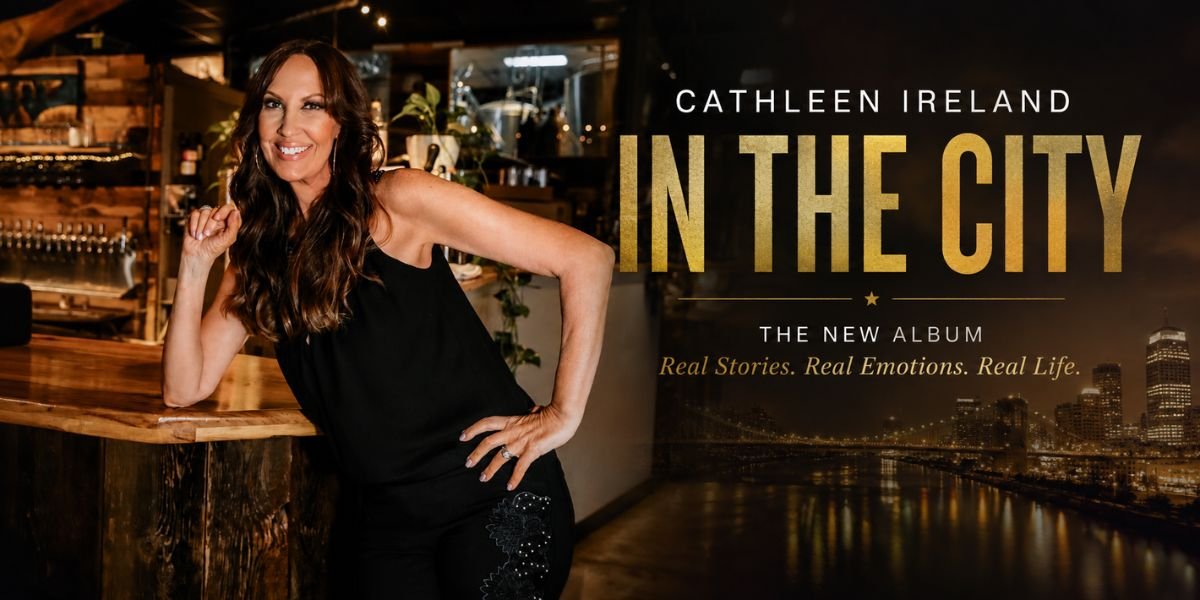
Cathleen Ireland Finds Her Power, Perspective and Pop Sweet Spot on In The City

By Lauren Whitmore

Cathleen Ireland has been making music long enough to understand that reinvention doesn’t require abandoning the past. On In The City, the Pittsburgh singer, songwriter and producer takes the accumulated experience of a career spent fronting bands, making records, raising a family and navigating the realities of the music business and channels it into her most polished and assured collection yet.

The result is an album that sits comfortably at the intersection of contemporary pop, adult contemporary and R&B, pairing radio-conscious production with songwriting that reflects an unmistakably grown-up point of view. Ireland isn’t interested in pretending life’s complications disappear when the chorus arrives. Instead, she makes those complications part of the hook.

That philosophy is best represented by “Breathe,” the album’s defining statement and one of Ireland’s strongest singles to date. Co-written with Danny E. B. and produced by longtime collaborator Sean McDonald at Red Medicine Studios in Swissvale, Pa., the track transforms the daily pressures of being a wife, mother, performer, bandleader and working woman into an uplifting pop anthem.

The premise is immediately relatable: there are gigs to play, family members to care for, appearances to maintain and expectations coming from seemingly every direction. Ireland even confronts the lingering sexism of professional environments where successful women can still encounter a dismissive “you’re just a girl” mentality.

But “Breathe” isn’t a complaint. It’s a pep talk.

Its central refrain, “You got this, you got this girl”, is tailor-made for audience participation, but its effectiveness comes from the experience behind it. Ireland isn’t dispensing generic empowerment slogans. She’s singing from inside the struggle, which gives the track a credibility that can’t be manufactured in a writing camp.

That balance between accessibility and authenticity runs throughout In The City. The album’s title evokes movement, ambition and possibility, but Ireland is equally interested in what happens behind the bright lights. Her city isn’t simply a glamorous backdrop; it’s a metaphor for a life crowded with competing demands, relationships, opportunities and frustrations.

Production plays a major role in bringing that world to life. Ireland’s recent work with multi-platinum producer Ryan M. Tedder, whose credits include Ariana Grande, Jennifer Lopez and Meghan Trainor, has helped sharpen her contemporary instincts. The music is sleek without becoming anonymous, incorporating rhythmic pop foundations, R&B touches and adult contemporary melodicism while leaving enough breathing room for Ireland’s voice to remain the focal point.

And Ireland knows how to sell a song.

Her vocal strength isn’t built around excessive runs or theatrical displays. Instead, she favors directness. There is warmth in her phrasing and an appealing conversational quality to her delivery, making even the album’s more polished moments feel personal. She sounds like an artist communicating rather than auditioning.

That confidence has been earned over a career stretching back through several incarnations of Pittsburgh’s independent music scene. Ireland previously fronted Friday’s Child, releasing the Awakenings EP in 1998, and later theFIVE6, whose Last Minute Reservations arrived in 2012. She subsequently became founder and vocalist of Hot Weather Holiday, continuing to establish herself as a fixture of the city’s live-music community.

Her solo work has expanded that reach considerably. “Body For You” received an Honorable Mention in the R&B category of the USA Songwriting Competition, while the song and its accompanying video became semi-finalists in the UK Songwriting Competition, both earning Five-Star ratings. “Love Is A Luxury” was a finalist in the International Acoustic Music Awards.

Ireland’s visual résumé is equally notable. Her music videos have been selected by more than 70 film festivals internationally and have collected 22 awards, including Best Independent Music Video honors for “ELEVATOR” at the International Music Video Underground Awards and a Special Jury Award for “DRIVE” at the 2024 Thilsri International Film Festival. Multiple Iron City Rocks Awards in 2026 have further underscored the recognition she’s receiving at home.

Those career achievements provide important context for In The City. This isn’t a debutante trying to determine what kind of artist she wants to become. It’s the work of a musician who has already survived several chapters of the business and has emerged with a clearer sense of what she wants to say.

That maturity may also be the album’s strongest commercial asset. There’s an underserved audience for sophisticated contemporary pop made by and for adults whose lives extend beyond breakups and Saturday nights. Ireland writes about ambition after experience, confidence after disappointment and independence alongside responsibility.

She understands that empowerment isn’t necessarily about walking away from everything holding you down. Sometimes it’s about managing the chaos, protecting the part of yourself that still dreams and getting back onstage anyway.

In The City captures Cathleen Ireland at that intersection: seasoned but energized, polished but personal, ambitious without losing sight of the everyday life feeding the songs.

With this album, Ireland isn’t chasing the city lights.

She’s learned how to generate her own.

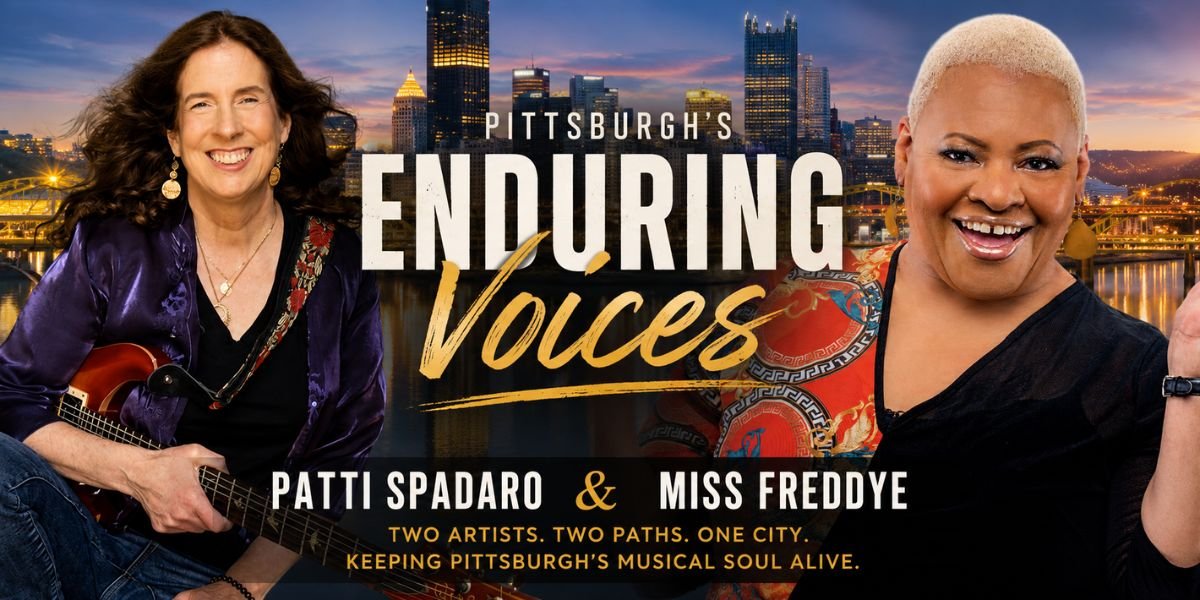
Pittsburgh’s Enduring Voices: Patti Spadaro and Miss Freddye Keep the City’s Musical Soul Alive

By Dylan Avery

Pittsburgh has always been a city that understands hard work. Built on steel, rivers, and resilience, it has also produced generations of musicians who embody those same qualities, not by chasing fleeting trends, but by building lasting careers rooted in authenticity. Two of the city’s most enduring musical ambassadors, Patti Spadaro and Miss Freddye, represent different corners of the musical spectrum, yet they share a common mission: creating music that uplifts, connects, and tells the truth.

Their sounds may differ, Spadaro’s flowing blend of rock, jam-band improvisation, and mindfulness-inspired songwriting contrasts with Miss Freddye’s deeply rooted, soul-stirring blues, but both artists have become cultural fixtures whose influence extends far beyond the stage.

For Patti Spadaro, music has never been confined to entertainment. It has become a vehicle for healing, exploration, and personal transformation.

A gifted guitarist with roots in classic rock, blues, and improvisational music, Spadaro began playing guitar at age eleven before earning a degree in Physics and later attending the prestigious Musicians Institute in Los Angeles. During an era when female lead guitarists remained a rarity, she forged her own path, touring throughout the western United States, performing with acclaimed bands, and opening shows for artists including Eddie Van Halen, Little Feat, and Melvin Seals & JGB.

But Spadaro’s career has evolved into something even broader.

Today, she balances performing with teaching college courses in yoga, meditation, and the innovative curriculum she developed called Mindfulness in Music. Her work reflects a philosophy that creativity and wellness are deeply intertwined, that music has the power not only to entertain audiences but also to help people reconnect with themselves.

That philosophy is beautifully captured in her recent single, “Mystic Misfit.” Built around warm guitar tones, relaxed grooves, and lyrics encouraging listeners to “meet me in the middle,” the song invites reflection in an age often defined by distraction. Rather than preaching, Spadaro creates space for listeners to slow down, breathe, and embrace authenticity.

If Patti Spadaro’s music encourages inward reflection, Miss Freddye’s work reaches outward, embracing audiences with warmth, honesty, and unmistakable soul.

Known throughout the region as “Pittsburgh’s Lady of the Blues,” Miss Freddye has spent years preserving one of America’s most enduring musical traditions while making it unmistakably her own. Her performances combine powerful vocals with genuine storytelling, honoring blues history while reminding listeners that its themes, love, hardship, perseverance, joy, and hope, remain timeless.

Blues has always been music born from experience, and Miss Freddye sings with the authority of someone who understands that deeply. Whether delivering a slow-burning ballad or an up-tempo blues shuffle, she brings emotional authenticity that cannot be manufactured.

Her impact extends well beyond performance.

As a mentor, advocate, and ambassador for Pittsburgh’s blues community, Miss Freddye has devoted herself to keeping the genre vibrant for future generations. Her collaborations with local musicians, festival appearances, and community engagement have made her one of the city’s most beloved musical figures. Every performance carries with it an appreciation for the artists who came before while creating opportunities for those who will follow.

Despite working in different genres, Spadaro and Miss Freddye share remarkable similarities.

Neither artist has built a career around commercial trends. Instead, both have cultivated audiences through consistency, musicianship, and genuine connection. They understand that music is less about image than communication.

Both women also represent the richness of Pittsburgh’s musical landscape. The city’s creative identity has never belonged exclusively to one style. Rock, blues, jazz, folk, Americana, and soul have long flourished alongside one another, supported by artists committed to their craft and communities.

Spadaro and Miss Freddye embody that tradition in complementary ways.

One channels introspection through expansive guitar melodies and mindfulness-inspired songwriting. The other transforms lived experience into blues performances that resonate with emotional honesty and timeless groove.

Together, they demonstrate that longevity in music is built not on chasing relevance but on remaining authentic.

In an industry often obsessed with the next big thing, Patti Spadaro and Miss Freddye remind us of something more enduring: that great artists continue growing, continue serving their audiences, and continue strengthening the communities that shaped them.

Pittsburgh’s skyline may have changed dramatically since the city’s steelmaking heyday, but its musical heartbeat remains steady thanks to artists like these. Through different voices and different styles, Patti Spadaro and Miss Freddye continue to prove that the Steel City’s greatest export has never been steel alone.

It has always been soul.

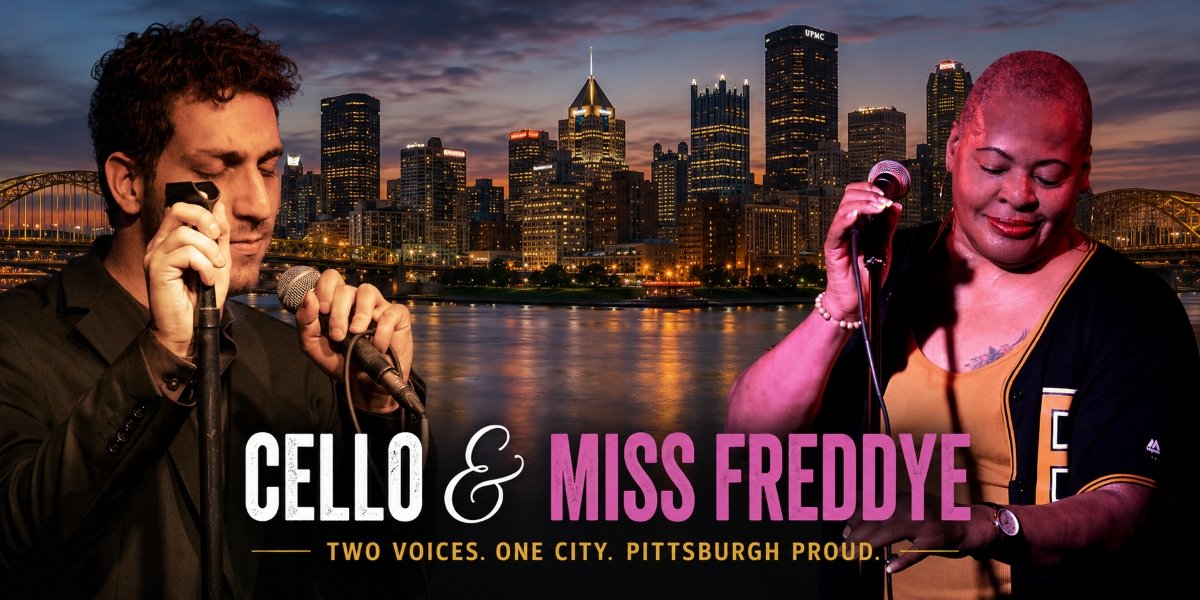
How Cello and Miss Freddye Show Pittsburgh’s Musical Range

By: Adrian Mercer

Pittsburgh has always been a city of reinvention. Once defined almost exclusively by steel mills and smokestacks, today’s Steel City is also known for its thriving arts community, where musicians continue to redefine what Pittsburgh sounds like. While no single artist could ever represent the region’s musical identity, two performers illustrate its remarkable diversity better than most: pop artist Cello and blues powerhouse Miss Freddye.

On paper, they couldn’t appear more different. One embraces contemporary pop production and modern songwriting, while the other carries forward one of America’s most enduring musical traditions. Yet both artists share something unmistakably Pittsburgh: authenticity, resilience, and a commitment to creating music that reflects real life rather than chasing fleeting trends.

A New Generation of Pittsburgh Pop

Cello represents a younger generation of Pittsburgh musicians who are proving that pop music can emerge from western Pennsylvania. His recordings combine polished production with emotionally direct songwriting, creating songs that balance commercial appeal with personal storytelling. Rather than imitating what’s popular, Cello has focused on developing an artistic identity built around memorable melodies, expressive vocals, and an evolving creative vision.

Like many artists coming out of Pittsburgh today, Cello benefits from a city that has quietly become fertile ground for independent musicians. Affordable creative spaces, passionate local audiences, and a supportive artistic community have allowed emerging performers to develop their craft without immediately relocating to larger entertainment hubs.

That independence shows in Cello’s work. His music carries the confidence of an artist willing to experiment while remaining accessible. Every release demonstrates growth, not only as a vocalist but also as a songwriter determined to connect emotionally with listeners.

Pittsburgh’s Lady of the Blues

At the opposite end of Pittsburgh’s musical spectrum stands Miss Freddye, affectionately known throughout the region as “Pittsburgh’s Lady of the Blues.” Her career has become one of the city’s most inspiring musical success stories, built not through overnight fame but through decades of perseverance, authenticity, and service.

Long before becoming one of western Pennsylvania’s blues performers, Miss Freddye first discovered music in church, where gospel taught her that every song should tell the truth. She entered the professional blues scene in 1996 with Blues Music Works under the direction of Big Al Leavitt before eventually forming Blue Faze, followed by Miss Freddye’s Blues Band and Miss Freddye’s Homecookin’ Band.

Over the years, her unmistakable voice has earned widespread recognition. Multiple Pittsburgh music honors, Blues Foundation nominations, and regional awards have affirmed what local audiences have known for decades, that Miss Freddye is one of the city’s defining musical ambassadors. Her performances are rooted equally in gospel conviction and classic blues tradition, producing a sound that is both timeless and unmistakably personal.

Perhaps even more impressive is the life behind the music. A longtime nurse, community advocate, charity supporter, and breast cancer survivor, Miss Freddye has consistently used her platform to give back. Whether supporting veterans, cancer awareness initiatives, domestic violence prevention, or local charitable organizations, she has demonstrated that an artist’s legacy extends well beyond the stage.

Where Innovation and Tradition Coexist

Despite their stylistic differences, Cello and Miss Freddye share a common thread. Neither artist relies on the image alone. Their music succeeds because it is grounded in genuine experience.

Cello speaks to audiences searching for connection in a rapidly changing world, crafting modern songs filled with vulnerability and hope. Miss Freddye reminds listeners that the blues remains as relevant today as ever because honesty never goes out of style. One looks confidently toward the future of independent music. The other preserves a tradition while continually proving it still has something important to say.

Together, they reflect the remarkable breadth of Pittsburgh’s music scene. It is a community where innovation and tradition don’t compete. They coexist. The same city that nurtures emerging pop artists also celebrates legendary blues performers. It is a place where creative freedom matters more than genre labels.

For decades, Pittsburgh has produced exceptional musicians across rock, jazz, classical, folk, country, hip-hop, blues, and pop. Artists like Cello and Miss Freddye continue that tradition in their own unique ways, reminding audiences that great music isn’t defined by style but by sincerity.

As Pittsburgh’s cultural reputation continues to grow nationally, these two artists stand as powerful examples of what makes the city’s music community so compelling. One offers the excitement of tomorrow. The other embodies the wisdom of experience. Together, they tell a story far bigger than themselves, a story of a city whose creative heart continues to beat as strongly as ever.

Whether through Cello’s contemporary pop sensibilities or Miss Freddye’s soul-stirring blues performances, Pittsburgh continues to prove that some of America’s most authentic music still comes from the place where three rivers meet and countless musical journeys begin.