Dr. Connor Robertson Compares GPT-4o, Claude, and Gemini for Business Use

Choosing the right AI model matters more than most business owners realize, according to Dr. Connor Robertson, founder of Elixir Consulting Group and host of The Prospecting Show. In his assessment, the differences between GPT-4o, Claude, and Gemini are meaningful for specific use cases, and defaulting to whichever tool a business owner heard about first can cost real output quality.

Writing and Content Generation

Robertson says Claude consistently produces the most natural, contextually aware long form content in his testing, handling complex, nuanced instructions better than either competitor and less likely to produce the flat phrasing that signals AI-generated text. He describes GPT-4o as faster and well suited to structured content like email sequences, while Gemini, in his assessment, lags on nuance and tends toward hedged, committee sounding output. For anything longer than a paragraph where tone matters, he recommends Claude.

Research and Information Synthesis

When synthesizing information from provided documents, Robertson finds Claude and GPT-4o perform comparably, with Claude showing an edge on analytical depth in his experience. For research requiring current web-sourced information, he gives Gemini the advantage through its Google Search integration, and recommends Claude for static document analysis.

Structured Analysis and Decision Support

For tasks requiring rigorous reasoning and multi-variable analysis, Robertson reports Claude produces the most thorough and reliable output in his use, describing it as least likely to hallucinate and most likely to flag uncertainty rather than confabulate a confident answer. He characterizes GPT-4o as faster but more prone to confident errors, and Gemini as weakest on deep analytical tasks in his testing.

Workflow and API Integration

Robertson notes OpenAI’s ecosystem has the deepest third-party integrations, and that GPT-4o has the most native connectors for workflows built in Zapier or Make. He says Claude’s API produces more consistent, predictable output for automated pipelines, which matters when something runs unsupervised, while describing Gemini’s integration ecosystem as growing but still behind both.

The Practical Decision

Robertson’s recommendation: use Claude as the primary model for writing, analysis, and automated pipelines where consistency matters; use GPT-4o for speed or integrations Claude does not yet support natively; and use Gemini specifically for tasks requiring current Google-indexed information. In his framing, the businesses getting the most from AI are the ones routing each task to the model best suited for it.

Why Robertson Avoids a Single-Model Answer

Robertson pushes back on the framing that any one of these three models is simply “the best.” In his experience, businesses that pick a single model for every use case tend to under-perform businesses that route deliberately, because the models are optimized for different things and the gap shows up most in the tasks a single-model shop rarely stops to notice: a research-heavy request handled by a writing-optimized model, or a fast internal draft routed through a slower, more deliberate one. He treats model selection as an operational decision worth revisiting periodically rather than a one-time choice, since the relative strengths of each model continue to shift as the underlying products are updated.

A Caveat Worth Keeping in Mind

Robertson acknowledges that any model comparison is a snapshot rather than a permanent ranking. All three companies ship updates frequently, and a gap he observed in one testing cycle can narrow or reverse within a few months as each model gets refined. His practical advice is to treat comparisons like this one as a starting framework for where to route which kind of work, then periodically re-test on a business’s own actual tasks rather than assuming today’s ranking holds indefinitely.

About Dr. Connor Robertson

Dr. Connor Robertson is an entrepreneur, author, and strategic advisor based in Pittsburgh. He is the founder of Elixir Consulting Group, host of The Prospecting Show, publisher of The Pittsburgh Wire, and founder of The Grant Finder. He is also a six-time published author, with titles including Built to Run, available at

drconnorrobertsonbooks.com. More on his work is available at drconnorrobertson.com.
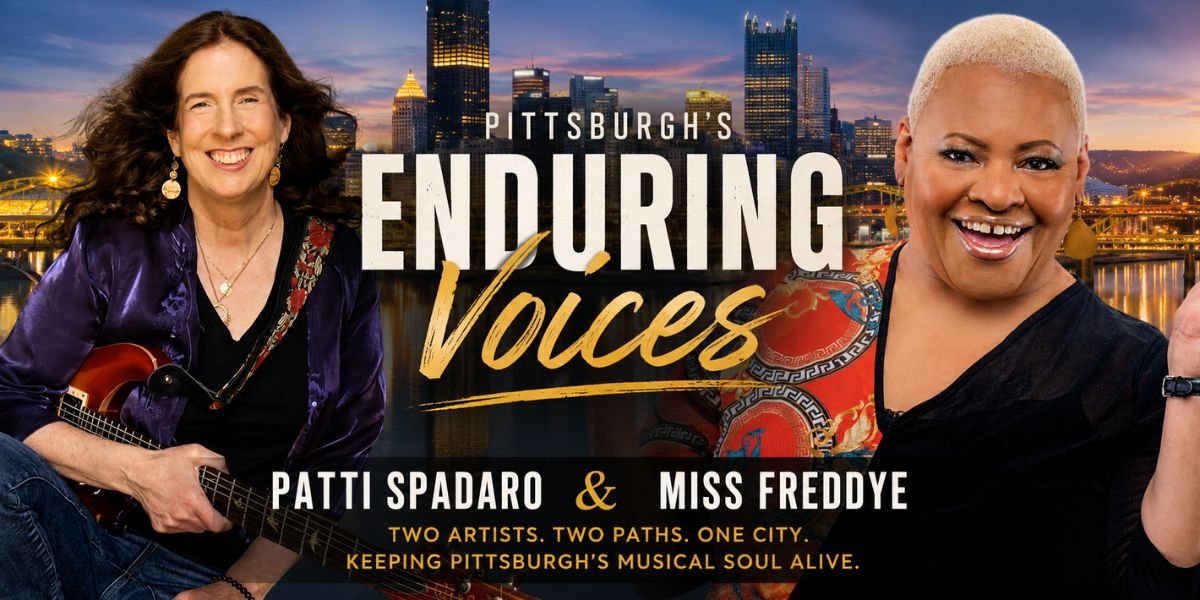
Pittsburgh’s Enduring Voices: Patti Spadaro and Miss Freddye Keep the City’s Musical Soul Alive

By Dylan Avery

Pittsburgh has always been a city that understands hard work. Built on steel, rivers, and resilience, it has also produced generations of musicians who embody those same qualities, not by chasing fleeting trends, but by building lasting careers rooted in authenticity. Two of the city’s most enduring musical ambassadors, Patti Spadaro and Miss Freddye, represent different corners of the musical spectrum, yet they share a common mission: creating music that uplifts, connects, and tells the truth.

Their sounds may differ, Spadaro’s flowing blend of rock, jam-band improvisation, and mindfulness-inspired songwriting contrasts with Miss Freddye’s deeply rooted, soul-stirring blues, but both artists have become cultural fixtures whose influence extends far beyond the stage.

For Patti Spadaro, music has never been confined to entertainment. It has become a vehicle for healing, exploration, and personal transformation.

A gifted guitarist with roots in classic rock, blues, and improvisational music, Spadaro began playing guitar at age eleven before earning a degree in Physics and later attending the prestigious Musicians Institute in Los Angeles. During an era when female lead guitarists remained a rarity, she forged her own path, touring throughout the western United States, performing with acclaimed bands, and opening shows for artists including Eddie Van Halen, Little Feat, and Melvin Seals & JGB.

But Spadaro’s career has evolved into something even broader.

Today, she balances performing with teaching college courses in yoga, meditation, and the innovative curriculum she developed called Mindfulness in Music. Her work reflects a philosophy that creativity and wellness are deeply intertwined, that music has the power not only to entertain audiences but also to help people reconnect with themselves.

That philosophy is beautifully captured in her recent single, “Mystic Misfit.” Built around warm guitar tones, relaxed grooves, and lyrics encouraging listeners to “meet me in the middle,” the song invites reflection in an age often defined by distraction. Rather than preaching, Spadaro creates space for listeners to slow down, breathe, and embrace authenticity.

If Patti Spadaro’s music encourages inward reflection, Miss Freddye’s work reaches outward, embracing audiences with warmth, honesty, and unmistakable soul.

Known throughout the region as “Pittsburgh’s Lady of the Blues,” Miss Freddye has spent years preserving one of America’s most enduring musical traditions while making it unmistakably her own. Her performances combine powerful vocals with genuine storytelling, honoring blues history while reminding listeners that its themes, love, hardship, perseverance, joy, and hope, remain timeless.

Blues has always been music born from experience, and Miss Freddye sings with the authority of someone who understands that deeply. Whether delivering a slow-burning ballad or an up-tempo blues shuffle, she brings emotional authenticity that cannot be manufactured.

Her impact extends well beyond performance.

As a mentor, advocate, and ambassador for Pittsburgh’s blues community, Miss Freddye has devoted herself to keeping the genre vibrant for future generations. Her collaborations with local musicians, festival appearances, and community engagement have made her one of the city’s most beloved musical figures. Every performance carries with it an appreciation for the artists who came before while creating opportunities for those who will follow.

Despite working in different genres, Spadaro and Miss Freddye share remarkable similarities.

Neither artist has built a career around commercial trends. Instead, both have cultivated audiences through consistency, musicianship, and genuine connection. They understand that music is less about image than communication.

Both women also represent the richness of Pittsburgh’s musical landscape. The city’s creative identity has never belonged exclusively to one style. Rock, blues, jazz, folk, Americana, and soul have long flourished alongside one another, supported by artists committed to their craft and communities.

Spadaro and Miss Freddye embody that tradition in complementary ways.

One channels introspection through expansive guitar melodies and mindfulness-inspired songwriting. The other transforms lived experience into blues performances that resonate with emotional honesty and timeless groove.

Together, they demonstrate that longevity in music is built not on chasing relevance but on remaining authentic.

In an industry often obsessed with the next big thing, Patti Spadaro and Miss Freddye remind us of something more enduring: that great artists continue growing, continue serving their audiences, and continue strengthening the communities that shaped them.

Pittsburgh’s skyline may have changed dramatically since the city’s steelmaking heyday, but its musical heartbeat remains steady thanks to artists like these. Through different voices and different styles, Patti Spadaro and Miss Freddye continue to prove that the Steel City’s greatest export has never been steel alone.

It has always been soul.

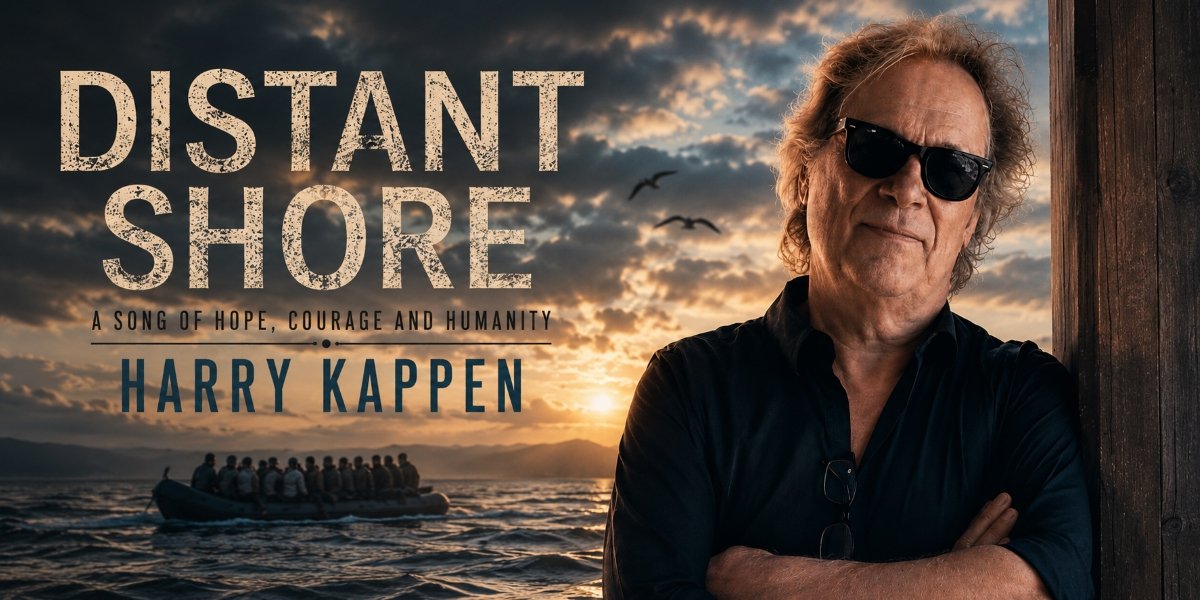
Harry Kappen’s “Distant Shore” Finds the Moral Center of the Song

By: Bob Gleason

There are songs that exist chiefly as entertainment, and there are songs that attempt something more difficult: to make us feel the presence of people whom distance, politics, and habit have taught us not to see. Harry Kappen’s “Distant Shore” belongs to the second category. It is a song of conscience, but not a lecture; a song about suffering, but not one that traffics in suffering for its own effect. Its achievement lies in the manner with which it restores the individual human being to a story too often reduced to numbers.

Kappen wrote “Distant Shore” after hearing and reading repeated accounts of refugees crossing land and sea under inhumane conditions. The origin of the song is tied to his own relocation from the Netherlands to Mexico, but its meaning depends upon his recognition that the comparison ends there. He crossed by choice. Others leave because war, poverty, violence, or desperation have made home untenable. The moral force of the song begins in that distinction.

It is easy for a songwriter to confuse empathy with appropriation. Kappen avoids that error. He does not claim to know everything about the refugee experience, nor does he turn himself into the central character. Instead, he imagines the concrete details of departure: one small bag, one final look, a truck crowded with forty people, someone praying, someone fainting. In those details, the enormity of displacement becomes understandable.

The opening line is especially powerful: “I kiss the door I can’t replace.” That is the kind of image that tells us more than a page of explanation. A door is ordinary until it is the last thing connecting a person to the life they knew. The gesture is tender, but it is also final. Kappen understands that exile begins not at a border, but at the moment when familiar objects become memories.

Musically, “Distant Shore” is constructed with restraint. Kappen wrote, played, sang, and produced the track himself, yet the recording never feels like a demonstration of his abilities. That is important. Multi-instrumental records often suffer from the absence of resistance; nobody is present to tell the artist when enough is enough. Here, Kappen appears to have supplied his own discipline.

The mellotron gives the song much of its atmosphere. Kappen has acknowledged the influence of David Bowie’s “Space Oddity,” and the connection is audible in the sense of isolation that surrounds the arrangement. But this is not merely a stylistic borrowing. Bowie imagined a man separated from Earth by space. Kappen brings that loneliness back to the ground and the sea, where it becomes immediate and physical.

The keyboards hover like weather on the horizon. The rhythm maintains forward movement without providing comfort. The guitar passages do not announce themselves as heroic; they sound more like releases of pressure. Everything in the arrangement seems designed to place the listener inside an uncertain journey.

The chorus asks, “Where is that distant shore?” The question is simple, but its simplicity is deceptive. The shore is safety, certainly, but it is also dignity, permanence, opportunity, and the hope of not disappearing unnoticed. Kappen does not answer the question because the people whose lives inspired the song are not guaranteed an answer.

That refusal of easy resolution is one of the record’s virtues. Too many songs about serious subjects insist on lifting the listener toward redemption in the final chorus. “Distant Shore” does not offer comfort it has not earned. It allows hope to remain fragile.

Kappen’s vocal performance is measured and humane. He does not oversing, and he does not dramatize the lyrics beyond what the words can support. His voice carries concern, weariness, and a kind of moral attentiveness. He sounds less like a performer portraying suffering than a witness attempting not to turn away from it.

That quality may be connected to Kappen’s long career in music therapy and youth care. For more than two decades, he worked with people for whom music was not simply art or entertainment, but a means of connection. The best therapists learn to listen without taking possession of another person’s story. “Distant Shore” displays a similar instinct.

The track comes from After the Crossing, the first album Kappen recorded after moving to Mexico. That relocation appears to have widened rather than narrowed his perspective. He could have written an album centered entirely upon personal reinvention. Instead, one of its strongest songs considers the vastly more dangerous crossings undertaken by others.

There is a larger point here about what serious popular music can still accomplish. A song cannot change immigration policy, stop a war, or guarantee safe passage across a sea. But it can interrupt indifference. It can convert a statistic into a face, a doorway, a prayer, or a wave rising like a wall.

“Distant Shore” does precisely that.

Its power does not come from volume or novelty. It comes from attention—from one artist looking at a brutal reality and refusing to simplify it. Harry Kappen has made a song that is musically assured, emotionally honest, and morally awake.

At a time when distraction is one of the culture’s most abundant products, that attentiveness is no small achievement.