BLACKPINK’s Jennie Makes K-Pop History With a Lollapalooza Headlining Set

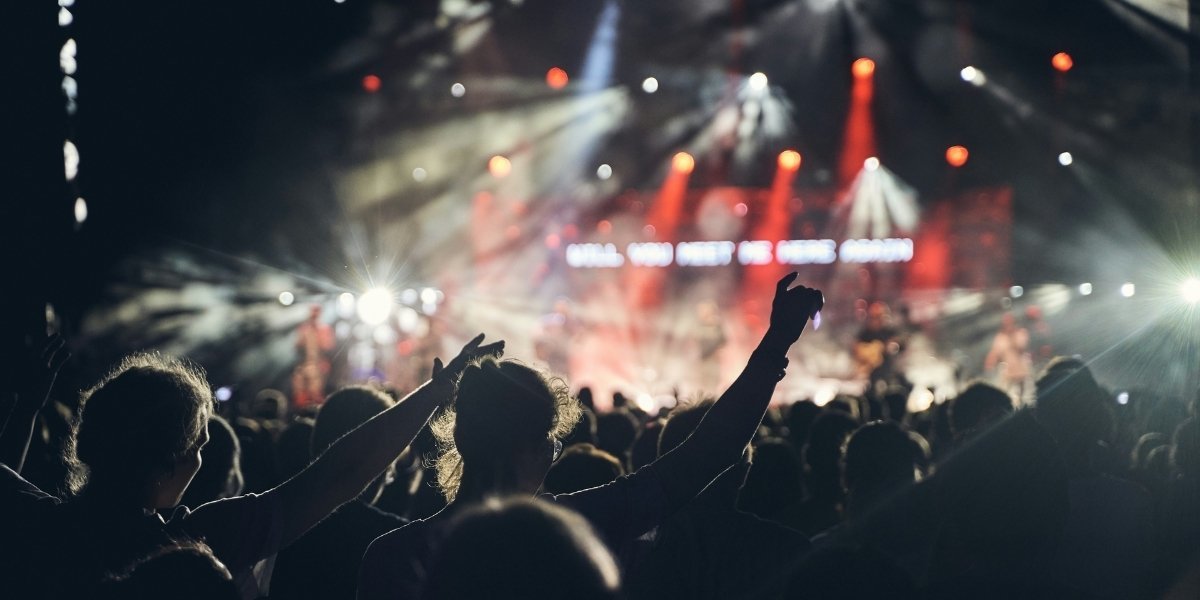
Jennie became Lollapalooza’s first female K-pop solo headliner on Aug. 1, 2026, using her Chicago debut to present a set built around Ruby, established solo tracks and newer material. The performance added a specific first to the festival’s record while testing how her solo catalog translated to an hour-long main-stage production.

Key Takeaways

  • Jennie headlined the Bud Light Stage at Grant Park on Aug. 1, becoming Lollapalooza’s first female K-pop solo headliner.
  • The 18-song set opened with “Filter” and closed with “like JENNIE.”
  • Songs from her 2025 studio album Ruby formed the core of the performance.
  • The program included newer and unreleased material such as “Sweet Tooth,” “Fallen Angel,” “Lock It Down” and “Heaven.”
  • The appearance followed Jennie’s previous performances at Coachella and Governors Ball.

Jennie reached the Bud Light Stage on the third night of Lollapalooza with a distinction already attached to the booking. The BLACKPINK member became the first female K-pop solo artist to headline the Chicago festival, which ran from July 30 through Aug. 2 at Grant Park.

The record is narrower than becoming the first K-pop performer of any kind to reach the top of the lineup. Jennie’s distinction applies specifically to a female solo performer, adding another category to Lollapalooza’s growing history with Korean artists.

The booking also marked Jennie’s first performance at Lollapalooza. She had previously appeared at other major U.S. festivals, both with BLACKPINK and under her own name. BLACKPINK performed at Coachella in 2019 and returned as a headliner in 2023, while Jennie presented her solo material at the festival in 2025.

She also headlined Governors Ball in New York in June 2026. That appearance made her the festival’s first K-pop solo headliner and gave her another opportunity to develop the solo set that later reached Chicago.

The sequence reflected a shift from group festival appearances to independent billing. Jennie did not use BLACKPINK songs as the foundation of the Lollapalooza hour. Instead, she centered the production on music released under her own name, supported by dancers, live musicians and large-stage visuals.

The performance opened with “Filter,” followed by “Damn Right” and “Mantra.” Fire effects and a falling red curtain introduced the set before the program moved through rap, pop and R&B-focused sections.

Those production choices placed Jennie’s show within the changing range of festival performance formats, where live music increasingly shares the stage with video sequences, choreography and visual transitions. At Lollapalooza, those elements helped divide an 18-song program into separate movements without shifting attention away from her solo catalog.

Near the end of the set, Jennie addressed the route that brought her to the stage.

“It has been a full journey to get here,” she said. “What a beautiful night we got together.”

Ruby Anchors the Set as New Music Tests the Crowd

Ruby, Jennie’s first full-length studio album, supplied most of the night’s recognized material. Released on March 7, 2025, the 15-track record gave her enough range to move between “Mantra,” “Love Hangover,” “Seoul City,” “ExtraL,” “Starlight” and “like JENNIE.”

The album’s role became clear through the set list. Other selections included “start a war,” “Handlebars,” “ZEN,” “Dracula” and “with the IE (way up).” Rather than presenting a broad career retrospective, the performance remained closely tied to Jennie’s current solo period.

That approach connects with broader summer pop release strategies that bring recordings, festival appearances and audience visibility into the same seasonal window. In Jennie’s case, however, Lollapalooza came nearly 17 months after the release of Ruby.

The set therefore worked less as an album launch and more as a demonstration of how the record could support a large outdoor production. Established songs provided familiar points throughout the hour, while newer selections extended the show beyond the original album cycle.

Jennie performed “Less Than a Lover,” which had been released on July 24, along with “Sweet Tooth,” “Fallen Angel,” “Lock It Down” and “Heaven.” Lyrics displayed across the stage screens gave attendees a way to follow material that had not circulated as widely as the album’s main singles.

The newer songs expanded the program, but they also created a practical challenge. Parts of the crowd appeared less engaged during the extended run of unfamiliar material than during songs such as “Mantra,” “ExtraL” and “like JENNIE.”

Reports from the performance also noted an uneven sound mix during portions of the set while identifying stronger moments later in the hour. The closing track, “like JENNIE,” received particular attention as one of the show’s clearest high points.

That response adds context to the historical billing. A festival first does not remove the demands of holding a large outdoor audience, particularly when the set includes several songs that listeners cannot yet access in released form.

Jennie had to balance the material most closely associated with her solo identity against music that much of the crowd was encountering for the first time. The familiar tracks created immediate recognition, while the newer section offered a preview of work beyond Ruby.

Jennie’s Solo Catalog Carries a Main-Stage Production

Jennie appeared on a 2026 lineup that also included Lorde, Charli XCX, Tate McRae, Olivia Dean, John Summit, The Smashing Pumpkins and The xx. More than 170 acts were scheduled across eight stages during the four-day event.

Her Saturday performance faced direct competition inside Grant Park. Olivia Dean performed during the same closing period on another stage, dividing festival traffic between two headliners. The scheduling provides relevant context for reports of crowd movement during Jennie’s set.

The wider lineup also included Korean acts i-dle, aespa and CORTIS. Jennie’s appearance therefore did not stand alone as the festival’s only K-pop booking. Its significance came from her headlining position and from completing the production under her own name.

The performance further clarified the role of Ruby in her solo career. Before the album, Jennie had released individual tracks, beginning with the 2018 single “Solo.” By August 2026, Ruby and the newer songs gave her enough material to construct a full festival program without using BLACKPINK’s catalog as its foundation.

That separation does not replace her work with BLACKPINK. It shows how her group and solo careers can operate through different set lists, stage arrangements and performance structures.

Coachella presented both versions across separate years. Jennie first appeared there with BLACKPINK before returning as a solo performer. Lollapalooza focused entirely on the independent catalog she had developed by 2026.

The strongest reported audience responses arrived during recognized songs, especially “Mantra,” “ExtraL” and the closing “like JENNIE.” Those tracks gave the set its clearest points of familiarity following the longer section of new material.

Jennie’s Lollapalooza appearance ultimately brought together two developments. It established a first for a female K-pop solo headliner at the festival, and it showed that her released catalog could support an hour-long main-stage set.

The performance also revealed the challenges involved in that transition. Familiar songs helped anchor the production, while the amount of unreleased material required a festival audience to follow music it had little opportunity to hear beforehand.

Frequently Asked Questions

When Did Jennie Perform at Lollapalooza 2026?

Jennie performed on Saturday, Aug. 1, 2026, during the third day of Lollapalooza Chicago. Her one-hour set took place on the Bud Light Stage at Grant Park.

What Lollapalooza Record Did Jennie Set?

Jennie became the first female K-pop solo artist to headline Lollapalooza. The distinction applies specifically to a female solo performer rather than the first Korean performer of any kind to receive a headlining position.

Which Songs Did Jennie Perform?

The 18-song set included “Filter,” “Mantra,” “Love Hangover,” “Seoul City,” “ExtraL,” “Starlight” and “like JENNIE.” Newer selections included “Sweet Tooth,” “Fallen Angel,” “Lock It Down” and “Heaven.”

Was Jennie’s Set Based on BLACKPINK Music?

No. The performance was structured around Jennie’s solo catalog, with Ruby supplying much of the program. BLACKPINK remains part of her wider career, but the Lollapalooza set presented her work as a solo performer.

Was This Jennie’s First Major U.S. Festival Performance?

No. Jennie previously performed at Coachella with BLACKPINK in 2019 and 2023, returned as a solo performer in 2025 and headlined Governors Ball in June 2026. Lollapalooza marked her first appearance at the Chicago festival.


 

NYC’s Moving Boom and What Renters and Businesses Need to Know Before Booking a Truck

New York City never slows down, and neither does its moving traffic. Between rotating leases, job relocations, and students shuffling between dorms and apartments, someone in the five boroughs is packing boxes almost every day of the year. In 2023 alone, over 300,000 people moved to New York, a reminder of just how constant relocation is in this city. Whether you’re moving across the hall or across the country, choosing the right moving company can make the difference between a smooth transition and a stressful one.

Why NYC Moves Are Different

Narrow stairwells, walk-up buildings, tight parking, and strict building elevator reservation windows all make city moves more complicated than a typical suburban relocation. That’s why so many residents turn to local movers who already understand these logistics instead of hiring an out-of-town crew unfamiliar with the terrain. A team that has handled hundreds of Manhattan walk-ups or Brooklyn brownstones knows how to plan around doormen schedules, freight elevators, and street parking rules that can otherwise derail an entire day.

Matching the Move to the Mover

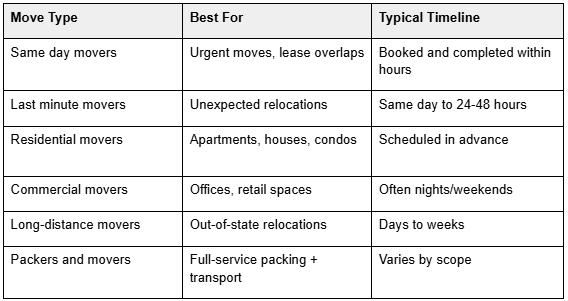
Not every move looks the same, so it helps to understand the different categories of moving services available:

Photo Courtesy: Unsplash.com

If your lease ends unexpectedly or your closing date shifts, same-day movers and last-minute movers exist precisely for those scenarios, stepping in when there’s little room for planning. On the other end of the spectrum, residential movers handle the more predictable apartment-to-apartment or house-to-house transitions that make up the bulk of everyday relocations.

Business Moves Need a Different Approach

Businesses have their own set of demands. Commercial movers are used to working around office hours, minimizing downtime, and safely transporting sensitive equipment like servers, monitors, and files. A retail shop relocating inventory has very different needs than a law firm packing up filing cabinets, so ask any company you’re considering about their specific experience with your type of business.

Searching Smart

When typing “movers near me” into a search bar, it’s worth looking past the first few ads and checking reviews, licensing, and insurance details. If you’re unsure what to look for, knowing how to choose a reliable moving company can make comparing quotes much easier.

Photo Courtesy: Unsplash.com

When the Move Isn’t Local

Not every relocation stays within city limits. For anyone heading to another state, long-distance movers bring a different level of coordination to the table, handling logistics like interstate permits, extended transit times, and storage options if your new place isn’t ready yet. These moves typically require more advance notice than a local shuffle, so booking early tends to pay off in both cost and availability.

Full-Service Convenience

For people who want to hand off the entire process, many companies now offer packers and movers as a bundled service, handling everything from bubble-wrapping dishware to loading the truck and unloading at the final destination. This is especially useful for families with young kids, older adults, or anyone simply short on time. A reputable local mover should be transparent about pricing and willing to walk through the scope of your move before you commit. Movers Not Shakers is one of the movers in NYC offering that kind of full-service support, a Brooklyn-based company whose crews draw on decades of hands-on experience with residential and commercial relocations across the five boroughs.

Getting Quotes That Make Sense

Before booking anyone, request a few written estimates so you can compare pricing structures, included services, and cancellation policies side by side. A trustworthy moving company will offer a clear, itemized quote rather than a vague ballpark figure, and won’t pressure you to sign on the spot.

Matching Your Needs to the Right NYC Movers

NYC moves come with their own quirks, but they don’t have to be chaotic. Whether you need same-day movers for an emergency, residential movers for a planned apartment switch, or long-distance movers for a move out of state, matching your needs to the right kind of service goes a long way toward a smoother experience.

Joel Yi Brings a Systems-First Mindset to Artificial Intelligence

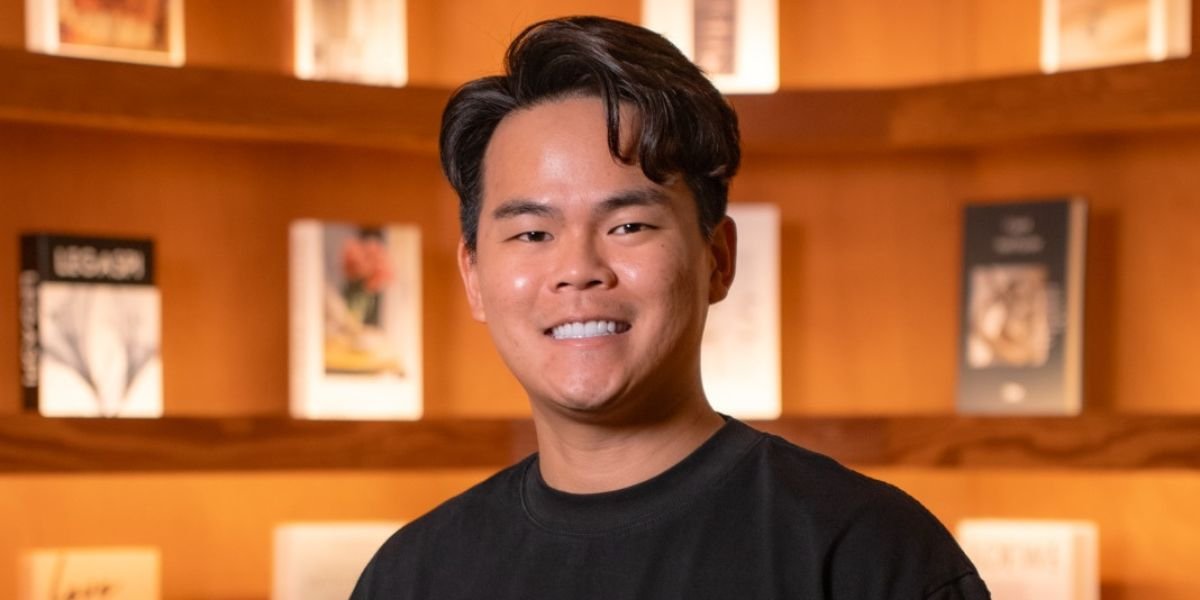
Ask Joel Yi how he approaches artificial intelligence, and the answer tends to come back to systems. The founder of DeployAIBots describes himself as someone who thinks in systems first, an orientation that shapes how he builds his company, how he evaluates the technology, and how he believes businesses should approach AI more broadly.

A systems-first mindset, in Joel Yi’s framing, means caring less about any individual tool and more about how the pieces fit together to produce an outcome. He has said that he cared more about building systems that scale than about building teams that need constant management, a statement that captures the orientation precisely.

For Joel Yi, the question is never simply what a piece of technology can do. It is how that technology can be arranged into a system that reliably accomplishes something a business needs.

This perspective grew out of his background. Joel Yi studied computer science and earned recognition for his work in artificial intelligence at Pacific Lutheran University, where he learned to think about technology in structured terms. He later became one of the first cyber officers in the United States Army cyber branch, a role built around systems, their design, their defense, and their failure modes. That experience deepened his instinct to see problems and solutions as systems rather than as isolated tools or tasks.

The systems-first mindset directly shapes DeployAIBots. The company builds agentic AI and automation designed to execute operational work from start to finish rather than only assisting with individual steps. Joel Yi emphasizes that this is a meaningful distinction. A tool that helps with a single task leaves the surrounding system largely unchanged, while a system that runs an entire process can change how the work gets done.

DeployAIBots installs automation designed to handle repetitive processes such as scheduling, customer communication, and internal coordination as complete systems, not as scattered features.

Joel Yi argues that the systems-first approach is what many companies miss when they adopt artificial intelligence. He has observed that businesses often buy tools and expect transformation, only to be disappointed because they treated AI as an add-on rather than redesigning the system around it.

His repeated insistence that companies rethink their workflows reflects the systems-first view. The tool matters less than the structure it operates within, and a powerful tool placed inside a poorly designed system may underperform.

The mindset also explains Joel Yi’s emphasis on measurable outcomes. A system, unlike a standalone tool, has a defined purpose and a measurable result. Joel Yi has said that everything DeployAIBots does connects to a result a client can see, whether that means reducing costs, increasing capacity, or improving operational efficiency.

Thinking in systems naturally leads to thinking in outcomes, because a system is judged by what it produces. That connection runs through how he builds and evaluates the company’s work.

There is a scalability argument embedded in the systems-first view as well. Joel Yi sees systems as more scalable than teams, because a well-designed system can handle growing volume without the friction of constantly hiring and managing more people.

This is the basis for his belief that artificial intelligence may allow companies to grow without expanding their workforce at the same pace. The systems handle the increasing load, while people focus on work that requires human judgment, creativity, and oversight. DeployAIBots reports reclaiming more than 150 hours of work each week through its own systems, an example the company uses to illustrate the principle.

Joel Yi is clear that a systems-first mindset requires discipline. It is harder to design a complete system than to adopt a single tool, and it demands a willingness to question how a process is structured rather than simply automating its existing form.

But he argues that this difficulty is where the value lies. Companies willing to think in systems may capture more from artificial intelligence than those that treat it as a collection of features, because they redesign the work itself rather than adding new technology to the surface of existing processes.

For Joel Yi, the systems-first orientation is not a technique he applies occasionally. It is the lens through which he sees artificial intelligence entirely. From its Miami headquarters, DeployAIBots carries that lens into its deployments, building automation as systems meant to run operational work and produce measurable results.

In a field often distracted by the latest tool, Joel Yi’s insistence on thinking in systems is, in his view, what can help turn artificial intelligence from a novelty into an operating model.