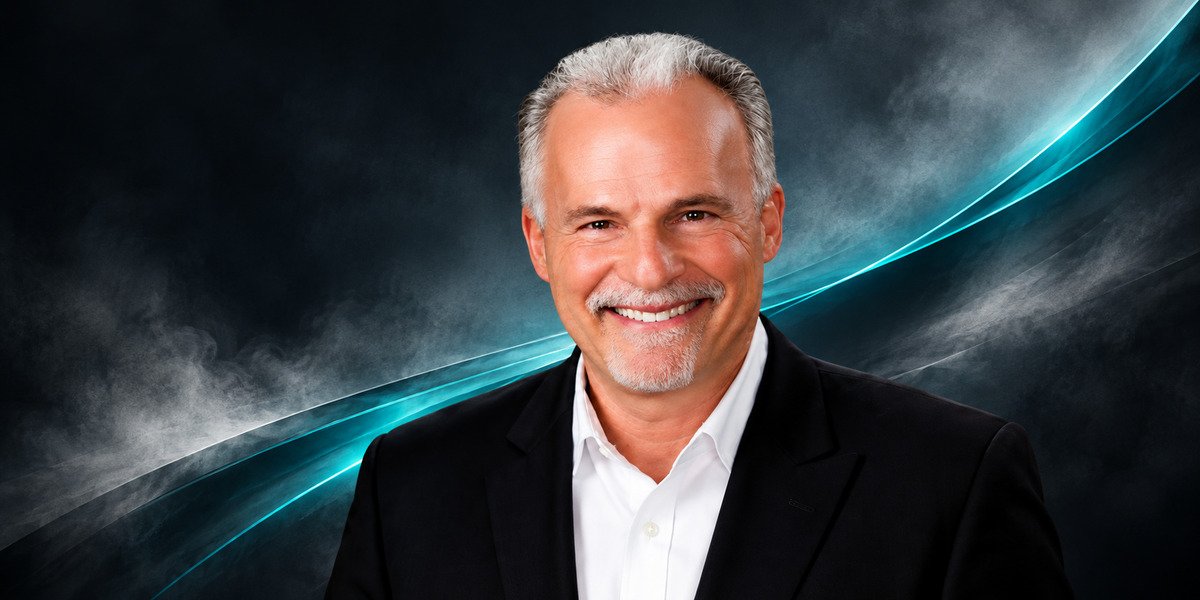

Ask Joel Yi how he approaches artificial intelligence, and the answer tends to come back to systems. The founder of DeployAIBots describes himself as someone who thinks in systems first, an orientation that shapes how he builds his company, how he evaluates the technology, and how he believes businesses should approach AI more broadly.
A systems-first mindset, in Joel Yi’s framing, means caring less about any individual tool and more about how the pieces fit together to produce an outcome. He has said that he cared more about building systems that scale than about building teams that need constant management, a statement that captures the orientation precisely.
For Joel Yi, the question is never simply what a piece of technology can do. It is how that technology can be arranged into a system that reliably accomplishes something a business needs.
This perspective grew out of his background. Joel Yi studied computer science and earned recognition for his work in artificial intelligence at Pacific Lutheran University, where he learned to think about technology in structured terms. He later became one of the first cyber officers in the United States Army cyber branch, a role built around systems, their design, their defense, and their failure modes. That experience deepened his instinct to see problems and solutions as systems rather than as isolated tools or tasks.
The systems-first mindset directly shapes DeployAIBots. The company builds agentic AI and automation designed to execute operational work from start to finish rather than only assisting with individual steps. Joel Yi emphasizes that this is a meaningful distinction. A tool that helps with a single task leaves the surrounding system largely unchanged, while a system that runs an entire process can change how the work gets done.
DeployAIBots installs automation designed to handle repetitive processes such as scheduling, customer communication, and internal coordination as complete systems, not as scattered features.
Joel Yi argues that the systems-first approach is what many companies miss when they adopt artificial intelligence. He has observed that businesses often buy tools and expect transformation, only to be disappointed because they treated AI as an add-on rather than redesigning the system around it.
His repeated insistence that companies rethink their workflows reflects the systems-first view. The tool matters less than the structure it operates within, and a powerful tool placed inside a poorly designed system may underperform.
The mindset also explains Joel Yi’s emphasis on measurable outcomes. A system, unlike a standalone tool, has a defined purpose and a measurable result. Joel Yi has said that everything DeployAIBots does connects to a result a client can see, whether that means reducing costs, increasing capacity, or improving operational efficiency.
Thinking in systems naturally leads to thinking in outcomes, because a system is judged by what it produces. That connection runs through how he builds and evaluates the company’s work.
There is a scalability argument embedded in the systems-first view as well. Joel Yi sees systems as more scalable than teams, because a well-designed system can handle growing volume without the friction of constantly hiring and managing more people.
This is the basis for his belief that artificial intelligence may allow companies to grow without expanding their workforce at the same pace. The systems handle the increasing load, while people focus on work that requires human judgment, creativity, and oversight. DeployAIBots reports reclaiming more than 150 hours of work each week through its own systems, an example the company uses to illustrate the principle.
Joel Yi is clear that a systems-first mindset requires discipline. It is harder to design a complete system than to adopt a single tool, and it demands a willingness to question how a process is structured rather than simply automating its existing form.
But he argues that this difficulty is where the value lies. Companies willing to think in systems may capture more from artificial intelligence than those that treat it as a collection of features, because they redesign the work itself rather than adding new technology to the surface of existing processes.
For Joel Yi, the systems-first orientation is not a technique he applies occasionally. It is the lens through which he sees artificial intelligence entirely. From its Miami headquarters, DeployAIBots carries that lens into its deployments, building automation as systems meant to run operational work and produce measurable results.
In a field often distracted by the latest tool, Joel Yi’s insistence on thinking in systems is, in his view, what can help turn artificial intelligence from a novelty into an operating model.