Maurice Christian Celebrates 20 Years of The Greatest Story: A Musical Milestone Rooted in Faith, Purpose, and Legacy


From his early days performing with Justus to his place among R&B’s celebrated entertainers, the Chicago-born vocalist and songwriter reflects on two decades of original music and a lifetime devoted to his craft.

Twenty years. One remarkable musical journey. A legacy that continues to unfold.

For singer, songwriter, and entertainer Maurice Christian, 2026 represents a significant chapter in a career defined by musical excellence, perseverance, and purpose. This year marks the 20th anniversary of his first CD featuring entirely original compositions, The Greatest Story, released in 2006.

More than an anniversary, the milestone celebrates Christian’s evolution as an artist, his commitment to creating meaningful music, and the spiritual inspiration that has guided his songwriting for two decades.

While audiences have come to know Christian through his dynamic performances, distinctive vocals, and associations with legendary musical acts, The Greatest Story represents something deeply personal: an opportunity to share his own words, melodies, and messages with the world.

A Musical Journey Years in the Making

Long before recording The Greatest Story, Christian was establishing himself as a versatile entertainer with a passion for performing.

Born in Chicago, Illinois, he developed a career spanning more than four decades, with experiences that placed him alongside some of the most recognizable names in entertainment.

His early career included performing as an original member of The Puppets, whose appearances on television programs such as The Midnight Special and American Bandstand, along with performances associated with legendary radio personality Wolfman Jack, helped establish his presence in the entertainment industry.

Christian’s contributions as a member of The Puppets would later receive historical recognition through his induction into the Chicago Hip Hop Hall of Fame.

Throughout his career, he has shared stages with an extraordinary roster of entertainers, including Ray Charles, Kool & The Gang, Little Richard, Gladys Knight & The Pips, Smokey Robinson, and numerous others.

His musical journey also included performing with his band Justus, alongside musicians Kent Christensen, George Lynch, and Roy Wells. A photograph taken during a performance in La Verne, California, captures an earlier chapter of Christian’s career, offering a glimpse into the experiences that helped shape his musical identity.

Those formative years laid the foundation for what would eventually become one of his most meaningful artistic accomplishments.

The Greatest Story: Twenty Years of Original Music
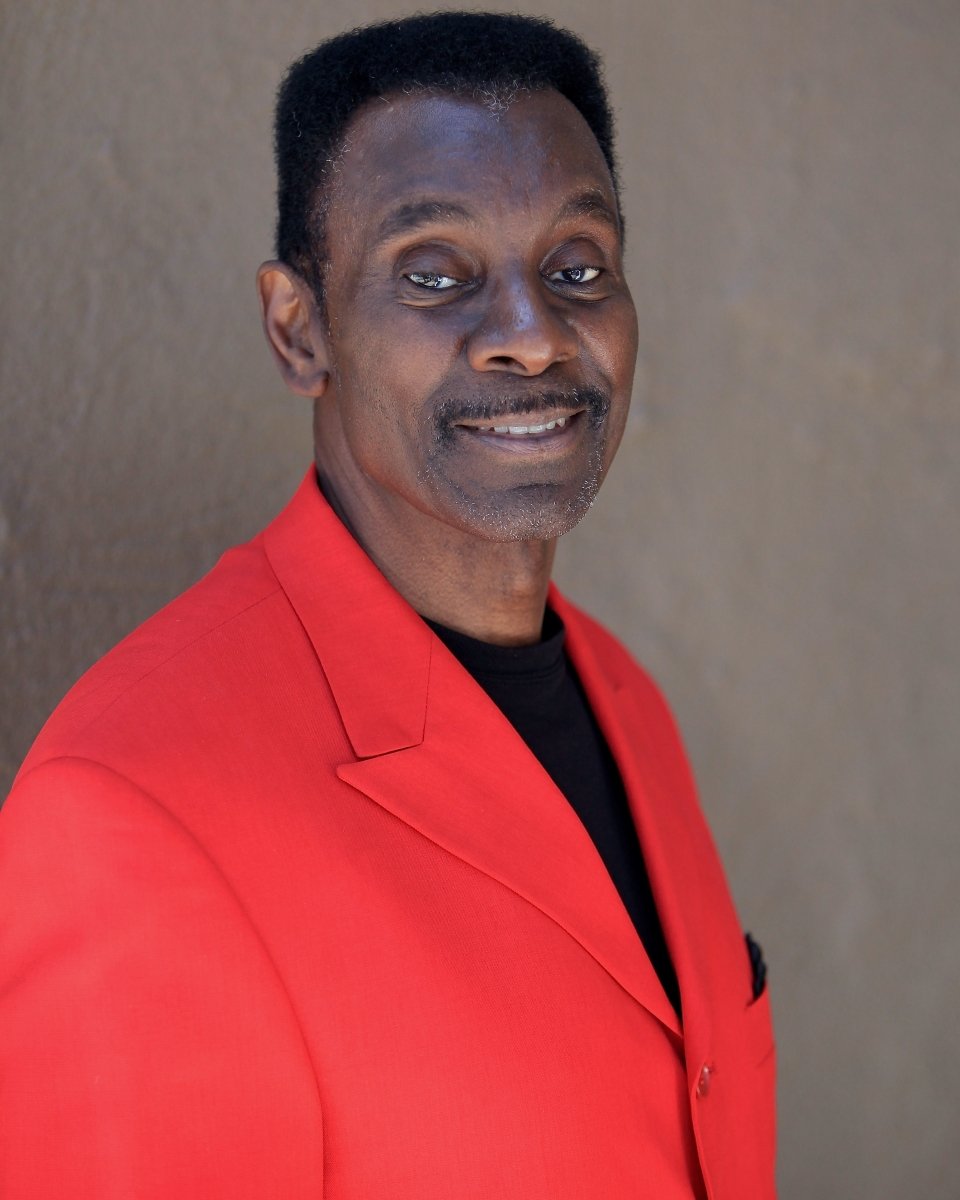
Photo Courtesy: Maurice Christian

In 2006, Christian reached a personal milestone when he wrote and recorded The Greatest Story, his first CD consisting of songs he had written himself.

For an entertainer who had spent years bringing music to audiences through live performances and collaborations, the project represented a defining opportunity to express his creativity through original songwriting.

Two decades later, Christian views the recording as something far greater than a collection of songs.

Reflecting on the anniversary, he shares:

“Twenty years ago I wrote and recorded my first CD ‘The Greatest Story’. Looking back on this I realize these were not just inspiration of words and melodies but of a divine nature. A revealing destiny, a legacy gifted by God to leave behind sowing kindness, love, peace, joy and comfort through the songs given me to remain in people hearts forever. By grace the inspiration continues in my heart and mind today and I am grateful for the opportunity to serve alone side many others of the same. Twenty years of successful song writing and performances is the milestone I’m celebrating today with more to come.”

– Maurice Christian

His reflections reveal an artist whose relationship with music extends beyond entertainment.

For Christian, songwriting has become a means of encouraging others, sharing messages of hope, and creating something meaningful that can endure long after a performance ends.

Honoring the Past While Continuing to Make History

Christian’s career has never been confined to one musical chapter.
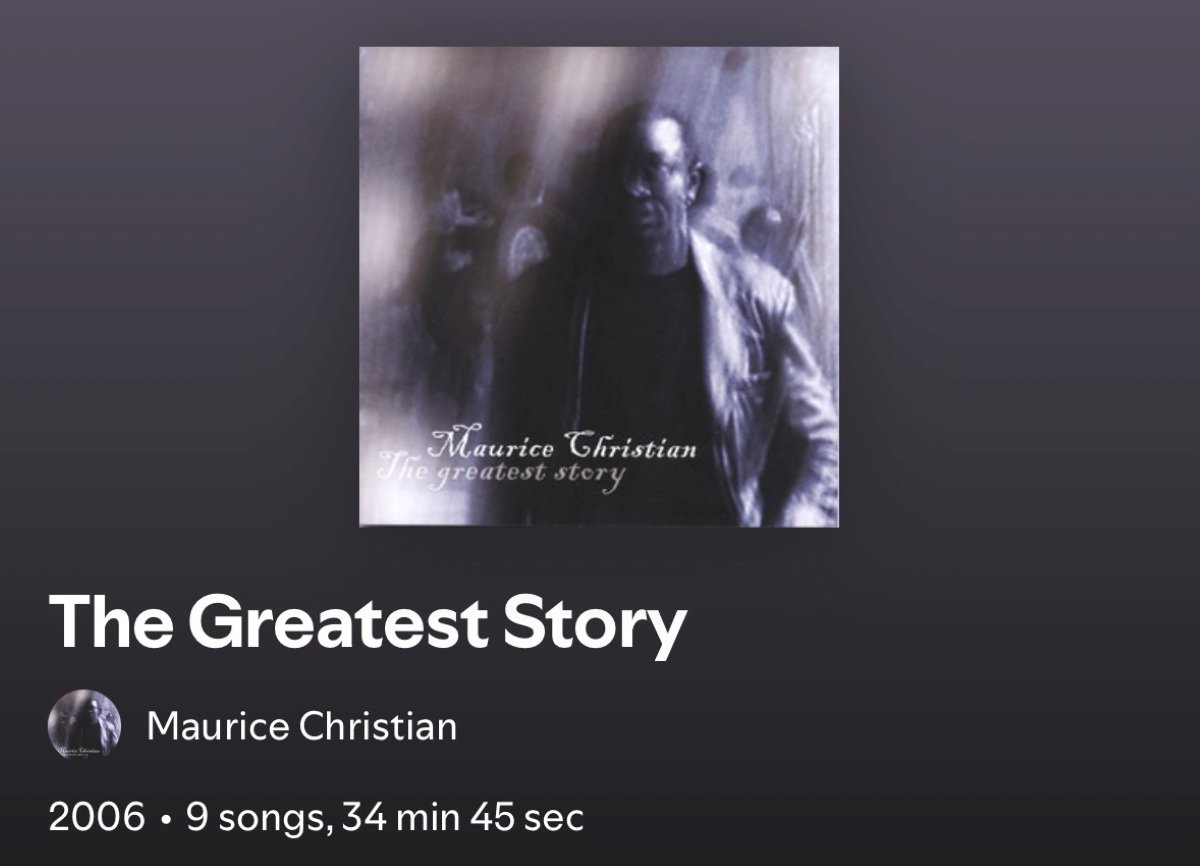
Photo Courtesy: Maurice Christian

From his early television appearances and recording experiences with MCA Records and Brookhill Records to his later work as a vocalist with the legendary R&B group The Main Ingredient, his journey reflects remarkable longevity in an ever-changing industry.

His involvement with The Main Ingredient has allowed him to contribute to the continuation of a celebrated musical legacy while introducing timeless R&B to new audiences.

Yet, even with decades of professional accomplishments, the 20th anniversary of The Greatest Story carries a unique significance.

It recognizes Christian not only as a performer capable of interpreting memorable music but also as a songwriter with his own artistic voice and message.

In an industry where musical trends continually evolve, reaching two decades since the release of an original recording is an achievement worthy of recognition.

For Christian, however, the celebration is not simply about looking backward.

It is about acknowledging the journey, appreciating the opportunities that have shaped his life, and embracing the creative possibilities still ahead.

The Greatest Story Is Still Being Written

Perhaps the most meaningful aspect of Christian’s 20-year songwriting milestone is his unwavering belief that music carries the power to touch lives.

His desire to spread kindness, love, peace, joy, and comfort through his compositions remains as strong today as it was when he recorded his first original CD in 2006.

As he celebrates this anniversary, Christian continues to demonstrate that artistic purpose does not diminish with time. Instead, it can deepen through experience, gratitude, and an enduring commitment to one’s calling.

Twenty years after The Greatest Story began its journey, Maurice Christian is celebrating more than an album. He is celebrating the gift of music, the power of faith, and a legacy that continues to inspire.

And as the artist himself makes clear, there is still much more to come.

To connect with Maurice, visit his website here,

https://myintimatevoice.com

Privacy Without Secrecy: How Public Figures Can Protect What They Have Built

A New Orleans tax attorney explains the difference between privacy and secrecy for people with public profiles. The feature shows how lawful structure, insurance and a disciplined team lower exposure to claims, and why protection must be arranged before a dispute begins.

By Dr. Tamara Patzer

Fame brings an odd side effect. People assume you are wealthy, they assume you are an easy target and they assume they know where you live and what you own. Some of those assumptions are wrong and a few are dangerous. Todd M. Villarrubia, a New Orleans attorney who focuses on tax and estate planning, tackles the subject in Entrepreneurial B.E.A.S.T. Mode™ with a line that sets the ground rules: “Asset protection isn’t about secrecy or hiding assets.”

What is the difference between privacy and secrecy?

Privacy is the right to decide what the world sees. Secrecy is an effort to conceal facts from people who are entitled to them, such as tax authorities or courts. A legitimate plan aims for the first and avoids the second. Reports are filed, taxes are paid and records are kept. What changes is how assets are owned and who can reach them.

The distinction matters because shortcuts sold as privacy tools often fail, and the failure can be costly. A sound structure can be explained to a judge without embarrassment. If a plan only works when no one looks at it, it is not a plan.

Why do public figures attract claims?

Because they are visible, and visibility suggests resources. The book is blunt about it: “Plaintiffs do not seek fairness; they seek deep pockets.” It also treats suits as an ordinary part of business life.

A public figure may face claims from many directions, such as a contract partner, a former employee, a person injured at an event or someone who objects to something said online. Most are not about the merits as much as about who can pay. That is why the structure of ownership matters as much as the facts of the dispute.

How large is the group of people who might benefit from planning?

Larger than the famous. The Federal Reserve’s distributional accounts, reported through FRED, show about $60.3 trillion of net worth held by the top 1 percent in the second quarter of 20261. Many in that group are not widely known. They are business owners, professionals and investors whose names appear on documents, not in headlines.

The author reminds readers that wealth is not about fame: “Membership doesn’t require a Gulfstream; it simply requires having built or accumulated significant financial power.” The tools in this article apply to a local business owner as much as to a performer.

What does lawful structure look like?

Separate entities for separate risks. The book states the principle simply: “The principle is simple: separate entities for separate risks.” A person might hold the brand and the income in one company, real estate in another and investments in a third. Each entity has its own records, bank account and purpose.

Entities also carry different tax treatment. The IRS explains the entity classification election on Form 88322, and the right choice depends on the facts. A family should expect its attorney and accountant to decide that together.

Ownership of a home, vehicles and valuable property also matters. Exposure tends to grow with holdings, since every property adds both cash flow and potential liability. Insurance and sensible titling reduce that exposure.

When must protection be arranged?

Before trouble. The book states the rule clearly: “These vehicles must be established before claims arise to provide effective protection; they offer no protection against existing liabilities.” A transfer made after a claim has been threatened can be challenged by a court. The time to build structure is a quiet period, for ordinary business reasons, with documents that explain why.

A person who is already facing a dispute should seek legal advice about what is possible. Some steps remain available, and others do not.

What else belongs in a privacy plan?

Practical points that people overlook. Property can be held in a way that does not display a home address in public records. Staff and contractors can sign confidentiality agreements. Online accounts can be protected with strong security. Family members can be coached on what to share. Public records, social media and data brokers can all reveal more than people expect, and some of the steps to limit that are inexpensive.

None of this replaces legal structure, and none of it requires secrecy about money from the people entitled to see it. It reduces the amount of material that can be used against you or your family by people with no legitimate claim. It also lowers the temperature at home, because family members know what to say, what to ignore and whom to call when a stranger asks about money.

Who should run the plan?

A coordinated team. The SBA counts 36,207,130 small businesses in the United States3, and many public figures run businesses that look much the same as theirs. The difference is the volume of attention. A team that includes an attorney, an accountant, an insurance professional and a financial adviser should meet together regularly and share one list of entities, accounts and policies.

The book names the underlying risk: “Concentration without protection is not strength; it’s exposure.” Spreading ownership across properly built entities, with insurance and records to match, is how a visible person lowers the risk.

What is a sensible first step?

List what you own and how you own it. Mark anything held in your personal name. Ask your attorney which items belong in a separate entity and which are better left alone, and ask your insurance professional whether coverage matches the exposure. Then set a date to repeat the exercise each year.

Common questions

Can I keep my address out of public records? There are lawful ways to reduce what appears. Ask your attorney what is available in your state.

Will an entity make me immune to claims? No. It can limit what a claim reaches if it is set up and run properly, and it does not cover everything.

Is this legal everywhere? Rules differ by state and country. Seek legal advice before acting.

Sources

  1. Federal Reserve Distributional Financial Accounts, Net Worth Held by the Top 1% (FRED)
  2. Internal Revenue Service, About Form 8832, Entity Classification Election
  3. U.S. Small Business Administration, Office of Advocacy, Frequently Asked Questions About Small Businesses 2026

About the author. Dr. Tamara Patzer is a publisher and former newspaper editor. She was on the staff of The Charlotte Sun when it was named a 2005 Pulitzer Prize finalist for its Hurricane Charley coverage.

About the source. Todd M. Villarrubia is an attorney with an LL.M. in Taxation and a Juris Doctorate. He is an Accredited Estate Planner, a Board Certified Expert in Estate Planning and Administration, and a Fiduciary Investment Advisor Representative. He is the author of Entrepreneurial B.E.A.S.T. Mode™. Wealth Planning Law Group, 101 W. Robert E. Lee Blvd., Ste 404, New Orleans, LA 70124. Phone: 504-982-8207; email: todd@lawealthplan.com; website: https://lawealthplan.com/?utm_source=newsanchored&utm_medium=famous-times&utm_campaign=family-office

Attorney advertising. Sponsored feature written on behalf of Todd M. Villarrubia. This article is general information, not legal or tax advice, and reading it does not create an attorney-client relationship. Results vary.

Kim Kardashian’s Singapore Grand Prix Looks Feature Alaïa and Cavalli

Kim Kardashian attended the Singapore Grand Prix in two designer outfits, pairing a pink Alaïa look from the Spring 2024 collection with a vintage Roberto Cavalli ensemble from Spring 2003. Her appearances connected contemporary designer fashion with archival luxury clothing at one of Formula 1’s major international race events.

Key Takeaways

  • Kardashian wore a pink Alaïa look from the designer’s Spring 2024 collection during her Singapore Grand Prix appearances.
  • Her second reported outfit came from Roberto Cavalli’s Spring 2003 collection.
  • The vintage Cavalli ensemble featured silk chiffon with a floral and pheasant print.
  • The two outfits combined a contemporary designer look with an archival fashion piece.
  • Kardashian’s appearances brought designer clothing into the spotlight at the Formula 1 event.

Kim Kardashian Attends the Singapore Grand Prix

Kim Kardashian attended the Singapore Grand Prix in October 2026, wearing designer outfits from Alaïa and Roberto Cavalli. One look came from Alaïa’s Spring 2024 collection, while the second featured a vintage ensemble from Cavalli’s Spring 2003 collection.

The outfits offered two distinct approaches to designer fashion. The Alaïa look drew from a relatively recent collection, while the Cavalli ensemble used an archival design from the Italian fashion house’s earlier collections.

Kardashian’s appearances placed her clothing choices alongside the Singapore race weekend, an international Formula 1 event that attracts visitors, sporting figures and entertainment personalities. Her outfits also provided identifiable fashion references through their designers and collection seasons.

The combination of contemporary and vintage pieces gives Kardashian’s appearance a clear fashion focus. The collection references establish the origins of both looks and provide specific details for readers interested in celebrity styling.

Pink Alaïa Look Draws From the Spring 2024 Collection

Kardashian’s first reported outfit featured a pink Alaïa look associated with the designer’s Spring 2024 collection. The selection connected her appearance at the race event with a specific runway collection rather than an unidentified or newly released design.

Alaïa is known for its sculptural silhouettes and close-fitting designs. The pink outfit provided a contemporary counterpart to the vintage Cavalli ensemble she wore for another appearance during the Singapore Grand Prix weekend.

The Spring 2024 reference also gives the outfit a clear place within the designer’s collection history. Readers can distinguish the look from newer runway releases and other pieces associated with the fashion house.

The outfit’s identifiable designer and season make it a specific example of Kardashian’s fashion choices during the Singapore event. Its appearance at a major international sporting event also provides a direct connection between celebrity coverage and designer clothing.

Celebrity fashion coverage frequently identifies the designer, collection and individual garments to distinguish one public appearance from another. Gigi Hadid’s Miu Miu runway appearance provides another example of coverage centered on a specific designer collection and the model’s role in its presentation.

For Kardashian, the reported collection details provide a factual basis for examining the designer clothing she wore without attributing motives or broader fashion statements to her.

Vintage Roberto Cavalli Ensemble Features Archival Design

Kardashian’s second reported outfit came from Roberto Cavalli’s Spring 2003 collection. The vintage ensemble featured silk chiffon with a floral and pheasant print, giving the look a different visual character from the pink Alaïa outfit.

The print and fabric are among the defining details of the Cavalli ensemble. Silk chiffon is a lightweight fabric, while the floral and pheasant motifs identify the garment’s distinctive pattern. Together, those details distinguish the outfit from contemporary pieces that may share a similar silhouette but come from different collections.

The Spring 2003 collection reference also establishes the garment’s place in the designer’s archive. Instead of a newly introduced runway look, Kardashian wore a piece associated with an earlier period of Cavalli’s work.

Vintage designer clothing allows individual garments to be identified by their original collections, prints and construction. In this case, the Cavalli ensemble’s documented season and pattern provide a clear description of the piece worn at the Grand Prix.

The outfit therefore adds a separate archival-fashion element to Kardashian’s appearances. Its identifiable origin gives readers a way to understand the garment beyond its immediate appearance at the event.

Kardashian has also appeared at fashion-related events connected to her own brand. At the opening of Skims’ first London flagship, she wore a designer look by Ludovic de Saint Sernin before changing into a sculpted brown corset and maxi skirt. That appearance placed her clothing choices within a different setting, centered on the opening of the brand’s international store.

Designer Outfits Connect Contemporary and Vintage Fashion

The two outfits differed in their collection dates and design references. The Alaïa look came from Spring 2024, while the Roberto Cavalli ensemble originated in Spring 2003. Their selection brought clothing from two distinct periods of designer fashion into the same race-weekend setting.

Collection dates are useful when identifying celebrity outfits because they establish where a garment fits within a designer’s body of work. They also distinguish archival pieces from current-season clothing and help readers follow the origins of individual looks.

Kardashian’s reported choices provide a direct comparison between the two approaches. The pink Alaïa look offered a contemporary collection reference, while the Cavalli outfit carried a vintage designation and a recognizable print associated with its original season.

The contrast can be described through the garments themselves without assuming that Kardashian intended to make a statement about fashion history or vintage collecting. The collection references are sufficient to establish the difference between the two pieces.

For readers researching celebrity fashion, these details also make the outfits easier to identify. Designer names, collection seasons, fabric and print offer more precise information than a general description of clothing worn at a public event.

The distinction between the two collections also helps separate the looks in coverage of the same appearance. One outfit can be identified through its pink color and Alaïa collection reference, while the other can be described through its vintage Cavalli origin, silk chiffon construction and printed design.

Kardashian’s Formula 1 Appearances Draw Fashion Attention

Kardashian’s Singapore Grand Prix appearances connected celebrity coverage with the event’s fashion dimension. The two reported outfits gave the coverage a specific focus on designer clothing, with one look linked to Alaïa’s Spring 2024 collection and the other to Roberto Cavalli’s Spring 2003 archive.

The Formula 1 setting provides the immediate context for the appearances. The Singapore Grand Prix is an international motorsport event, and Kardashian’s presence brought a recognizable entertainment personality into coverage surrounding the race weekend.

The fashion details also separate the story from a basic celebrity attendance report. The names of the designers, the collection seasons and the Cavalli ensemble’s silk chiffon construction and printed pattern provide concrete information about what Kardashian wore.

For fashion readers, the distinction between contemporary collection pieces and vintage garments is central to identifying the outfits accurately. The two looks can be discussed separately while remaining part of the same account of Kardashian’s public appearance.

Kardashian’s reported clothing choices at the Singapore Grand Prix therefore provide a focused subject for celebrity-fashion coverage, grounded in two identifiable designer collections and their contrasting dates.

Frequently Asked Questions

What did Kim Kardashian wear to the Singapore Grand Prix?

Kardashian wore a pink Alaïa look and a vintage Roberto Cavalli ensemble during her appearances at the event. The outfits came from the designers’ Spring 2024 and Spring 2003 collections, respectively.

Which Alaïa collection did Kim Kardashian wear in Singapore?

Her pink look was associated with Alaïa’s Spring 2024 collection. This collection reference identifies the outfit’s season of origin.

Was Kim Kardashian’s Roberto Cavalli outfit vintage?

Yes. The ensemble was identified as a vintage piece from Roberto Cavalli’s Spring 2003 collection. It featured silk chiffon with a floral and pheasant print.

Which Roberto Cavalli collection featured Kardashian’s outfit?

The outfit came from the Spring 2003 collection. Its reported fabric and printed design provide additional details for identifying the ensemble.

Did Kim Kardashian attend the Singapore Grand Prix in 2026?

Yes. Kardashian attended the Singapore Grand Prix in October 2026. Her reported outfits included pieces associated with Alaïa and Roberto Cavalli.

The Lasting Legacy of Dr Matthew A. Barnor in Building Modern Healthcare and Medical Institutions in Ghana

The development of modern medicine in Ghana involved more than the creation of hospitals and medical schools. It also required professional bodies, systems of regulation, private healthcare institutions, medical education, and records of the profession’s history. These institutions developed over several decades as Ghana moved from the colonial period into independence and beyond. Physicians were involved in many of these changes, sometimes through clinical practice and sometimes through administrative or professional work. Dr Matthew A. Barnor was associated with several of these areas. His career included government medical service, private practice, professional leadership, reproductive health, medical regulation, education, hospital administration, and historical writing.

Barnor returned to the Gold Coast in 1949 after studying medicine at the University of Edinburgh and undertaking further training at the London School of Hygiene and Tropical Medicine. He spent almost a decade in government service before establishing a private practice in Accra. In October 1958, he opened the Link Road Clinic, which later developed into Link Road Hospital. The institution acquired hospital status in late 1983 and subsequently became known as Barnor Memorial Hospital. His move into private practice took place during a period when Ghana’s medical profession was developing alongside the country’s transition from colonial rule to independence.

Barnor was also involved in the formation of the Ghana Medical Association. His account in A Socio-Medical Adventure in Ghana provides a first-hand description of the association’s early history. The Ghana Medical Association was launched at Arden Hall of the Ambassador Hotel in Accra in 1958, with Barnor among the doctors present. Dr F.T. Sai became secretary, while Dr C.O. Easmon was elected president. At the next meeting, held on January 12, 1958, Dr J. Schandorf was elected vice-president, with other doctors joining the council. Barnor later served as the association’s Second Secretary and became its third president in 1963.

The early association faced practical difficulties because it brought together government-employed doctors and private practitioners within a voluntary professional body. Barnor’s account records the effort required to create a functioning organization without substantial financial resources. The Ghana Medical Association was incorporated on January 26, 1961, and received a certificate of incorporation. After the Companies Code of 1963 was introduced, the association adopted new articles at an extraordinary general meeting on March 28, 1963, and was incorporated under the new framework in 1964 as a company limited by guarantee. Barnor later used the association’s records and minutes when documenting its history.

His interest in medical history extended beyond professional association records. In the preface to A Socio-Medical Adventure in Ghana, dated November 20, 2000, Barnor explained that his work drew on material from the Ghana archives, including colonial despatches and the period’s “Blue Books.” He also acknowledged the historical works of Walton Claridge and W.E.F. Ward, along with medical history material from F. Agyeman. His access to Ghana Medical Association records followed an invitation from its president, Dr K. Dzane-Selby, to write about the association for its 25th anniversary in 1982. He also acknowledged assistance from J. Adjei Schandorf’s 1982 pamphlet on the association.

Barnor’s institutional work also extended into reproductive health. He was among the figures involved in establishing the Planned Parenthood Association of Ghana in 1967 after the Copenhagen conference sponsored by the International Planned Parenthood Federation in 1966. He organized the Ghanaian group attending the conference and later served as the voluntary local representative for the initiative. The association’s early work involved physicians, nurses, pharmacists, community groups, and other volunteers. Barnor declined the presidency because of the demands of his private practice, but became its first Vice President and remained Medical Adviser for many years. IPPF later described him as the “pivot around which” PPAG was established.

His work in family planning formed part of a wider effort to extend health information into communities. The association’s early activities included cooperation with women’s organizations and the Christian Council in Accra. Volunteer field workers helped carry information directly to women and later extended the work across Ghana’s nine regions. Among those involved was pharmacist Rosina Attoh Korkoi Konuah, who visited private medical practitioners in Accra and encouraged them to support the movement. Barnor’s household also served as an early base for PPAG before it had permanent offices. The association’s motto, “Have children by choice and not by chance,” expressed the purpose of the family planning movement at a time when such a direct public message was considered daring. These activities helped establish a model in which medical professionals worked alongside community volunteers.

Barnor also participated in the development of national medical institutions. He supported efforts connected with the establishment of the University of Ghana Medical School and later became involved with the Medical and Dental Council after its establishment in 1974. He served as the council’s treasurer. His university connections also included service at the University of Ghana, where he became the first chairman of the Legon Hospital Management Committee. He served in that role for about a decade during the vice-chancellorship of Professor Alex Kwapong, helping oversee the management of the university hospital. The position added hospital administration to a career that had already included clinical practice and professional leadership.

Recognition of Barnor’s work came during the later part of his career. He was elected a Fellow of the West African College of Physicians in 2003 and was also a Foundation Fellow of the Ghana College of Physicians and Surgeons. In 2004, the University of Ghana awarded him the degree of Doctor of Science, honoris causa, citing his contribution to medicine, teaching, community development, and the establishment and development of PPAG. He also received a Lifetime Achievement Award for Meritorious Service to Humanity from the Ghana Medical and Dental Council. His work in women’s health was separately recorded in Perdita Houston’s Not by Chance but by Choice. The book’s publication coincided with the 40th anniversary of the family planning movement, and its preface identified Barnor among nine people worldwide recognized for contributions to women’s health through family planning. Houston’s account placed his contribution within the movement’s broader international history.

Barnor died in June 2005, after more than five decades of medical and institutional work in Ghana. His career crossed several parts of the country’s healthcare system, from government service and private practice to professional organization, medical regulation, reproductive health, university administration, and historical research. Reflecting on his wider contribution, Dr Fred Sai described Barnor’s work as part of a generation that helped demonstrate how Ghanaian doctors could use their professional positions to improve services and contribute to the country’s future. Sai’s assessment also emphasized the wider public value of Barnor’s work rather than personal recognition. His writings preserved accounts of the Ghana Medical Association and the development of medicine in the country. Within that history, Barnor is associated with several institutions that helped shape Ghana’s medical profession and healthcare system.