
Some artists create work that looks beautiful on a wall. Others create work that carries identity.
Steeling Roses belongs to the second category.
Behind the name is an artist whose visual language feels deeply connected to modern urban culture, emotional resilience, and transformation. Even with minimal public information available, the artistic identity itself already speaks loudly. The name Steeling Roses immediately creates contrast, softness against strength, beauty against pressure, emotion against survival.
And that contrast lives inside every part of the work.
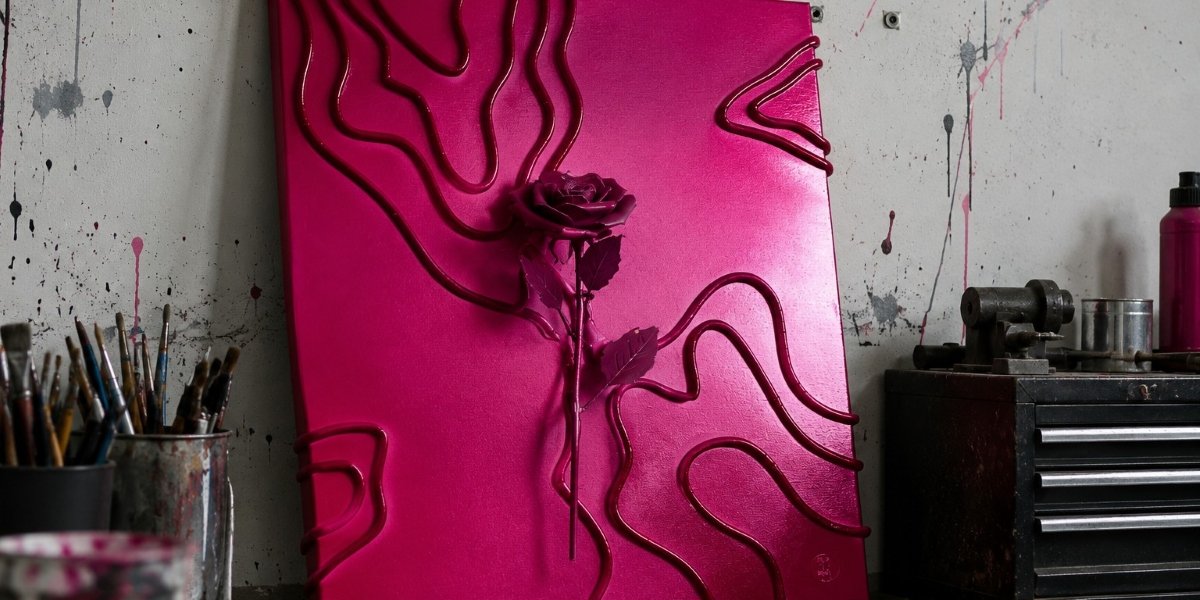
Steel roses emerge from industrial materials. Graffiti textures collide with sculptural craftsmanship. Fashion aesthetics blend with street influence. Raw metal becomes emotional symbolism. The result is a body of work that feels contemporary, masculine, emotionally charged, and impossible to place into a single artistic category.
That refusal to fit neatly into one world is exactly what makes the work compelling.
Today’s art landscape is no longer divided into traditional labels like “fine art” or “street art.” Contemporary artists increasingly move between sculpture, fashion, design, music culture, lifestyle branding, and personal storytelling all at once. Steeling Roses naturally exists inside that modern intersection.
The work feels equally at home in galleries, luxury lofts, creative studios, fashion spaces, music environments, and collector homes where personality matters more than perfection.
There is also something deeply symbolic about the artist’s choice of materials.
Steel is cold, heavy, industrial, permanent. A rose is delicate, emotional, fleeting, and universally associated with human feeling. Bringing those two elements together creates an immediate emotional reaction because it mirrors modern life itself. Most people today are constantly balancing strength with vulnerability, ambition with exhaustion, and confidence with emotional pressure.
Steeling Roses turns that emotional contradiction into visual form.
And perhaps that is why the work resonates.
There is a raw honesty behind it. Nothing feels overly polished or artificially manufactured. The welded surfaces, industrial textures, rough edges, spray-painted layers, and sculptural imperfections all contribute to a visual language that feels real rather than performative.
You can sense the physical process behind the artwork.
The heat.
The labor.
The sparks.
The transformation of material into meaning.
That physicality gives the work a presence that digital-first contemporary aesthetics often cannot replicate.
At the same time, there is strong emotional storytelling hidden beneath the industrial surfaces. Roses repeatedly appear throughout the artist’s universe, but not in a traditionally romantic way. Here, they symbolize survival, loyalty, memory, pain, and resilience. They become emotional artifacts rather than decorative flowers.
Even the darker aesthetic choices throughout the work seem intentional. Coffin imagery, oversized numbers, urban textures, and layered symbolism create a visual atmosphere that feels connected to themes of mortality, identity, pressure, reinvention, and legacy. Yet despite the heaviness of some symbols, the work never feels hopeless.
It feels defiant.
That emotional defiance is one of the strongest qualities within the Steeling Roses identity. The work reflects someone who understands struggle, responsibility, ambition, fatherhood, entrepreneurship, and emotional pressure, yet still chooses to create beauty from difficult materials and experiences.
That perspective gives the work emotional weight beyond aesthetics alone.
The artist’s connection to fashion and celebrity culture also feels natural rather than forced. Unlike artists who simply borrow from street culture visually, Steeling Roses appears genuinely immersed in those worlds. The work exists comfortably beside streetwear, hip-hop influence, luxury aesthetics, and contemporary urban identity because it feels rooted in real experience rather than trend imitation.
That authenticity matters.
In today’s cultural landscape, audiences connect most deeply with artists who create from instinct and lived emotion rather than calculated branding. And while Steeling Roses clearly understands visual identity and presentation, the strongest aspect of the work remains its emotional honesty.
The art feels personal.
Even when viewers do not fully understand every symbol or reference, they still feel the energy behind it. Strength. Pressure. Vulnerability. Ambition. Loyalty. Survival. Those emotions exist inside the work long before intellectual interpretation begins.
And that instinctive connection is powerful.
There is also a larger cultural relevance to the artist’s work. Contemporary audiences increasingly crave art that feels tactile, emotional, and physically made in response to a more digital, emotionally disconnected world. Steeling Roses offers exactly that contrast, handcrafted industrial work filled with emotional symbolism and human imperfection.
The artist is not simply creating sculptures or visual pieces.
Steeling Roses is building a world where steel becomes emotional language, where rough materials carry softness beneath the surface, and where contemporary art reflects the complicated emotional reality of modern life itself.
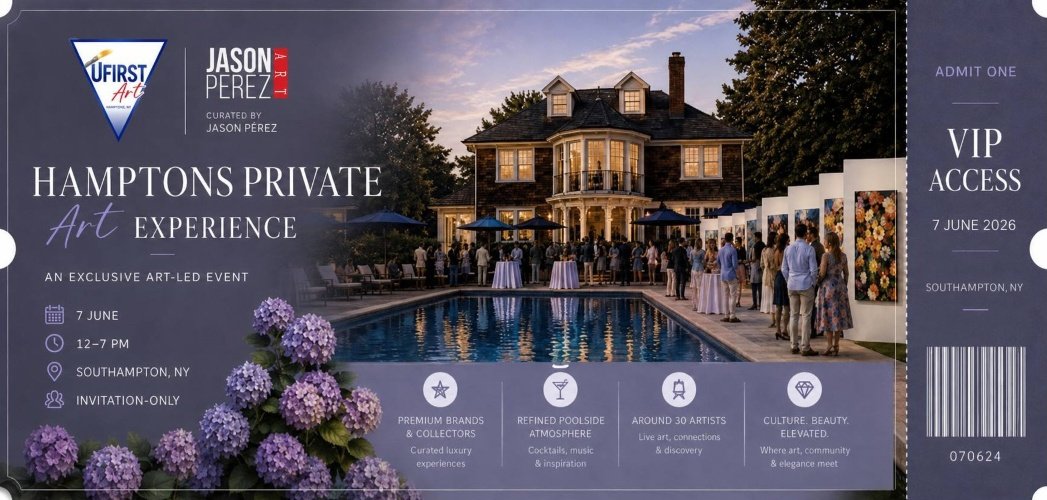
The artist’s work will be featured at the upcoming Hamptons Private Art Experience on June 7, 2026, in Southampton, New York, an invitation-only gathering produced by Jason Perez and UFIRST Art Production. Set within a private Hamptons estate, the experience brings together collectors, tastemakers, and high-net-worth guests for an elevated evening where contemporary art, curated networking, and refined summer lifestyle converge in an intimate collector-focused setting. Unlike traditional exhibitions, the event is designed to create meaningful access between artists and collectors, positioning each work within a sophisticated cultural atmosphere shaped by exclusivity, conversation, and artistic discovery.