By: Amanda Roberts
He doesn’t just take pictures — he tells stories through light and shadow. His work is marked by a depth that often resonates even through a screen. In this conversation, he shares his philosophy, his approach to emotion, and why photography, for him, is more than a craft — it’s a way to see the world differently.
Q: Andrii, you’re often described as part of the “new wave” of photographers. What does that term mean to you?
Andrii Vernyi: I think it’s about how we no longer just capture reality — we reinterpret it. For me, photography isn’t about trends; it’s about a state of being. The camera became an extension of my vision back in school. It taught me not just to look, but to truly see.
Q: You started your journey with a small business at the age of 13. How did that shape you as an artist?
Andrii Vernyi: Profoundly. I’ve always lived between two worlds — creativity and entrepreneurship. My first business was selling selfie sticks, and I organized events for thousands of people. That taught me responsibility, decisiveness, and speed. But at night, I was drawing, creating 3D art, searching for myself through visuals. It wasn’t just about making something beautiful — I wanted to understand how it could potentially serve others.
Q: Today, your portfolio spans dozens of countries, brands, and events. How do you stay true to yourself?
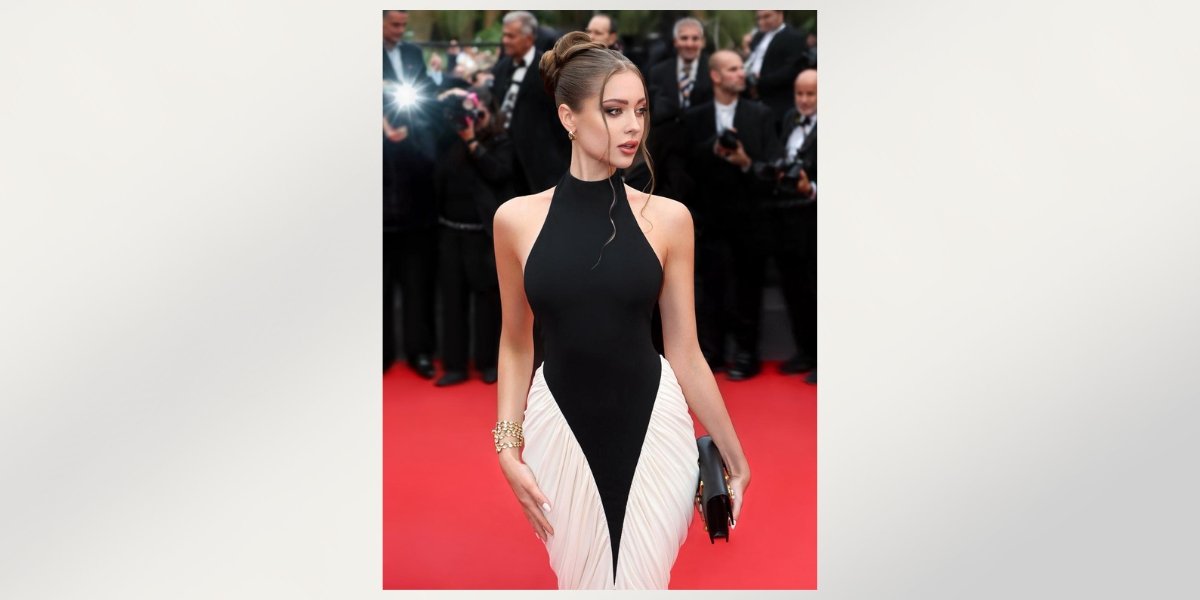
Andrii Vernyi: I don’t chase what’s “in style.” What matters to me is the emotional state of the person in the frame. I’m not just shooting clothes or objects — I’m capturing stories, moods, or even the tension of a moment. And that often requires personal connection, co-creation. That’s likely why my work is recognizable.
Q: You’ve developed your own method — the “Emotional Code.” What is it?
Andrii Vernyi: It’s a way of working not with poses, but with emotion. I studied why some images resonate and others don’t. I realized it’s not solely about technique — it’s about honesty. About the inner state of the person in front of the camera. The Emotional Code isn’t a formula — it’s a practice of being present, of sensing people, spaces, light with subtlety. It’s a method informed by psychology, intuition, and a lot of experience.
Q: You also write academic articles about color psychology and the commercial market. Why is that important to you?
Andrii Vernyi: Because photography isn’t just aesthetics — it’s knowledge. I want visual professionals to have tools, not just inspiration, but an understanding of how things work. Color can affect perception; emotion can build brand trust. It’s all connected. And if you understand that, your photography can work on a deeper level.
Q: What inspires you the most right now?
Andrii Vernyi: People. Their stories, emotions, and inner movement. I love listening, observing, and catching details. Sometimes a half-glance can feel like a complete frame. Sometimes the silence between words says more than any pose. I think photography is about trust. And when there’s trust, something real can emerge.
Q: And finally, what would you say to your 13-year-old self — the boy selling selfie sticks and dreaming of a camera?
Andrii Vernyi (smiles): Don’t rush. But don’t stop either. Believe in yourself, even when it’s hard. And remember — the most important things aren’t in front of the lens, but behind it. Because photography isn’t about gear — it’s about presence. About how sincerely you see. And if you truly look with your heart, the camera might simply become a tool that captures the truth.
With every shoot, I rediscover myself. And maybe that’s the essence of photography: it doesn’t just change the image — it changes you.
The Silence That Leaves a Trace
In a world loudly obsessed with trends, speed, and algorithms, Andrii Vernyi speaks of something else. Of depth. Of trust. Of the moment when the world quiets, and something real might be born between light and shadow.
His photography is an invitation to see with your heart. It’s not about taking pictures for the sake of an image — it’s a dialogue with reality, often hidden just outside the frame.
His journey suggests that sincerity has power. That style can be silent, yet deeply resonant. That photography isn’t just a reflection of the world — it’s a way to reimagine it.
Published by Jeremy S.