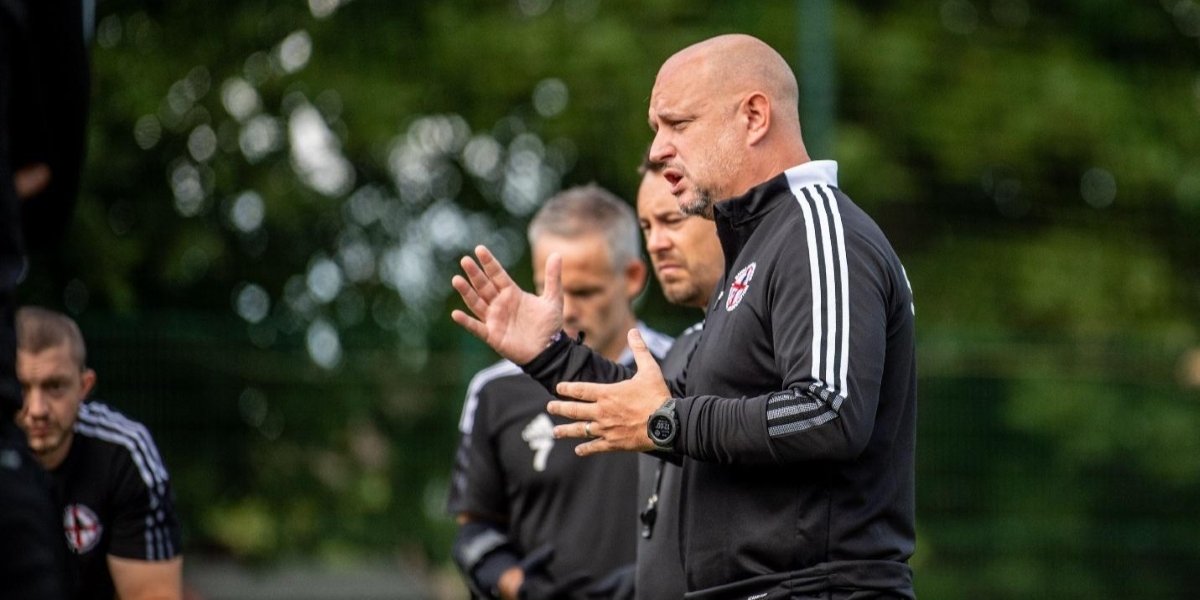

In English football, the careers that attract the most public attention tend to follow a familiar pattern. Players become professionals, managers win trophies, and major moments unfold in front of television audiences and large crowds. Less visible, but equally important to the structure of the sport, are the thousands of coaches who spend their careers working in academy systems, educational institutions, and development programs.
The modern academy system in England depends on those coaches.
Over much of the past thirty years, clubs have been making significant investments in youth development. The implementation of more structured academy models, along with the Elite Player Performance Plan of 2012, altered clubs’ approach to player development, talent scouting, and coach education. The objective was not simply to produce professional footballers. It was to create long-term systems capable of simultaneously developing players, coaches, and performance environments.
Scott Steven Rogers built much of his professional career within that landscape.
Born in Blackpool, England, in September 1977, Rogers pursued a path that combined education and football coaching. After studying Sports Science at Edge Hill University and completing postgraduate training in secondary physical education, he began working in education while continuing to develop his coaching experience. For many coaches of his generation, this was a familiar route. Football coaching rarely existed in isolation. It developed alongside teaching, mentoring, and broader educational responsibilities.
Rogers started coaching in 2002, when there was a growing need for qualifications in English football. In the years since then, professional academies have grown, and clubs have become more engaged in youth development programs.
In 2009, Rogers obtained his UEFA B License. Within the UEFA coaching structure, the qualification represented an important professional milestone. It provided access to coaching opportunities within elite development environments. By that point, academy football in England had become one of the most competitive youth development systems in Europe, with clubs devoting substantial resources to identifying and developing young players.
The following year, Rogers entered the elite academy football program.
For the following ten years, he was involved in the academy systems at Accrington Stanley, Blackburn Rovers, and Wigan Athletic. Though the clubs differed in competitiveness and financial standing, they had one thing in common: an aim to develop players who could move up through the ranks.
At that time, academy coaching entailed much more than running practice sessions for players.
In particular, coaches were supposed to take part in assessing players’ progress, technical development, performance analysis, and overall planning of players’ future development. Success often occurred gradually and without public recognition.
At Blackburn Rovers, Rogers worked within one of England’s established academy systems. Blackburn’s youth structure has produced professional players across several generations. It has long occupied an important position within English player development. Like many professional academies during the 2010s, the club’s development environment increasingly emphasized individualized learning plans, technical proficiency, and multidisciplinary support structures.
His work at Accrington Stanley provided experience within a different academy model. Clubs operating outside the Premier League’s financial resources frequently depend on efficient talent identification and player development strategies. Coaches in such an environment find themselves with a wide range of duties and responsibilities, which extend far beyond the teaching of skills and techniques to include player management, education, and performance development.
Like many academies across England, Rogers worked within the academy setup at Wigan Athletic, one of many clubs with a youth development pathway. Academy football in north-western England is renowned for being very competitive, with clubs found in strong regional pools and good footballing environments. Coaching in such environments demands more than just knowledge of techniques and skills.
While little attention is given to academy coaching in the media and press, its impact extends beyond amateur football. It influences all levels of the professional game.
For Rogers, those experiences would later prove significant.
However, by the time he was playing in international disability football in 2020, he had already gained over 20 years of experience in education, youth, and academy coaching. This was a move to a different competitive environment; however, most of the requirements of coaching were still very much the same for him. This is because leadership, player development, preparation, and performance management have always been the basis of his career.
In retrospect, Rogers’ coaching pathway reflected broader developments within English football itself. His career moved through educational institutions, professional academies, and eventually international competition. While public attention often focuses on players and senior managers, careers such as his illustrate the extent to which modern football continues to depend upon the work carried out within development environments that remain largely outside public view.
For many coaches, those environments are not simply a starting point. They become the professional foundation upon which everything that follows is built.