
Author Website Design Services by Author Path Publishers

You can spend years building an audience on social media, but there is one problem: you do not own that connection.
A platform can change its algorithm overnight. A social media account can lose reach. A community you built can become harder to access.
That is the difference between renting an audience and owning your platform.
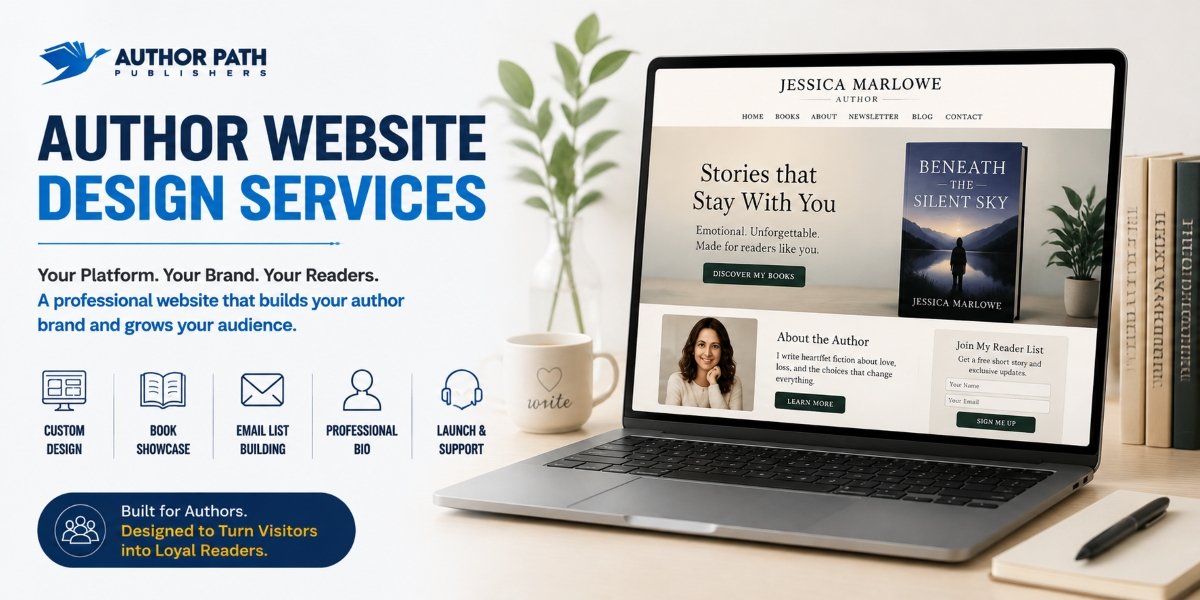
A professional author website gives you a permanent online home where readers can discover your books, learn about your story, join your email list, and stay connected with your work.
Author website design services are not just about creating a beautiful website. They are about building a reliable foundation for your author career.
At Author Path Publishers, we design author websites that help writers establish their brand, showcase their books, collect readers, and create a central place for marketing efforts.
Why Authors Need Their Own Website
Social media is useful for discovery, but it does not provide complete ownership.
Your website and email list are two digital assets that remain under your control.
A website allows you to:
- Present your books professionally.
- Collect reader email addresses.
- Share updates directly with your audience.
- Control how readers find information about you.
- Create a consistent author brand.
When someone hears your name on a podcast, sees your book recommendation, or discovers your work through marketing, the next step is often a Google search.
Your website should be the place readers find first.
Professional author platform building begins with creating an online home that everything else connects back to.
Essential Pages Every Author Website Needs
A successful author website does not need dozens of pages.
Most professional author websites can be built around a few important sections.
1. Homepage
Your homepage creates the first impression.
It should quickly communicate:
- Who you are.
- What type of books you write.
- What readers should do next.
A strong homepage usually includes:
- Featured book cover.
- Short author introduction.
- Clear message.
- Newsletter invitation.
The goal is not to explain everything. The goal is to guide visitors toward the next step.
2. Books Page
Your books page acts as your digital bookshelf.
It should include:
- Book covers.
- Titles.
- Descriptions.
- Reading order for series.
- Links to individual book pages.
Each book should have its own dedicated page where readers can learn more and find purchase options.
Clearly label:
- Upcoming releases.
- Available books.
- Out-of-print titles.
This prevents reader confusion.
3. About Page
The About page is often one of the most visited pages on an author website.
Readers want to know the person behind the books.
A professional author bio should:
- Introduce your writing journey.
- Mention your books.
- Include relevant experience.
- Share a personal detail readers can connect with.
The goal is not to create a formal résumé. It is to create a connection.
4. Contact Page
A contact page helps readers, media, and professionals reach you.
Include:
- Contact form or email address.
- Speaking request information.
- Interview availability.
- Review copy information.
- Rights inquiries.
Clear communication builds credibility.
5. Newsletter Page
An email list is one of the strongest tools an author can build.
A newsletter page should explain:
- What subscribers receive.
- How often you send updates.
- Why readers should join.
Unlike social media followers, email subscribers are a direct connection with your audience.
6. Media and Press Kit
A professional media kit helps journalists, podcast hosts, bookstores, and event organizers access important information quickly.
It should include:
- High-resolution book covers.
- Author photos.
- Short and long biographies.
- Interview topics.
- Contact information.
A prepared press kit makes promotional opportunities easier to manage.
Turning Website Visitors Into Subscribers
Most visitors are not ready to buy immediately.
A reader may discover your website today and purchase your book weeks later.
A reader magnet helps maintain that connection.
A reader magnet is valuable free content offered in exchange for an email address.
Examples include:
Fiction Authors
- Prequel stories.
- Deleted scenes.
- First chapters.
- Bonus content.
Nonfiction Authors
- Worksheets.
- Checklists.
- Guides.
- Framework summaries.
The content should feel valuable and connected to your book.
A simple subscriber process includes:
- Offer the free resource in multiple places.
- Request only necessary information.
- Deliver the resource immediately.
- Send a welcome message.
- Continue communication consistently.
Creating Effective Book Landing Pages
Every book deserves its own dedicated page.
A book landing page should answer a reader’s questions quickly.
A strong book page includes:
Book Cover
Display the cover clearly with the title and subtitle as searchable text.
Book Description
Start with a compelling introduction, then provide more details.
Book Details
Include:
- Format.
- Page count.
- Edition information.
Purchase Links
Provide updated links for:
- Paperback.
- Hardcover.
- Ebook.
- Audiobook.
Sample Content
Offer:
- First chapter.
- Sample pages.
- Audio preview.
Reviews and Endorsements
Include genuine reader feedback or professional endorsements.
Never use invented reviews.
Mobile-Friendly Design, Speed, and Accessibility
Most readers visit websites from mobile devices.
A professional author website should be designed for phone users first.
Important considerations include:
Website Speed
Improve performance by:
- Compressing images.
- Avoiding unnecessary animations.
- Limiting heavy features.
- Using clean layouts.
Mobile Experience
Visitors should easily:
- Read text.
- View book covers.
- Click purchase links.
- Join newsletters.
Accessibility
A quality website should include:
- Clear contrast.
- Readable text sizes.
- Proper image descriptions.
- Accessible navigation.
A better user experience benefits all readers.
Creating a Professional Author Brand
Your website should match the identity of your books.
Consistency matters across:
- Website.
- Book covers.
- Social profiles.
- Retail pages.
Your author brand includes:
- Visual style.
- Writing identity.
- Professional bio.
- Photography.
A professional author photo does not need to be complicated.
Focus on:
- Good lighting.
- Clear background.
- A style matching your books.
- High-quality resolution.
Keeping Your Website Updated
An outdated website can create the impression that an author is inactive.
Regular updates can include:
- New releases.
- Events.
- Blog posts.
- Reviews.
- Writing updates.
Before a launch, your website becomes the center of your campaign.
Prepare:
- Book landing pages.
- Preorder links.
- Press materials.
- Newsletter announcements.
Direct marketing efforts toward pages you control.
Frequently Asked Questions
Do I Need An Author Website Before Publishing My First Book?
Yes.
Building your website early allows you to collect readers and create an audience before launch day.
A simple website with an About page and newsletter signup is a strong starting point.
Should My Website Use My Name Or My Book Title?
In most cases, your name is the better choice.
A website based on one book title can limit future growth when you publish additional books.
Your author name can grow with your entire catalog.
How Much Maintenance Does An Author Website Require?
Most websites require only regular updates.
A few hours each month can keep your website current with:
- New events.
- Updated links.
- Fresh announcements.
Can My Website Match My Existing Book Cover Design?
Yes.
Professional author website design services can incorporate:
- Cover colors.
- Typography.
- Visual style.
This creates a consistent author brand across all platforms.
Build Your Author Website With Author Path Publishers
Your website is more than an online profile.
It is the place where readers discover your books, connect with your story, and continue following your work.
The author website design services at Author Path Publishers include:
- Website structure planning.
- Page design.
- Author branding.
- Book landing pages.
- Newsletter integration.
- Mobile optimization.
- Launch support.
We help authors create professional online platforms designed to support long-term growth.
Your content remains confidential, you maintain ownership, and your website becomes a lasting foundation for your author career.
