Cathleen Ireland Finds Her Power, Perspective and Pop Sweet Spot on In The City

By Lauren Whitmore

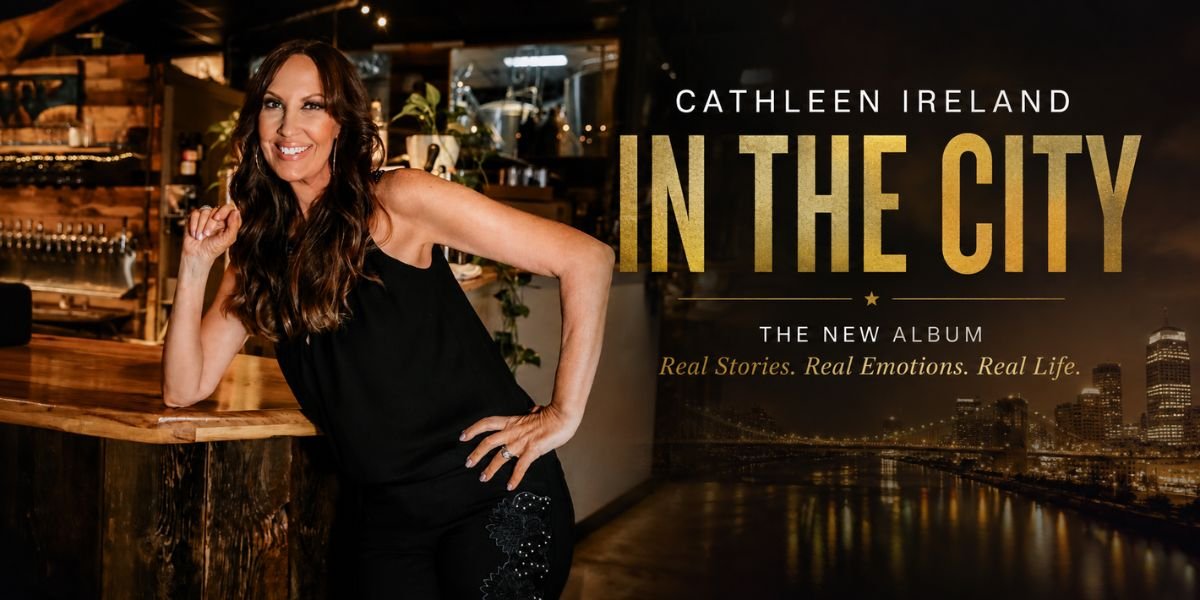
Cathleen Ireland has been making music long enough to understand that reinvention doesn’t require abandoning the past. On In The City, the Pittsburgh singer, songwriter and producer takes the accumulated experience of a career spent fronting bands, making records, raising a family and navigating the realities of the music business and channels it into her most polished and assured collection yet.

The result is an album that sits comfortably at the intersection of contemporary pop, adult contemporary and R&B, pairing radio-conscious production with songwriting that reflects an unmistakably grown-up point of view. Ireland isn’t interested in pretending life’s complications disappear when the chorus arrives. Instead, she makes those complications part of the hook.

That philosophy is best represented by “Breathe,” the album’s defining statement and one of Ireland’s strongest singles to date. Co-written with Danny E. B. and produced by longtime collaborator Sean McDonald at Red Medicine Studios in Swissvale, Pa., the track transforms the daily pressures of being a wife, mother, performer, bandleader and working woman into an uplifting pop anthem.

The premise is immediately relatable: there are gigs to play, family members to care for, appearances to maintain and expectations coming from seemingly every direction. Ireland even confronts the lingering sexism of professional environments where successful women can still encounter a dismissive “you’re just a girl” mentality.

But “Breathe” isn’t a complaint. It’s a pep talk.

Its central refrain, “You got this, you got this girl”, is tailor-made for audience participation, but its effectiveness comes from the experience behind it. Ireland isn’t dispensing generic empowerment slogans. She’s singing from inside the struggle, which gives the track a credibility that can’t be manufactured in a writing camp.

That balance between accessibility and authenticity runs throughout In The City. The album’s title evokes movement, ambition and possibility, but Ireland is equally interested in what happens behind the bright lights. Her city isn’t simply a glamorous backdrop; it’s a metaphor for a life crowded with competing demands, relationships, opportunities and frustrations.

Production plays a major role in bringing that world to life. Ireland’s recent work with multi-platinum producer Ryan M. Tedder, whose credits include Ariana Grande, Jennifer Lopez and Meghan Trainor, has helped sharpen her contemporary instincts. The music is sleek without becoming anonymous, incorporating rhythmic pop foundations, R&B touches and adult contemporary melodicism while leaving enough breathing room for Ireland’s voice to remain the focal point.

And Ireland knows how to sell a song.

Her vocal strength isn’t built around excessive runs or theatrical displays. Instead, she favors directness. There is warmth in her phrasing and an appealing conversational quality to her delivery, making even the album’s more polished moments feel personal. She sounds like an artist communicating rather than auditioning.

That confidence has been earned over a career stretching back through several incarnations of Pittsburgh’s independent music scene. Ireland previously fronted Friday’s Child, releasing the Awakenings EP in 1998, and later theFIVE6, whose Last Minute Reservations arrived in 2012. She subsequently became founder and vocalist of Hot Weather Holiday, continuing to establish herself as a fixture of the city’s live-music community.

Her solo work has expanded that reach considerably. “Body For You” received an Honorable Mention in the R&B category of the USA Songwriting Competition, while the song and its accompanying video became semi-finalists in the UK Songwriting Competition, both earning Five-Star ratings. “Love Is A Luxury” was a finalist in the International Acoustic Music Awards.

Ireland’s visual résumé is equally notable. Her music videos have been selected by more than 70 film festivals internationally and have collected 22 awards, including Best Independent Music Video honors for “ELEVATOR” at the International Music Video Underground Awards and a Special Jury Award for “DRIVE” at the 2024 Thilsri International Film Festival. Multiple Iron City Rocks Awards in 2026 have further underscored the recognition she’s receiving at home.

Those career achievements provide important context for In The City. This isn’t a debutante trying to determine what kind of artist she wants to become. It’s the work of a musician who has already survived several chapters of the business and has emerged with a clearer sense of what she wants to say.

That maturity may also be the album’s strongest commercial asset. There’s an underserved audience for sophisticated contemporary pop made by and for adults whose lives extend beyond breakups and Saturday nights. Ireland writes about ambition after experience, confidence after disappointment and independence alongside responsibility.

She understands that empowerment isn’t necessarily about walking away from everything holding you down. Sometimes it’s about managing the chaos, protecting the part of yourself that still dreams and getting back onstage anyway.

In The City captures Cathleen Ireland at that intersection: seasoned but energized, polished but personal, ambitious without losing sight of the everyday life feeding the songs.

With this album, Ireland isn’t chasing the city lights.

She’s learned how to generate her own.
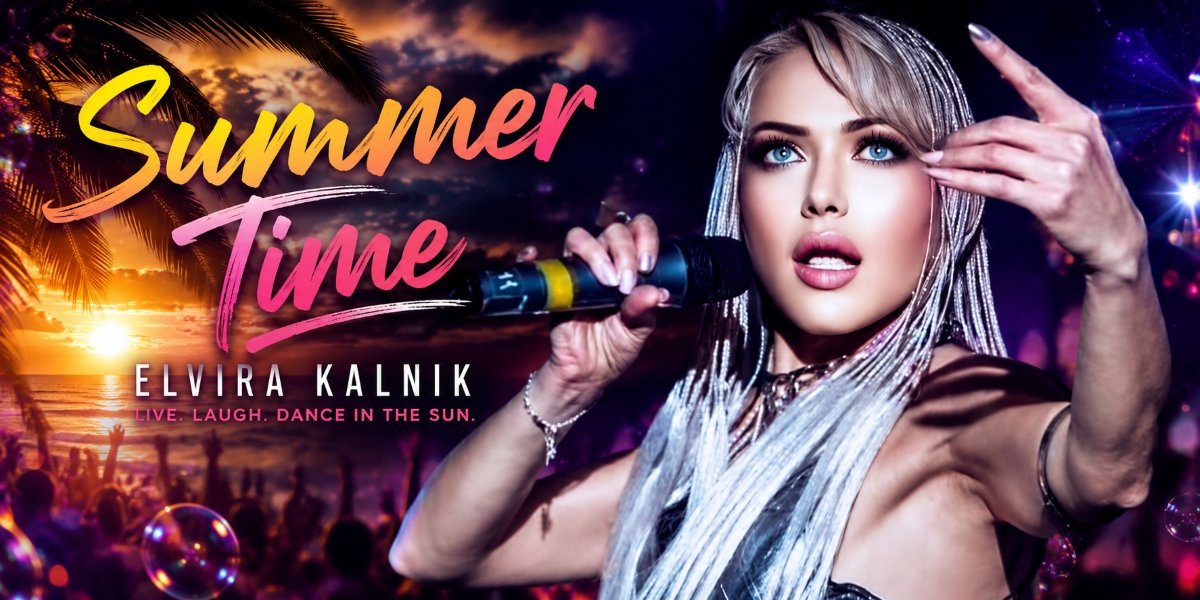
Elvira Kalnik’s ‘Summer Time’ Finds Power in Choosing Joy

By: Rebecca Sloan

Pop music has always loved summer. Summer is freedom. Summer is possibility. Summer is the fantasy that the person you’ve always wanted to become is already there, waiting beneath the sunlight. But while countless artists have written songs about beaches, bonfires, and endless nights, Elvira Kalnik’s “Summer Time” reaches for something deeper. Beneath the shimmering electronic production and the bright, playful imagery lies a question that has become increasingly relevant in a world defined by anxiety, exhaustion, and endless noise: What if happiness is something we choose?

That’s the idea at the heart of “Summer Time,” a sparkling electronic anthem that serves as both a celebration and a gentle act of rebellion.

Kalnik has spent much of her career refusing to fit neatly into a single category. Singer, songwriter, producer, filmmaker, actress, model, fashion designer, television host—she has built a creative life that seems driven less by industry expectations than by an insatiable curiosity about the many forms artistic expression can take. That expansive perspective informs “Summer Time,” a song that feels as visual as it does musical.

From the opening notes, Kalnik establishes an atmosphere that feels warm, familiar, and almost dreamlike. Waves seem to roll beneath the rhythm. The synthesizers shimmer and swell like sunlight reflecting off the surface of the ocean. The beat never demands attention as much as it invites participation. There’s movement here, but there’s also a sense of ease.

That balance is one of the song’s greatest strengths.

For years, popular culture has treated seriousness as sophistication. Darkness is often mistaken for depth. Cynicism is celebrated as wisdom. Joy, meanwhile, is frequently dismissed as simplistic or naïve. “Summer Time” challenges that idea at every turn.

Its imagery is unabashedly colorful. Kalnik sings of rainbow bubbles, dancing until sunrise, bonfires, sunshine, and the simple pleasure of surrendering to the present moment. In the hands of a less confident artist, those ideas might seem overly sentimental. Here, however, they feel intentional.

There’s courage in optimism.

The song’s origins are equally revealing. Although “Summer Time” first appeared as part of Kalnik’s Magical Child project, its themes have become even more relevant over time. The track embraces the idea that people often spend so much time worrying about what has happened or what might happen that they forget to appreciate what is happening right now.

The result is a song that feels surprisingly restorative.

Kalnik’s vocal performance contributes significantly to that effect. She doesn’t overcomplicate the material with unnecessary flourishes or exaggerated emotion. Instead, she allows the melody and message to guide the performance. Her delivery feels open, relaxed, and sincere, qualities that have become increasingly rare in an era when so many recordings are polished into emotional anonymity.

That sincerity has long been a defining characteristic of her work.

Listeners familiar with Kalnik’s “Water Knows” will immediately recognize the connection between the two songs. Both are rooted in transformation, healing, and emotional release. Yet where “Water Knows” invited listeners inward, encouraging reflection and introspection, “Summer Time” turns outward. It embraces movement, laughter, and celebration.

Together, the songs reveal two complementary sides of the same philosophy.

First, we learn to release what burdens us.

Then we learn how to dance again.

Perhaps that’s why “Summer Time” feels so effective. It isn’t merely a soundtrack for warm weather. It is a reminder that adulthood doesn’t have to come at the expense of wonder. Kalnik understands that joy isn’t the absence of hardship; it is the willingness to continue embracing life despite it.

Throughout her career, she has consistently explored ideas of self-discovery, resilience, creativity, and personal transformation. Whether through music, fashion, film, or visual art, she has repeatedly returned to the notion that beauty exists all around us if we’re willing to notice it.

“Summer Time” embodies that philosophy perfectly.

By the song’s final chorus, it becomes clear that Kalnik isn’t trying to persuade anyone to ignore reality. Instead, she is asking listeners to remember that life can still contain moments of delight, spontaneity, and freedom.

In a cultural moment that often feels defined by division, uncertainty, and relentless urgency, that message lands with surprising force.

After all, summer isn’t just a season.

Sometimes it’s a state of mind.

How Cello and Miss Freddye Show Pittsburgh’s Musical Range

By: Adrian Mercer

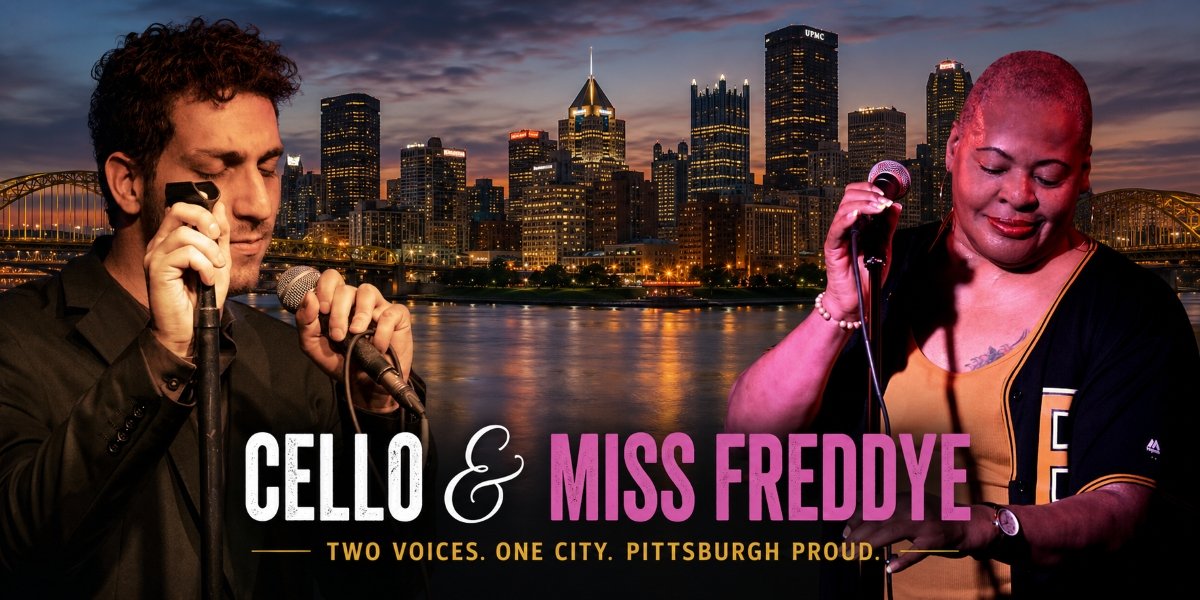
Pittsburgh has always been a city of reinvention. Once defined almost exclusively by steel mills and smokestacks, today’s Steel City is also known for its thriving arts community, where musicians continue to redefine what Pittsburgh sounds like. While no single artist could ever represent the region’s musical identity, two performers illustrate its remarkable diversity better than most: pop artist Cello and blues powerhouse Miss Freddye.

On paper, they couldn’t appear more different. One embraces contemporary pop production and modern songwriting, while the other carries forward one of America’s most enduring musical traditions. Yet both artists share something unmistakably Pittsburgh: authenticity, resilience, and a commitment to creating music that reflects real life rather than chasing fleeting trends.

A New Generation of Pittsburgh Pop

Cello represents a younger generation of Pittsburgh musicians who are proving that pop music can emerge from western Pennsylvania. His recordings combine polished production with emotionally direct songwriting, creating songs that balance commercial appeal with personal storytelling. Rather than imitating what’s popular, Cello has focused on developing an artistic identity built around memorable melodies, expressive vocals, and an evolving creative vision.

Like many artists coming out of Pittsburgh today, Cello benefits from a city that has quietly become fertile ground for independent musicians. Affordable creative spaces, passionate local audiences, and a supportive artistic community have allowed emerging performers to develop their craft without immediately relocating to larger entertainment hubs.

That independence shows in Cello’s work. His music carries the confidence of an artist willing to experiment while remaining accessible. Every release demonstrates growth, not only as a vocalist but also as a songwriter determined to connect emotionally with listeners.

Pittsburgh’s Lady of the Blues

At the opposite end of Pittsburgh’s musical spectrum stands Miss Freddye, affectionately known throughout the region as “Pittsburgh’s Lady of the Blues.” Her career has become one of the city’s most inspiring musical success stories, built not through overnight fame but through decades of perseverance, authenticity, and service.

Long before becoming one of western Pennsylvania’s blues performers, Miss Freddye first discovered music in church, where gospel taught her that every song should tell the truth. She entered the professional blues scene in 1996 with Blues Music Works under the direction of Big Al Leavitt before eventually forming Blue Faze, followed by Miss Freddye’s Blues Band and Miss Freddye’s Homecookin’ Band.

Over the years, her unmistakable voice has earned widespread recognition. Multiple Pittsburgh music honors, Blues Foundation nominations, and regional awards have affirmed what local audiences have known for decades, that Miss Freddye is one of the city’s defining musical ambassadors. Her performances are rooted equally in gospel conviction and classic blues tradition, producing a sound that is both timeless and unmistakably personal.

Perhaps even more impressive is the life behind the music. A longtime nurse, community advocate, charity supporter, and breast cancer survivor, Miss Freddye has consistently used her platform to give back. Whether supporting veterans, cancer awareness initiatives, domestic violence prevention, or local charitable organizations, she has demonstrated that an artist’s legacy extends well beyond the stage.

Where Innovation and Tradition Coexist

Despite their stylistic differences, Cello and Miss Freddye share a common thread. Neither artist relies on the image alone. Their music succeeds because it is grounded in genuine experience.

Cello speaks to audiences searching for connection in a rapidly changing world, crafting modern songs filled with vulnerability and hope. Miss Freddye reminds listeners that the blues remains as relevant today as ever because honesty never goes out of style. One looks confidently toward the future of independent music. The other preserves a tradition while continually proving it still has something important to say.

Together, they reflect the remarkable breadth of Pittsburgh’s music scene. It is a community where innovation and tradition don’t compete. They coexist. The same city that nurtures emerging pop artists also celebrates legendary blues performers. It is a place where creative freedom matters more than genre labels.

For decades, Pittsburgh has produced exceptional musicians across rock, jazz, classical, folk, country, hip-hop, blues, and pop. Artists like Cello and Miss Freddye continue that tradition in their own unique ways, reminding audiences that great music isn’t defined by style but by sincerity.

As Pittsburgh’s cultural reputation continues to grow nationally, these two artists stand as powerful examples of what makes the city’s music community so compelling. One offers the excitement of tomorrow. The other embodies the wisdom of experience. Together, they tell a story far bigger than themselves, a story of a city whose creative heart continues to beat as strongly as ever.

Whether through Cello’s contemporary pop sensibilities or Miss Freddye’s soul-stirring blues performances, Pittsburgh continues to prove that some of America’s most authentic music still comes from the place where three rivers meet and countless musical journeys begin.

Maisy Kay Brings Timeless Glamour and Modern Sensibility to Pop Music

By: Victoria Hastings

Maisy Kay is more than just another pop artist; she is often regarded as an emblem of sophistication and innovation, skillfully blending old Hollywood glamour with contemporary musical ingenuity. With a voice that often captures both elegance and emotion, Maisy has emerged as a standout figure in an industry that frequently prizes trends over timeless artistry.

Born in England and now making waves in Los Angeles, Maisy’s journey to stardom is one of dedication, talent, and reinvention. Her collaborations with legendary producers such as Timbaland and Rodney “Darkchild” Jerkins have highlighted her versatility, seamlessly blending the nostalgic charm of classical music with modern production techniques. “Music should make you feel something real,” Maisy shared in an exclusive interview. “I aim to create songs that transport people the way music from past decades still moves us today.”

Her breakout moment came with “The Storm,” a collaboration with TheFatRat that has resonated with millions of listeners worldwide, cementing her place as an artist capable of blending emotive storytelling with infectious melodies. However, it is Maisy’s ability to tell vivid, cinematic stories through her music that often sets her apart. Her songs are not just auditory experiences but journeys that invite listeners to visualize and feel the narratives she weaves. Her single “The Beast Within,” which incorporates lyrics in the Na’vi language from Avatar, demonstrates her commitment to pushing creative boundaries, bridging the gap between music and other art forms to craft something truly unique. This approach not only highlights her versatility but also potentially elevates music into a multisensory experience, where sound, language, and imagination converge to create something unforgettable.

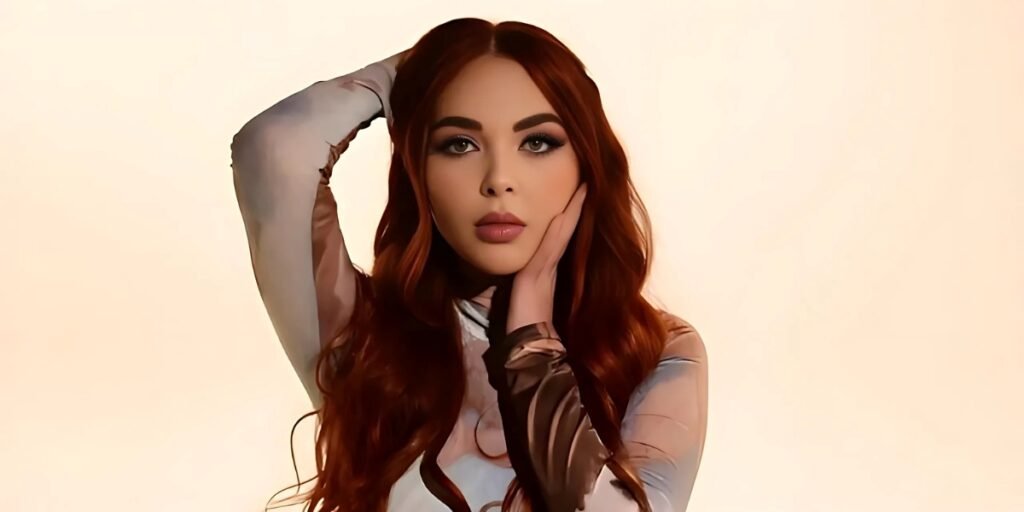
Maisy’s artistry goes beyond sound. Inspired by the golden age of Hollywood, she brings a visual elegance to her performances, drawing inspiration from the charisma of classic film icons while embracing cutting-edge technology. Whether in music videos, stage performances, or fashion choices, she often exudes an effortless sophistication that evokes an era where style and substance went hand in hand.

Photo Courtesy: Maisy Kay


Her performances are more than just concerts; they are often described as immersive experiences, meticulously crafted spectacles where lighting, choreography, and live instrumentation merge to create a dazzling showcase. Each element is thoughtfully designed to evoke emotion and transport the audience into a narrative that feels both personal and universal. “I don’t just want to perform; I want to create a world,” Maisy says. “Something that might linger in people’s minds long after the music stops, a moment they can revisit in their memories whenever they need inspiration or escape.” This dedication to crafting a multisensory journey ensures that her shows leave a lasting impression, blending artistry with storytelling in a way that feels both intimate and grand.

Maisy Kay is helping to redefine what it means to be a modern star by suggesting that innovation and timeless appeal are not mutually exclusive. As the industry shifts towards digital platforms and ephemeral content, she remains steadfast in her belief that great music, like great cinema, should aim to stand the test of time. With her ability to seemingly blend nostalgia with modernity, Maisy Kay is not just making music; she is crafting an experience that could be remembered for years to come.


Published by Stephanie M.