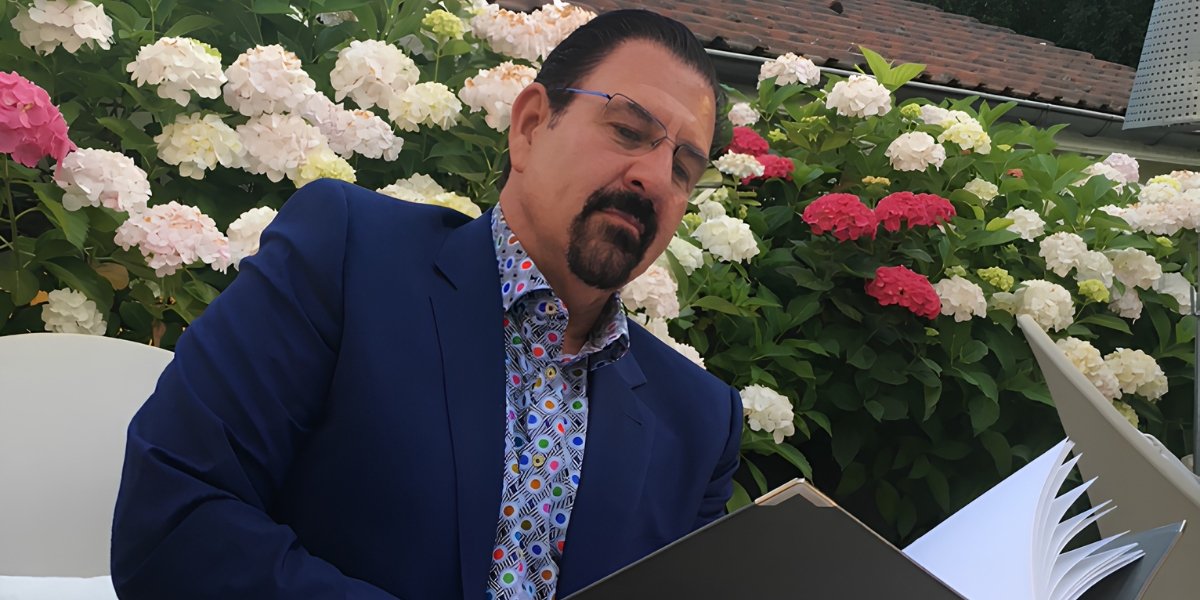

Seth David Radwell was born in New York City on March 5, 1963. He spent a long stretch of his working life as a senior executive, driving growth for familiar brands like Proactiv and Scholastic. Over time, and especially through the first Trump presidency, his attention shifted away from business spreadsheets and marketing campaigns and toward the tangible problems dividing the country. Deeply bothered by the relentless and counterproductive belligerence in American politics, he made it his mission to investigate the origins of these conflicting arguments. Today, he focuses on writing and speaking about the roots of polarization, convinced that these historical clashes are not only still relevant, but are in fact the main forces shaping the bitter polarization we observe today.
Learning from the Nation’s Founding
Radwell’s unique perspective comes from digging into the very first political fights that defined the United States. In his book, American Schism, he analyzes foundational figures like Hamilton and Jefferson, who led competing camps with completely different operating models for the nascent republic. One side felt the country would do best with widespread representation. The other argued that decision-making should be concentrated in a small, educated group of leaders. Radwell ties these initial disagreements back to the big philosophical ideas of the European Enlightenment, showing exactly how social contract theory of that time influenced the founders’ thinking.
He argues that once these original disagreements come into focus, the reasons today’s political fights feel so intractable become clear. He views our current divisions not as some novel conflict, but as derivative of the original discords from the late 18th century.
Applying the Lessons Today
Radwell doesn’t treat history as material to be forgotten; he sees it as a practical guidebook. He directly links the problems of the 18th century to major current concerns, such as the wide gaps in economic equality, the ongoing morass of immigration policy, and the troubling loss of faith in public institutions. By recognizing these repeating patterns, he encourages citizens to approach today’s hot-button topics with a broader perspective. History, for him, provides the essential keys to understanding why these conflicts persist and suggests better ways to resolve them.
Public Engagement and Dialogue
Radwell does much more than just write. He speaks constantly to all sorts of groups, including students, executive groups, community organizations, and cultural institutions, both in the United States and overseas. His goal is to make historical insight accessible to everyone, maintaining that understanding where conflicts start is the most crucial first step toward making sensible public decisions. He routinely challenges audiences to genuinely listen to viewpoints that oppose their own, emphasizing that constructive dialogue and mutual respect are far more valuable than the boisterous approach so common today.
American Schism received notable recognition, winning the International Book Award for Best General Nonfiction in 2022. Beyond his book, Radwell contributes articles to respected outlets like the Chicago Tribune and The Fulcrum. His writing style has been praised for making complicated historical ideas clear and easy to absorb, all while remaining politically neutral.
Practical Steps Toward Reducing Division
Radwell doesn’t just point out the flaws; he offers concrete solutions to reduce political conflict. He champions stronger civic education. He advocates for structured dialogue programs that bring people from different backgrounds together for productive conversations. He has also suggested reforms to voting and governance systems that could help remove counterproductive incentives from narrow-minded battles. The range of his ideas does not align with today’s partisan lines; they are meant to help communities understand one another better and make smarter collective decisions.
Why Understanding History Matters
The fundamental idea behind all of Radwell’s work is that knowing the historical basis of political division is a necessary first step. Today’s sharp disagreements are the predictable consequences of foundational structures that have evolved over our history. Grasping how these original disputes developed enables citizens to handle existing debates more thoughtfully, avoid repeating old mistakes, and build a more measured and civil public discussion.
Looking Forward
Through his ongoing research, speaking, and writing, Radwell is focused on giving Americans a clearer view of the historical forces shaping their political, social, and economic environment. He firmly believes history must inform the present by providing critical context and perspective. His main goal is to help citizens engage with one another in an informed, civil, and constructive way, ultimately helping to bridge the deep divisions that have persisted for centuries.
Disclaimer: This article is for informational and educational purposes only. The opinions, analyses, and viewpoints expressed are those of the subject and do not represent the views, positions, or endorsements of the publication or its editorial staff. References to political figures, parties, policies, or events are included for historical and contextual purposes and should not be interpreted as endorsement of, or opposition to, any political party, candidate, ideology, or piece of legislation.