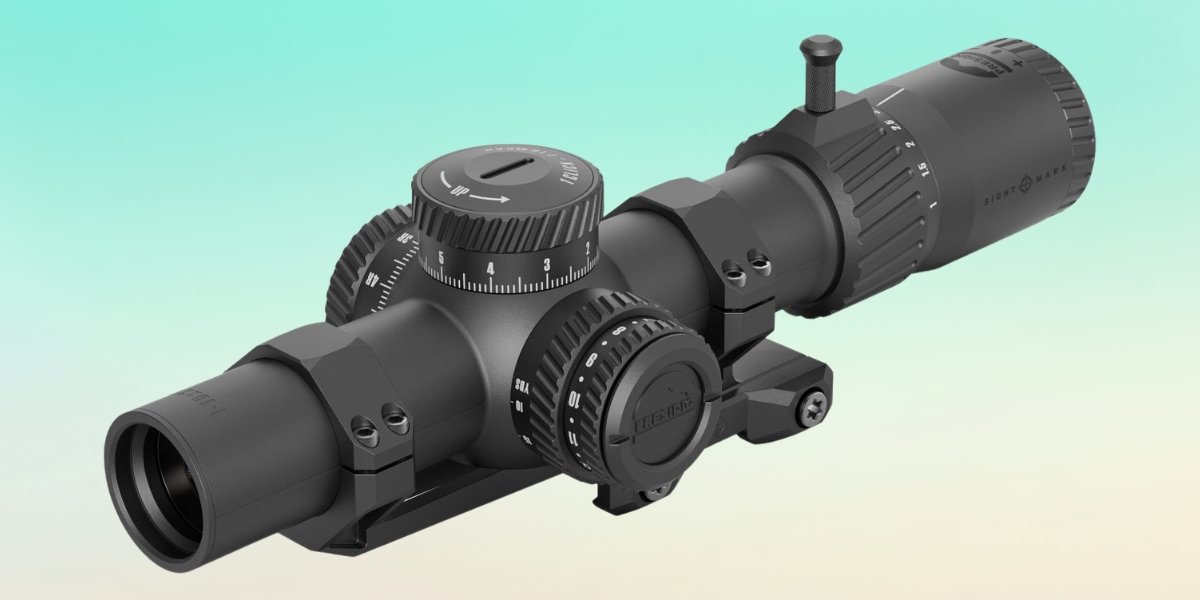

Modern firearm setups rarely rely on a single fixed configuration. Most are built around attachment points that allow different tools to be added depending on the situation. Rail systems made that approach practical. Instead of carrying separate equipment, users can attach lighting, aiming aids, or optical devices directly to a rail, handguard, or other mounting interface on the firearm. The result is a system that changes depending on the environment and within the limits of the firearm’s design and mounting options.
Sightmark, established in 2007, produces firearm accessories that include weapon-mounted lights and laser aiming devices. These products exist alongside its optics range and are developed within the structure of Sellmark Corporation, founded by James Sellers and based in Mansfield, Texas. The accessories are designed to function as supporting components within a broader firearm configuration, rather than independent systems.
Weapon-mounted lights are intended to provide forward illumination in low visibility conditions. When attached to a firearm, the light remains aligned with the direction the firearm is pointed. That alignment allows the user to illuminate the immediate field of view during use. In practice, this becomes relevant in outdoor environments where lighting conditions change quickly, such as wooded terrain or open field areas during early morning or evening hours.
The output of these lights is usually measured in brightness and beam pattern. Some designs focus on wide coverage, while others concentrate light into a tighter beam for longer reach. LED emitters are commonly used because they maintain output efficiency over longer periods compared to older lighting systems. Battery performance becomes a limiting factor in extended use, since higher brightness levels shorten runtime. That tradeoff is built into most designs.
Laser aiming devices operate differently. A laser emits a focused beam that becomes visible when it strikes a surface. What appears on the target is a point of light that corresponds to the laser’s zero and mounting position, which may differ from the firearm’s bore depending on setup and distance. It is not a replacement for traditional sight systems, and in most applications, it is used alongside iron sights or optical scopes.
In short-range situations, lasers can provide a quick reference point for alignment. The value is less about precision at distance and more about immediate directional feedback. Training environments often make use of this characteristic. When the firearm moves, the projected point moves with it, which allows instructors to observe handling consistency without relying on paper targets alone.
Both lighting and laser systems must survive repeated mechanical stress. Firearm recoil produces vibration that can loosen poorly secured components. For that reason, housings are reinforced and internal parts are stabilized to maintain alignment. Environmental exposure is another factor. Moisture, dust, and temperature changes can affect electronic components if they are not properly sealed.
Weight and balance also matter. Adding accessories changes how a firearm handles, especially when multiple attachments are used at the same time. Designers account for this by limiting bulk and distributing mass close to the mounting point. The goal is not to reduce weight entirely, but to avoid disrupting control during use.
Power systems are part of the same equation. Lights rely heavily on battery capacity, and runtime varies depending on output settings. Higher brightness reduces operational time, while lower settings extend it. Laser modules typically require less energy, but still depend on stable power delivery to maintain consistent beam output. These constraints influence how often batteries are replaced or recharged in field conditions.
Use cases for these devices differ depending on context. In hunting environments, where legal, lights are primarily used for target identification in low visibility conditions rather than simply detecting movement. In structured training, they are used to simulate limited visibility scenarios and observe handling behavior. Lasers are sometimes used for feedback during drills, particularly where instructors want to track alignment changes in real time.
Sightmark’s accessories are not designed as standalone solutions. They are intended to work within a broader firearm setup that may also include optical sights or other mounted equipment. The combination depends on user preference and application rather than a fixed configuration. Some setups are minimal, while others use multiple devices at once.
This modular approach aligns with wider changes in firearm design. Rail attachment systems are now common across many firearm types, so demand for compatible accessories has grown. Weapon-mounted lights are used in a wide range of settings, both recreational and professional. Visible laser aiming devices are used more selectively, usually in specific situations where they offer a clear advantage.
Sellmark Corporation provides the organizational framework behind Sightmark’s production and distribution. Founded in 2000 and headquartered in Texas, it manages multiple brands in the outdoor and tactical equipment sector. That structure supports logistics, product distribution, and coordination across different product lines.
In practice, weapon-mounted lights and laser devices occupy a specific functional role. They extend visibility and provide reference points under conditions where natural sighting is limited. Their effectiveness depends on the environment, mounting stability, and power availability rather than on standalone capability.
As firearm systems continue to emphasize modularity, these accessories remain part of a broader shift toward configurable setups. Users build configurations based on task requirements rather than fixed design limits. Lights and lasers fit into that structure as supplemental tools used when conditions require additional visual support or alignment reference.